


Bridal Makeup for Dark Skin That Photographs Beautifully
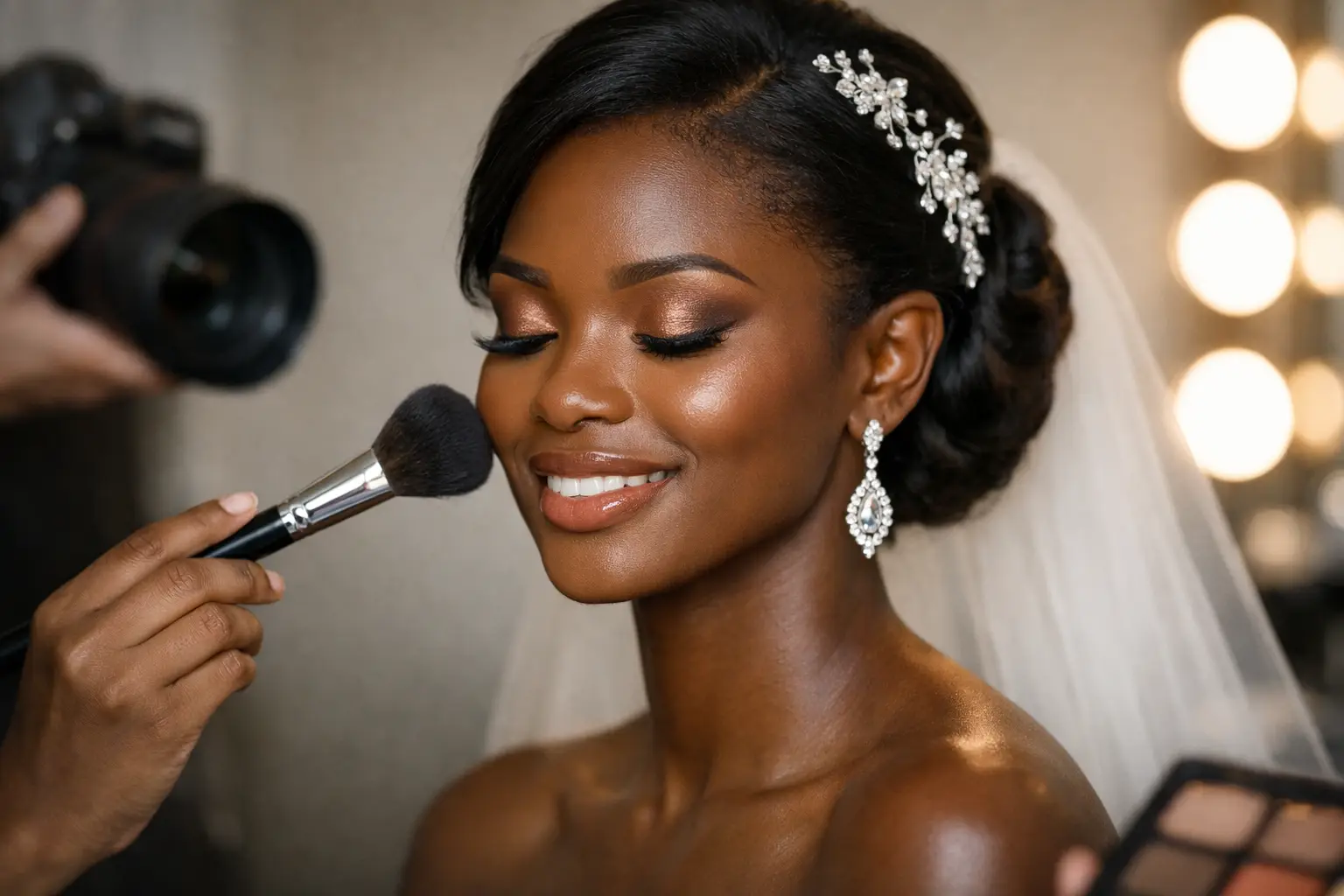
A wedding complexion should never appear flattened in the name of perfection. Bridal makeup for dark skin is at its most beautiful when it honors the natural depth, warmth, and light within the skin, then refines it for the ceremony, the dance floor, and the camera. The goal is not a lighter version of the bride. It is a polished, dimensional version of her, with color that remains true from first look through the final portrait.
For a luxury celebration, makeup must perform beyond a mirror moment. It needs to read elegantly in daylight, withstand flash photography, remain composed through emotion and movement, and complement the scale of the gown, jewelry, and setting. That level of finish begins with artistry that understands undertones, texture, cultural references, and the particular demands of professional imagery.
Bridal Makeup for Dark Skin Starts With Undertone
A foundation match is not simply about finding a shade that looks close on the jawline. Deep complexions can carry red, golden, olive, neutral, blue, or richly warm undertones, sometimes with subtle shifts across different areas of the face. A formula that is technically dark enough but incorrectly toned can leave skin looking gray, overly red, or disconnected from the neck and décolletage.
The most refined approach often involves custom blending. Rather than relying on a single bottle, an artist may adjust depth and undertone across the center of the face, perimeter, and chest so the complexion reads as one harmonious whole. This matters especially for brides wearing open necklines, traditional jewelry, or sculptural white gowns, where contrast makes every tonal decision more visible.
Skin prep has equal influence. Dehydrated skin can make even an exceptional foundation separate or turn dull beneath powder. A considered preparation routine creates a supple surface while respecting the bride’s natural oil balance. The finish should feel like skin, not like a mask designed to survive the day.
Dimension Is the Difference Between Polished and Flat
Deep skin tones possess extraordinary natural dimension. Bridal makeup should preserve it rather than cover it beneath a uniform layer of base product. Strategic complexion work brings structure back to the face: a subtly brighter under-eye, a softly sculpted cheekbone, warmth at the temples, and a highlight chosen for the skin’s actual undertone.
The language around highlighting deserves care. A pale, icy shimmer can look stark or ashy against dark skin, particularly in flash. Champagne, bronze, copper, rose gold, and deep gold tones are often more harmonious, but the right choice depends on the bride’s undertone and desired mood. A luminous finish may come from finely milled cream products and strategic light reflection, not a visible stripe of sparkle.
Contour should create architecture, not a new face. Cool or gray contour shades can quickly appear muddy on warm or richly melanated complexions. A deeper neutral, espresso, red-brown, or warm sculpting tone may be more convincing, depending on the bride. The artistry lies in restraint: enough definition for photography, softened enough for close conversation.
Blush is another essential layer of dimension. Berry, mulberry, terracotta, burnt rose, plum, and saturated coral can bring exceptional life to the cheeks. The correct shade does more than add color. It connects the eye, lip, and complexion so the whole bridal look feels intentional.
A Camera-Ready Finish Requires More Than Full Coverage
High-definition photography and video reveal texture, product buildup, and flashback with uncompromising clarity. More coverage is not always the answer. A bride with hyperpigmentation, acne scarring, or uneven tone may benefit from targeted color correction and precise concealing before foundation, allowing the final complexion to remain flexible and believable.
Corrector selection is especially nuanced on dark skin. Peach, orange, red-orange, and deeper red correctors can neutralize discoloration, but each must be placed thoughtfully and layered lightly. An overly bright corrector that is not fully balanced by complexion product can shift the skin’s natural tone. The work should be invisible once the makeup is complete.
Powder also requires a discerning hand. Translucent does not automatically mean universal. Some powders can flash white or leave a muted cast on deep complexions, particularly under professional lighting. A finely milled powder with a compatible undertone, applied only where needed, helps preserve radiance while securing the makeup for a long celebration.
A truly camera-ready finish is tested in more than one light. Window light, ballroom lighting, flash, and evening ambience all tell a slightly different story. During a bridal trial, a few photographs in varied lighting can reveal whether the skin reads luminous, balanced, and recognizably like the bride.
Eyes and Lips Can Carry Tradition, Fashion, or Both
For South Asian and multicultural weddings, bridal beauty often moves between distinct moments: a ceremony look, a reception transformation, or multiple wardrobe changes with different color stories. The makeup should respect each tradition while still feeling cohesive across the day.
A richly lined eye can be paired with a softly luminous complexion and a velvet berry lip. A bride wearing red, maroon, emerald, or gold may want eyes that hold their own against ornate textiles and heirloom jewelry. In another setting, a sleek couture gown may invite a more sculptural brow, satin skin, and precisely shaped nude lip. Neither approach is more elevated. The right one reflects the bride, the wardrobe, and the visual language of the celebration.
Nude lipstick deserves particular attention for dark skin. A nude that is too pale or too cool can erase the mouth in photographs. The most flattering versions usually carry warmth, rose, brown, caramel, or berry undertones, often anchored with a complementary liner. The result can be understated without disappearing.
Long-wear formulas are valuable, but comfort matters. A matte lip may suit a formal editorial moment, while a satin finish can feel more sensual and forgiving during a lengthy event. The trade-off is practical: higher shine may require more touch-ups, while a truly transfer-resistant formula can feel drier. A skilled artist plans for both the visual preference and the rhythm of the day.
The Bridal Trial Is Where the Look Becomes Personal
A trial is not simply a preview appointment. It is where a bride’s visual references, skin behavior, wardrobe palette, and bridal traditions are translated into a specific beauty direction. Bring images that reflect what you are drawn to, but also share what you do not want. “Natural” can mean fresh skin and defined eyes to one bride, or barely-there makeup to another.
It is also helpful to discuss ceremony timing, venue lighting, veil placement, hair accessories, and whether the event will be photographed or filmed in multiple environments. A look designed for a sunlit waterfront ceremony may need different complexion control than one created for a candlelit Manhattan ballroom. Destination humidity, tears, dancing, and clothing changes are not minor details. They shape the product choices and application technique.
The best trial leaves room for refinement. Perhaps the original lip feels too quiet once the jewelry is added, or a stronger liner feels more authentic after seeing the full ensemble. Bespoke bridal artistry is not about imposing a signature look. It is about editing every element until the bride sees herself with greater clarity.
Choosing an Artist With Range
Experience with dark skin should be visible in more than a single portfolio image. Look for complexions that retain warmth and dimension, foundations that match the chest and body, and flash photography that does not reveal gray cast or excessive shine. Just as importantly, look for versatility. A polished soft-glam bride, a bold South Asian bridal eye, and a modern fashion-forward finish require different instincts.
At BridalGal, the approach is informed by bridal precision, multicultural beauty fluency, and production-aware artistry. That combination is particularly valuable when the day includes couture styling, cultural ceremony, editorial photography, and a reception designed to be remembered from every angle.
Your bridal makeup should not ask your skin to become something else for the camera. Choose color, dimension, and finish that allow its richness to remain present, then let every photograph carry that truth forward.