


What a Couture Makeup Artist Brings to the Camera
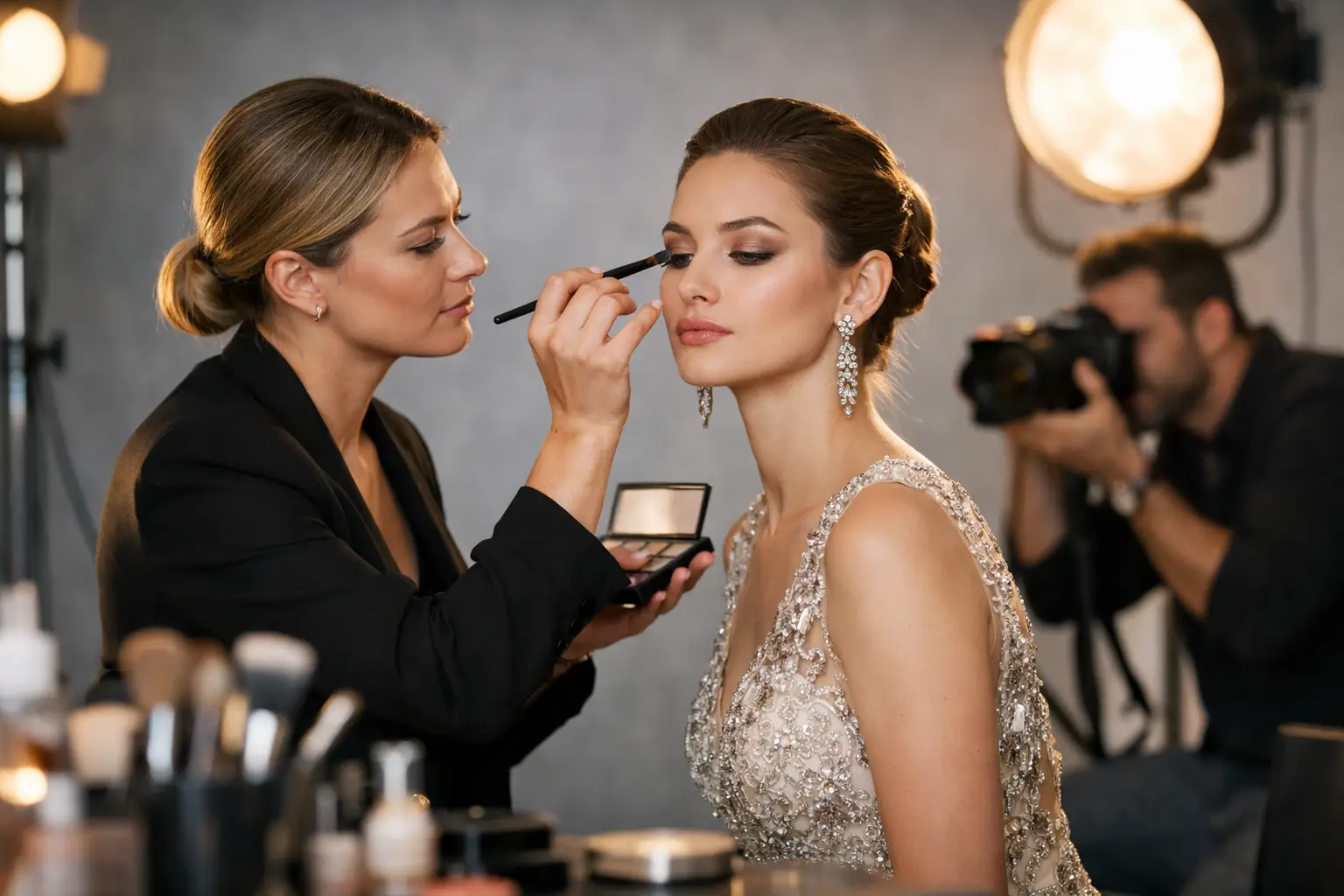
A couture makeup artist does more than create a beautiful face. The work is an exercise in proportion, texture, light, movement, and point of view – designed to hold its presence from the first close-up to the final photograph. For a bride in a hand-finished gown or a model under editorial lighting, makeup must feel intentional at every distance.
Couture beauty is not defined by excess. It is defined by discernment. A radiant complexion, a sculpted eye, or a saturated lip earns its place because it serves the person, the garment, and the image being made.
The Couture Makeup Artist Standard
A couture makeup artist approaches the face as part of a complete visual composition. The neckline of a gown, the architecture of a veil, the jewelry, the color story, and the quality of light all affect the final look. Makeup is never separate from these details. It should carry the same level of consideration.
This is why the most refined results often appear effortless. Skin retains dimension rather than becoming a flat, uniform finish. Contour is placed to shape features without announcing itself. Eyes are built in layers, so they remain expressive in person and defined under flash. Every choice is calibrated, even when the finished look appears soft.
The distinction matters most when the stakes are high. A wedding day moves between natural daylight, candlelight, flash photography, and video. A fashion production may shift from a studio set to hard outdoor sun within hours. Makeup that is only beautiful in a mirror is not enough. It must translate.
Beauty Designed for Light, Lens, and Movement
Camera-ready artistry is often misunderstood as heavier makeup. In reality, weight is only one variable. A polished complexion depends on strategic skin preparation, precise color correction, controlled sheen, and products selected for the environment. What reads luminous in a portrait can become reflective under a strong key light; what looks sheer in daylight may disappear on film.
The couture approach respects these differences. Coverage is built where it is needed and softened where skin should remain alive. Powder is used with restraint. Cream, liquid, and powder textures are layered with purpose, creating a finish that stays intact while still moving naturally with the face.
This balance is particularly valuable for brides. The bridal look should feel exceptional without becoming a version of beauty that feels unfamiliar. It needs enough structure for the camera, but it must still look graceful at arm’s length during the ceremony, through tears, embraces, and a long evening of celebration.
Hair plays an equally essential role. A clean chignon, sculpted wave, or soft updo changes the geometry of the face and the mood of the entire look. When hair and makeup are developed together, the result feels composed rather than assembled.
Personal Style Is the Starting Point
Couture does not mean applying the same dramatic signature to every client. It means recognizing what deserves emphasis. One bride may be best framed by satin skin, lifted lashes, and a softly defined lip. Another may want a more graphic eye, jeweled adornment, or a full, glamorous contour that meets the scale of her celebration.
A strong consultation considers more than inspiration images. It considers how a client wears makeup in daily life, what features she wants to celebrate, how formal the wardrobe will be, and how she wants to feel when she enters the room. The most compelling reference is not a trend alone. It is the relationship between the client and the look.
There are practical trade-offs, too. A high-shine complexion may be perfect for a controlled editorial portrait but require refinement for a humid outdoor ceremony. A bold lip can be unforgettable, although it calls for intentional touch-up planning through meals, greetings, and photographs. Precision does not eliminate these choices. It makes them visible early enough to choose well.
Multicultural Bridal Beauty Requires Visual Fluency
For South Asian and multicultural weddings, couture artistry carries another dimension: understanding the significance, scale, and visual richness of the celebration. A bridal look may need to complement intricate embroidery, heirloom jewelry, a maang tikka, a dupatta, or multiple wardrobe changes across ceremonies. These are not accessories added after the makeup is complete. They inform the palette, finish, and level of definition from the beginning.
A vibrant lehenga can support a richer eye or lip, while a heavily embellished dupatta may call for a complexion with quiet luminosity and controlled detail. Jewelry placement also affects where highlight, contour, and color should sit. The aim is harmony, not competition.
Cultural fluency also means listening. Traditions vary by family, region, faith, and personal preference. Some clients want a timeless red bridal statement; others envision rose, berry, bronze, or a modern neutral interpretation. Neither approach is more authentic than the other when it reflects the bride with care and respect.
For complexions across the full spectrum, color theory is central. Foundation must preserve undertone rather than mute it. Concealer, contour, blush, and highlight should add shape and radiance without turning skin ashy, gray, or overly warm in photography. These details are technical, but their effect is deeply personal: a bride should recognize herself, elevated.
Editorial Discipline Makes the Difference
Couture fashion and bridal beauty share an essential principle: the final image is created by a team. Makeup must speak to the designer’s work, the photographer’s framing, the hairstylist’s silhouette, and the event’s setting. It should contribute character while allowing the full composition to breathe.
That collaborative discipline is especially important for commercial photography, video, and film. A makeup artist must anticipate continuity, changing light, monitor feedback, and the demands of close camera work. A look that photographs beautifully in a single still may need adjustment for movement and long-form coverage.
This production awareness brings confidence to a wedding day as well. The timeline is protected, touch-ups are thoughtful, and the artist knows when to refine a detail before it becomes visible in every image. At BridalGal, this intersection of multicultural bridal expertise and editorial experience shapes work that feels polished, dynamic, and enduring.
Choosing the Right Artist for a Couture Vision
Portfolio is a meaningful place to begin, but look beyond a single aesthetic. Notice whether skin looks believable across different lighting conditions, whether the artistry flatters varied features and skin tones, and whether the work remains distinctive without feeling repetitive. The strongest portfolio demonstrates range with a consistent standard of finish.
Ask how the artist prepares for photography and video, especially if your celebration includes multiple locations or events. Discuss your wardrobe, accessories, ceremony timing, and whether a second look is planned. If you are wearing traditional garments or incorporating cultural beauty rituals, bring those details into the conversation from the first consultation.
A trial is not simply a rehearsal for makeup. It is an opportunity to establish a shared visual language. Wear a color similar to your wedding outfit if possible, test the look in daylight, and take photographs from several angles. Pay attention not only to what you see, but to how you feel. Couture beauty should give you presence, not disguise you.
The right look will not ask you to choose between being photogenic and being yourself. It will make room for both, with enough artistry to honor the occasion and enough restraint to let your own beauty remain the lasting impression.