


A Luxury Destination Wedding Beauty Guide
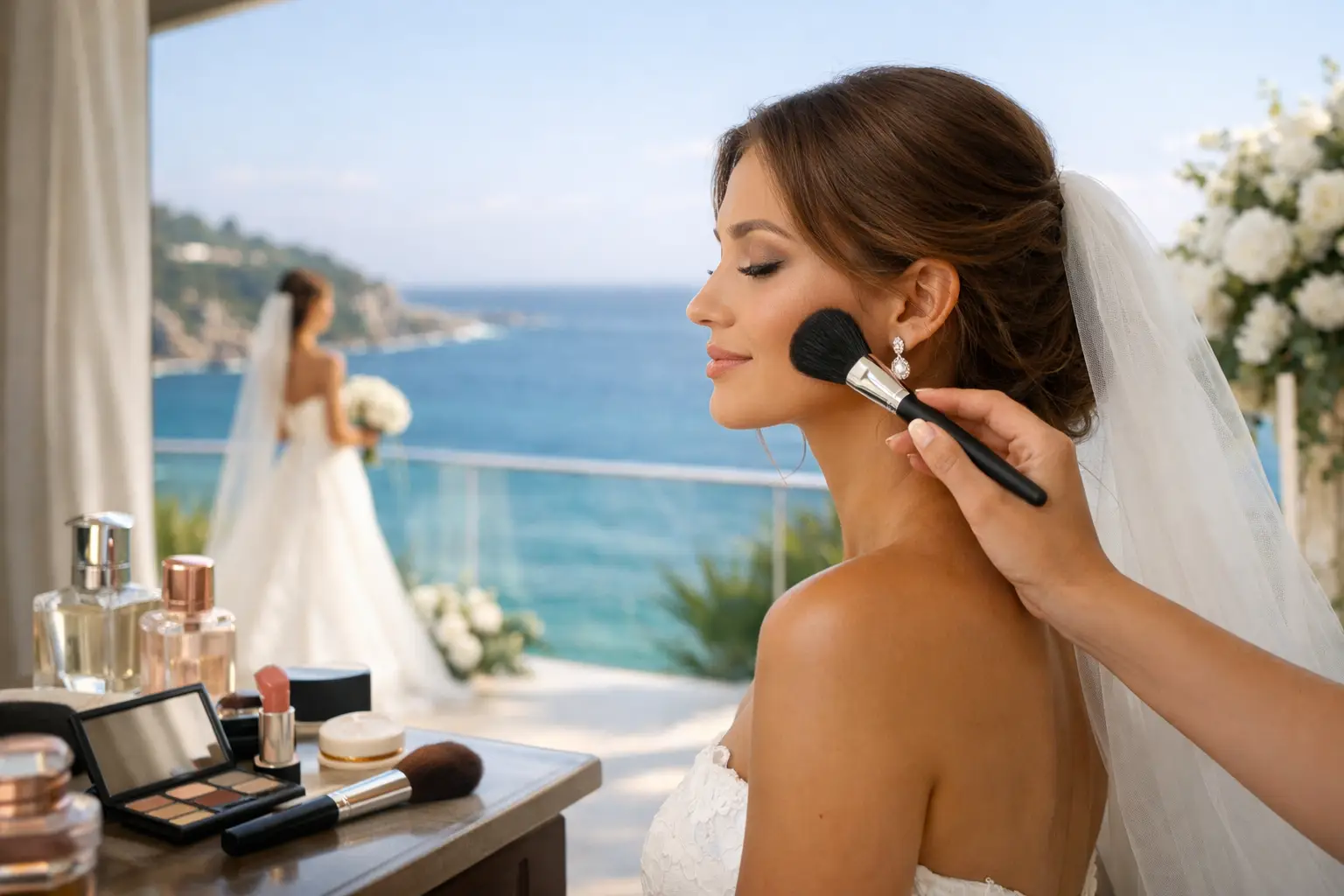
A destination wedding asks more of beauty than a beautiful first impression. Your look may move from a salt-air welcome dinner to a sunlit ceremony, flash photography, a midnight dance floor, and a next-day brunch – often in a climate far removed from home. This luxury destination wedding beauty guide is designed around that reality: refined artistry with the stamina, cultural fluency, and photographic intelligence to remain impeccable in every setting.
The goal is not a look that simply survives the day. It is beauty that belongs to the destination, honors the occasion, and still looks unmistakably like you in every image.
Start With the Setting, Not a Reference Photo
A saved image can establish a mood, but it cannot account for heat, wind, humidity, altitude, ceremony timing, or the color temperature of a venue. A polished bride in a candlelit European villa needs a different approach than one marrying beneath direct Caribbean sun or against the high-contrast architecture of a desert resort.
Begin with the visual conditions. Consider the ceremony hour, whether portraits will happen before or after sunset, and how much of the celebration takes place outdoors. Oceanfront settings call for controlled luminosity rather than excessive shine. A mountain celebration may require additional hydration and complexion preparation, while tropical weather favors strategic layering, flexible texture, and products selected for wear rather than novelty.
Your wardrobe should guide the beauty direction as well. The clean line of a silk column gown may invite sculpted skin, soft definition, and a precise hairstyle. A heavily embroidered lehenga, ceremonial dupatta, or couture ball gown can support a more dimensional eye, richer lip, and intentional jewelry placement. Luxury beauty is never separate from the full composition.
Build a Beauty Plan That Travels Well
Destination artistry begins well before the artist arrives at the hotel. Trials are the moment to establish not only colors and technique, but the behavior of the finished look under changing conditions. Bring images of your gown or ceremony attire, jewelry, floral palette, and any cultural references that are significant to you. If you plan multiple looks, share the full wardrobe schedule rather than discussing only the ceremony.
A thoughtful trial also identifies practical variables: skin sensitivity, lash preferences, hair density, extensions, veil placement, and the level of coverage that feels elegant in person and correct on camera. The right foundation is not always the fullest foundation. In many destination climates, a lighter, expertly corrected complexion will wear more gracefully than a heavier formula applied to chase perfection.
Avoid introducing aggressive skincare treatments immediately before travel. New peels, retinoids, facials, or unfamiliar products can create irritation at the exact moment your skin needs to be calm. Prioritize consistent hydration, sleep where possible, and a routine your skin already understands. A skilled artist can create radiance, but the most convincing finish begins with a settled complexion.
The case for a complete wedding weekend plan
For a multi-day celebration, beauty should have an arc. The welcome event can carry a fashion-forward note – a sleek ponytail, burnished eye, glossy lip, or softly undone hair with editorial movement. The wedding day may be more timeless and ceremonial. A final brunch or poolside gathering can return to fresh, understated polish.
This approach preserves the distinction of each event while keeping the bride visually coherent across the weekend. It also gives photography and video a richer story to capture, especially when the celebration includes traditional attire changes or multiple ceremonies.
Choose Longevity Without Losing Lightness
The most successful destination makeup feels weightless, even when it is carefully engineered. Long-wear does not mean matte at every point of the face, nor does it mean piling on product. It means placing performance where it matters: complexion preparation, thin layers of coverage, secure eye definition, strategically set areas, and cream or powder textures chosen according to the climate.
For humid destinations, skin should retain dimension. A completely flat complexion can appear dry in photography, while uncontrolled glow can become reflective under flash. The balance often comes from a softly luminous base, selectively powdered T-zone, and high points that catch light with restraint.
Hair requires the same discernment. A romantic down style may be beautiful for the first hour, but wind, moisture, and movement can change its shape quickly. That does not make it the wrong choice. It simply means the design should be adapted: a more secure foundation, a controlled face frame, or a half-up structure that keeps the silhouette intentional. For some brides, a sculpted low bun, textured chignon, or polished braid offers the most elegant answer to a demanding environment.
The question is not whether a style looks effortless. It is whether it continues to look intentional after hugs, dancing, portraits, and a long walk through the property.
Respect Tradition With a Couture Eye
Multicultural wedding beauty requires more than the ability to recreate a trend. It requires attention to symbolism, timing, garment construction, adornment, and the distinct emotional rhythm of each ceremony. South Asian bridal celebrations, for example, may involve a mehndi, sangeet, Hindu ceremony, reception, and outfit changes that each call for their own beauty language.
A red bridal lehenga can be paired with classic gold warmth, a modern rose-toned palette, or a more editorial balance of defined liner and sculpted skin. The strongest choice depends on the embroidery, jewelry, personal style, and how the bride wants to be remembered. Dupatta placement, tikka or matha patti positioning, and the security of hair under ornate accessories should be considered as part of the styling plan, not handled as final-minute additions.
The same principle applies across cultures. A beauty artist should understand when tradition calls for precision and when a contemporary interpretation is welcome. The result should feel respectful, personal, and elevated rather than costume-like or overly literal.
Plan for Photography, Film, and Real Life
A destination wedding is often documented from every angle: editorial stills, family portraits, guest phone cameras, cinematic video, and late-night flash. Makeup must read beautifully across all of them without becoming a mask when someone is standing close to you.
For this reason, color selection matters. A lip shade that looks perfect in a hotel mirror may disappear in bright sunlight. Under warm indoor lighting, cool-toned contour can appear gray. False lashes may need to be customized so they define the eye without casting a shadow or overpowering the face in close-up footage.
Ask your artist how the look will be adjusted between the ceremony and reception. A small change can transform the mood: a deeper lip, added liner, a second hair accessory, or a refreshed wave. These refinements photograph as a new chapter without requiring a complete reset.
A professional touch-up presence is particularly valuable when the schedule includes outdoor portraits, multiple wardrobe changes, or a long gap between ceremony and reception. It protects the investment in your look and gives you space to be present rather than concerned with powder, pins, or lipstick.
Leave Room for the Human Moments
The best beauty plan accounts for logistics without making the bride feel managed. Build in time for hair and makeup before photography begins, and do not schedule the final touch at the same moment your planner expects you to be dressed. A calm finish allows for veil placement, jewelry, portraits with family, and the quiet pause that often becomes one of the most meaningful parts of the day.
Keep a small touch-up edit nearby: your lip color, blotting papers, a compact powder if appropriate, and a few pins selected by your artist. It should be enough for confidence, not a second beauty routine. Your wedding party or planner can hold it so you never have to.
For destination celebrations, choosing an artist with bridal, editorial, and production experience can make a visible difference. BridalGal approaches beauty as part of the entire visual environment – one that must perform under changing light, movement, close-up photography, and the emotional intensity of a once-in-a-lifetime gathering.
When you arrive at the ceremony, the details should already be working for you. Your only task is to look toward the people waiting for you, feel entirely yourself, and let the place become part of the memory.