


Bridal Skin Prep for a Flawless Wedding Finish
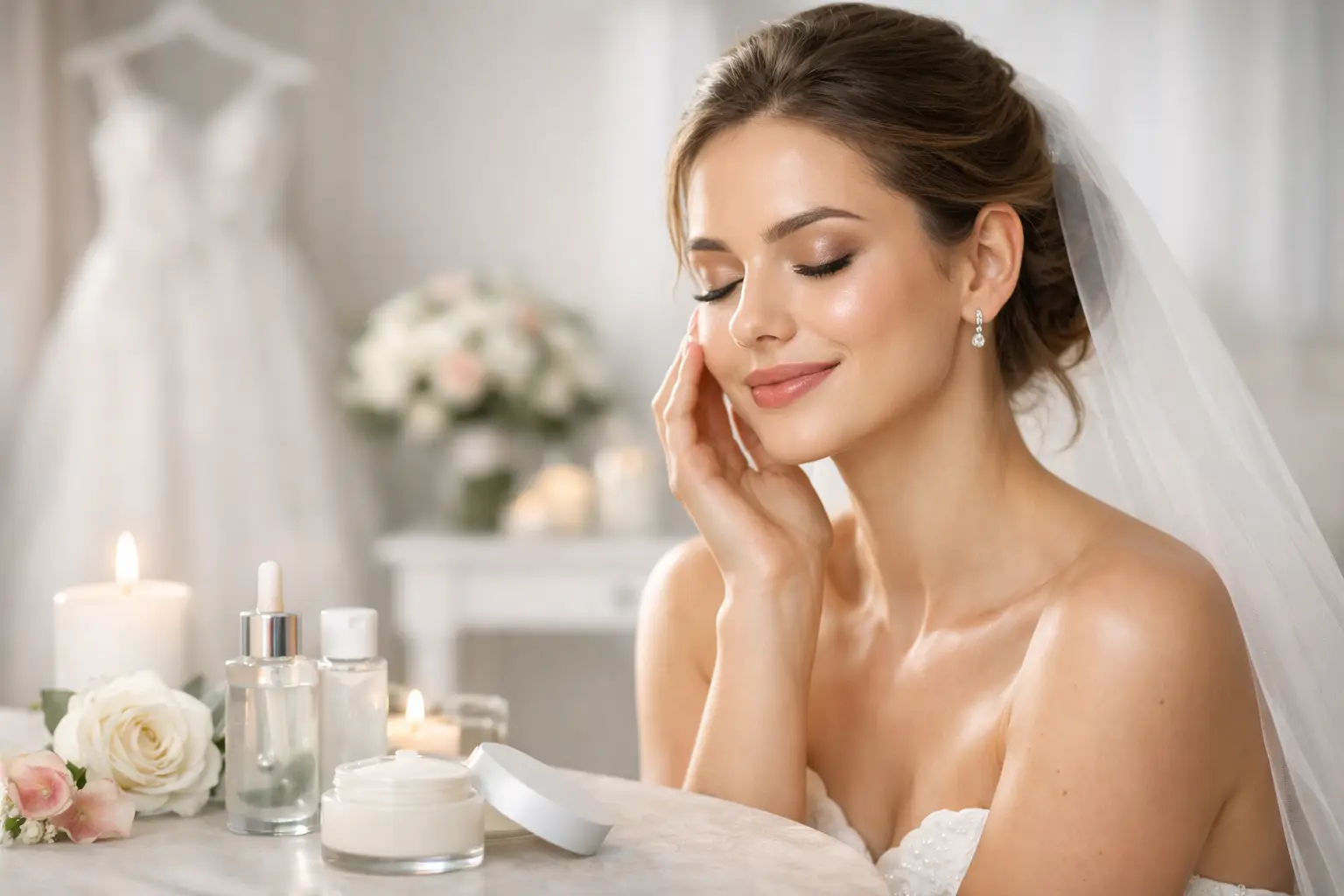
The most polished bridal makeup begins before the makeup chair. Bridal skin prep is not about pursuing a poreless, filtered version of your complexion. It is about creating skin that feels balanced, comfortable, and beautifully responsive under professional makeup – through ceremony light, flash photography, close-up video, and a long day of celebration.
For a bride wearing a couture gown, a red lehenga, a sleek civil-ceremony suit, or several looks across a multi-day celebration, the complexion should still feel like her own. The goal is luminosity with structure: hydrated enough to reflect light, refined enough for a clean finish, and stable enough to carry makeup without separating by the first dance.
Bridal Skin Prep Starts With Skin Stability
A wedding is the wrong occasion to experiment with aggressive treatments or a completely new routine. Skin often reacts slowly, and the effects of irritation can linger longer than expected. Redness, flaking, congestion, and sensitivity are difficult to conceal convincingly, particularly in high-resolution imagery.
The most elegant approach is consistent rather than dramatic. If you already have a dermatologist or esthetician whose work you trust, begin the conversation early. Share your wedding date, any events surrounding it, and whether you are planning makeup for a rehearsal dinner, sangeet, haldi, ceremony, or reception. A well-timed treatment plan respects both your skin and the visual demands of each occasion.
Skin stability matters especially for brides managing acne, rosacea, eczema, melasma, hyperpigmentation, or hormonal changes. There is no universal routine for these concerns. A product that gives one person glow can leave another inflamed. Professional guidance is preferable to a last-minute mix of trending acids, masks, and actives.
A Refined Timeline for Bridal Skin Prep
Three to six months before: establish the baseline
This is the window for assessment and consistency. Pay attention to what your skin does rather than what social media says it should do. Does foundation become dry around the mouth? Does your T-zone become shiny by midday? Are there recurring marks after breakouts? Is your complexion comfortable after cleansing, or does it feel tight?
A simple, reliable routine is often the strongest foundation: gentle cleansing, moisturizer appropriate to your skin type, daily broad-spectrum SPF, and targeted treatment only where it is needed. If you are considering facials, light-based services, peels, or other clinical treatments, this is the time to explore them with qualified providers. Schedule cautiously enough that your skin has time to recover and reveal its true response.
For brides with deeper complexions, treatment planning should be especially thoughtful. Post-inflammatory hyperpigmentation can follow irritation, even when the initial reaction seems minor. The aim is not to overcorrect. It is to protect an even, healthy-looking tone that can be enhanced with precision.
Six to eight weeks before: refine, do not reinvent
By this point, your routine should feel familiar. If a facial series has been working well, maintain it at a sensible cadence. If it has not, resist the temptation to escalate immediately. Great bridal beauty is built on judgment, not urgency.
This is also an ideal time for a makeup trial. A trial is more than a chance to select lip color. It gives your artist a clear view of your complexion, its texture, its level of hydration, and how it takes complexion products. It also creates space to discuss the finish you want: soft satin skin, refined matte, fresh luminosity, or a sculpted editorial glow.
Bring references, but let them be a starting point rather than a prescription. The same look can read very differently depending on skin tone, facial structure, lighting, attire, jewelry, and the level of coverage you enjoy wearing. For South Asian and multicultural bridal beauty, this conversation may also include the warmth of the outfit, the reflective quality of embellishment, traditional jewelry placement, and the rhythm of multiple events. Skin should complement the full visual story.
Two weeks before: protect the progress
The final two weeks are for preservation. Avoid introducing a new retinoid, strong exfoliant, facial oil, or overnight mask simply because it promises instant radiance. Avoid picking, too. A small blemish can be expertly corrected; an irritated area with broken skin is much more demanding.
Keep hydration steady, particularly if travel, tastings, fittings, or late nights have disrupted your usual schedule. Water alone is not a magic complexion solution, but regular hydration, nourishing meals, sleep where possible, and a familiar moisturizer can help your skin look more settled. If you are flying for a destination wedding, pack your known essentials in your carry-on. A change in climate does not require a complete change in routine.
The final 72 hours: calm is the luxury
The best wedding-week skin often looks rested, not overly treated. Choose gentle cleansing, dependable hydration, and SPF during the day. If you use a mask, make it one you have used successfully before. Keep hands away from the face and avoid anything that causes tingling, heat, or prolonged redness.
Consider the practical details as well. If you are waxing, threading, shaving, or dermaplaning, schedule it with enough buffer for your individual skin. Some brides look perfectly calm the next day; others need several days for sensitivity to settle. The correct timing depends on your history, not a generic calendar.
The Morning-of Canvas
On the wedding morning, skin preparation should feel considered rather than crowded. Arrive with a clean face and follow the guidance agreed upon with your artist. In many cases, that means skipping heavy creams, facial oils, or thick sunscreen immediately before makeup unless specifically requested. Too many layers can cause complexion products to slip, pill, or separate.
A professional artist adjusts prep according to what the skin needs that day. Dry areas may need targeted hydration, while areas prone to shine may need a lighter hand. This is why a one-size-fits-all “dewy skin” routine rarely delivers the same result in person as it does in a short video. Makeup that photographs exquisitely needs balance beneath it.
The desired finish also affects the preparation. A soft matte look can still have life and dimension when the skin is hydrated in the right places. A luminous look should not mean an overly emollient base that moves beneath foundation. For long celebrations, especially in warm weather or under dance-floor lighting, strategic prep is what allows radiance to remain polished.
What Your Artist Needs to Know
Clear communication makes the makeup experience more precise. Let your artist know about allergies, prescriptions that affect your skin, active breakouts, recent treatments, sensitivity around the eyes, or areas you prefer not to emphasize. Mention if you have had prior issues with flashback, oxidation, texture, or makeup wearing away around the nose and chin.
It is equally useful to share the conditions of the day: indoor or outdoor ceremony, season, travel plans, veil or dupatta placement, change of looks, and how much time you expect to spend in photography. A bride standing in bright Miami sun needs a different complexion strategy from one marrying in a candlelit Manhattan venue in winter. Both deserve skin that looks effortless, but the route there is not identical.
At BridalGal, skin prep is approached as part of the complete image – one that must hold its beauty across intimate moments, editorial portraits, movement, and celebration. That perspective allows makeup to look finished without looking fixed.
Let the Skin Look Like Skin
There is a difference between perfection and polish. Perfection asks skin to erase every trace of real life. Polish allows freckles, natural contours, and individual tone to remain while creating an even, intentional finish. In photographs, this often reads as more luxurious than a heavy, overly corrected complexion.
Your wedding beauty should feel aligned with your style, your traditions, and the way you want to remember the day. Give your skin time, avoid last-minute intensity, and let artistry build on a calm, well-cared-for canvas. The result is not simply makeup that lasts. It is a bridal presence that looks luminous from the first look to the final photograph.