


South Asian Bridal Hair Guide for a Couture Finish
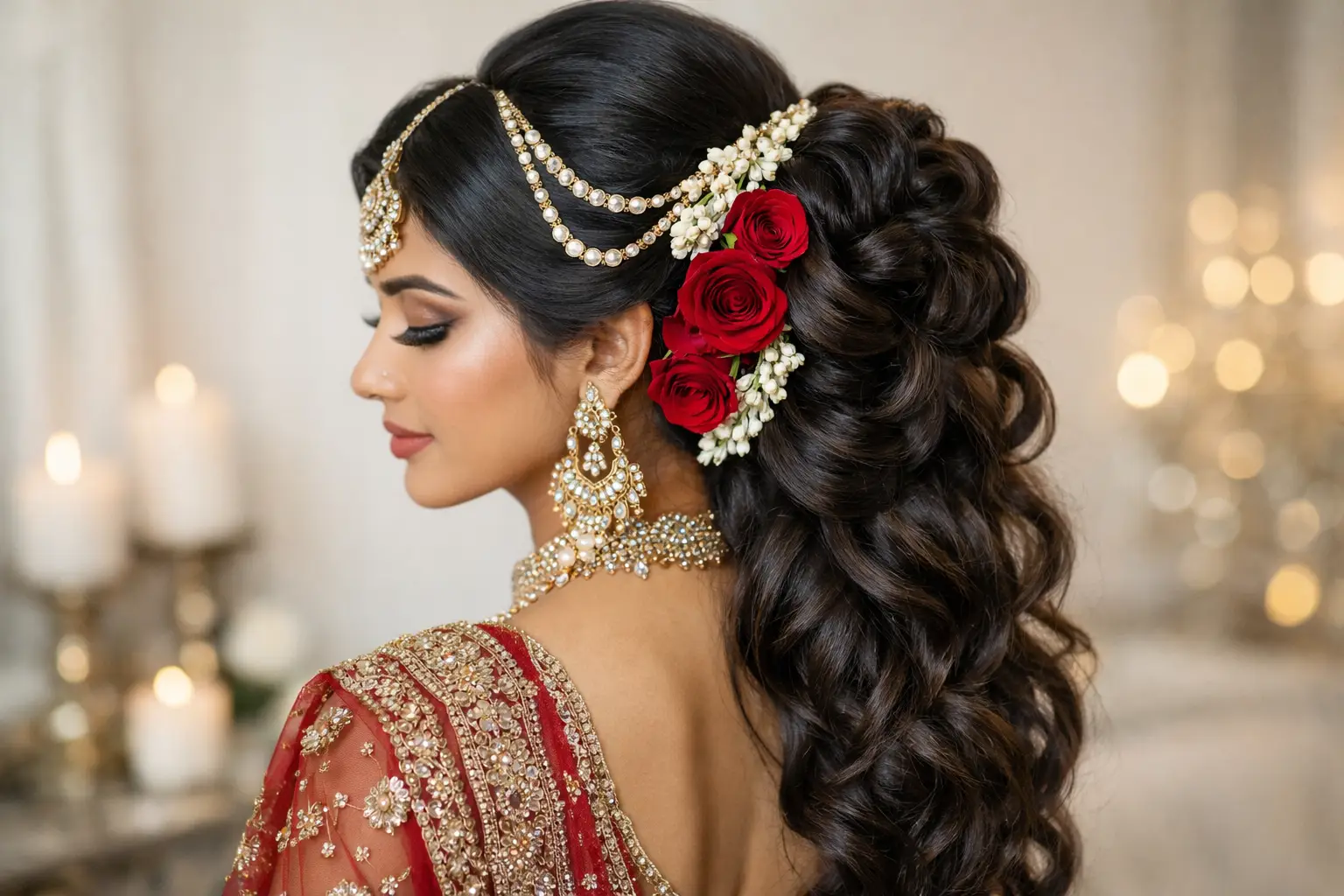
The most memorable South Asian bridal hair is never simply a hairstyle. It is the structure beneath a dupatta, the framing for heirloom jewelry, the silhouette seen across a mandap, ballroom, beach, or reception floor. This South Asian bridal hair guide begins with that larger picture: a look must feel personal and culturally considered while holding its shape through hours of ceremony, portraits, embraces, movement, and celebration.
A bridal style can be traditional, editorial, softly romantic, or sharply modern. The right choice is the one that supports the bride rather than competing with her outfit, jewelry, and natural features. For a multi-event wedding, it should also be designed with practical precision. The hair has to perform as beautifully at the end of the night as it does in the first close-up.
Start With the Bridal Silhouette
Before discussing curls, braids, or accessories, consider proportion. The neckline of the blouse, the weight of the lehenga or sari, the placement of the dupatta, and the scale of the earrings all influence the appropriate hairstyle. A heavily embellished high neckline may call for an elegant updo or a controlled low bun, allowing the craftsmanship of the garment to remain visible. A strapless or more minimal reception gown often creates room for Hollywood waves, a high ponytail, or a sculptural braid.
Face shape matters, but it should not dictate the entire decision. A skilled artist uses part placement, crown height, softness at the temples, and the direction of the hair around the cheekbones to create balance. A center part can be striking with a maang tikka or matha patti, while a softened side part may complement asymmetrical jewelry or a more fashion-forward reception look.
The scale of the venue is another useful consideration. In a grand setting, a style needs enough dimension to read from a distance and in wide photographs. For an intimate ceremony, refined texture and details around the face can carry more impact. What looks understated in person may disappear under professional lighting, so the finish should be planned for both the room and the camera.
South Asian Bridal Hair Guide: Ceremony Styles
For the wedding ceremony, the most successful styles tend to have a strong internal foundation with a graceful exterior. That may mean a low textured bun, a sleek center-parted chignon, a voluminous braid, or polished waves secured beneath a veil or dupatta. The visual effect can be soft, but the construction should be intentional.
The low bun with dupatta placement
A low bun remains a classic for good reason. It creates a clean profile, provides a secure anchor for a dupatta, and beautifully showcases earrings, necklaces, and the back detailing of a blouse. It can be smooth and sculpted for a formal Hindu ceremony, or gently textured with face-framing pieces for a more relaxed garden or destination setting.
The placement of the bun is critical. Too low, and it may interfere with the drape of the dupatta. Too high, and it can change the intended proportions of the profile. This is where an experienced trial is invaluable: the artist can test the exact placement with the anticipated dupatta style rather than making assumptions on the wedding day.
Braids with presence
A braid can carry remarkable drama, especially for brides who want their hair to be part of the visual storytelling. A full, elongated braid paired with fresh florals, gold accessories, pearl pins, or a traditional parandi has movement and ceremony in equal measure. It also offers an excellent canvas for regional details and family traditions.
The trade-off is weight. A heavily extended braid, particularly one built with added hair and adornment, must be comfortable at the scalp and supported correctly. The objective is not simply volume. It is a braid that remains balanced, photographs with definition, and does not pull uncomfortably as the day progresses.
Down styles and polished waves
Bridal waves can feel effortlessly glamorous, but they require more preparation than their softness suggests. For a ceremony look with hair down, the texture must withstand warmth, humidity, and the friction of a dupatta without collapsing. Extensions, when color-matched and placed well, can create the density needed for a luxurious wave pattern.
This approach works particularly well when the outfit has a more open neckline or when the bride wants a fashion-led contrast to traditional jewelry. It is less ideal if the dupatta will be anchored directly over the crown for an extended period, unless the style is carefully adapted. A half-up structure can provide the romance of loose hair with greater control and a stable attachment point.
Jewelry, Flowers, and Hair Accessories Need a Plan
South Asian bridal accessories are not an afterthought. A maang tikka needs a secure and discreet anchor at the part. A matha patti requires thoughtful placement so it sits elegantly against the hairline without shifting. Jhoomar placement should work with the part and the balance of the hairstyle, not sit as an isolated detail.
Fresh flowers introduce another layer of beauty and logistics. Gajra around a bun offers fragrance and tradition, while roses, orchids, jasmine, or small buds woven through a braid can create a more expansive effect. Yet flowers have weight, and delicate blooms respond differently to heat, moisture, and time. Select florals that suit the climate and schedule, especially for outdoor ceremonies or destination celebrations.
Bring every intended accessory to the hair trial when possible. A photo of the jewelry is helpful, but it cannot reveal its actual weight, clasp, shape, or how it catches in the hair. The same is true of a dupatta border. These details determine where the hair needs reinforcement.
Build the Style Around the Full Wedding Schedule
Many South Asian weddings involve several looks across more than one day: mehndi, sangeet, wedding ceremony, reception, and sometimes a separate civil celebration. Each event has a different energy, and the hair should reflect it without becoming repetitive.
For mehndi, a softer braid, half-up style, or elevated ponytail can feel festive and allow for ease during the event. A sangeet often welcomes more movement and glamour – a high ponytail, waves, or a statement braid can hold its own on a dance floor. The ceremony may call for greater structure and tradition, while the reception is an opportunity for a sharper silhouette, high-shine bun, or cinematic waves.
There is also a practical advantage to designing the sequence in advance. If the bride plans a same-day transformation, the ceremony hairstyle should be built so it can be adjusted efficiently rather than entirely dismantled. A low bun might release into textured waves, or a half-up look can become a more dramatic ponytail. The feasibility depends on timing, hair type, extensions, and whether the dupatta has altered the original set.
The Trial Is Where Luxury Becomes Specific
A trial is not merely an opportunity to choose between two reference images. It is a working session where inspiration is translated for your hair density, texture, color, accessories, wardrobe, and event schedule. Reference images are useful, but they should be treated as a visual direction, not a promise that every style will behave identically on every head of hair.
Arrive with images of each outfit, jewelry, dupatta draping, and veil if applicable. Share whether you wear extensions, have a sensitive scalp, use keratin treatments, or plan a color appointment before the wedding. Be candid about how you normally wear your hair and how long you are comfortable sitting with pins or added weight. A beautiful bridal look should feel secure, not punishing.
At BridalGal, that conversation is approached as part of the artistry. The finished look must belong to the bride, honor the cultural context of the celebration, and meet the visual standards of professional photography and film.
Prepare Hair for Hold, Not Just Shine
Freshly washed hair is not always the best canvas for every bridal style. Very silky, freshly conditioned hair may resist pins and lose texture more quickly, while overly dry or product-heavy hair can make a smooth finish difficult. Follow your artist’s preparation guidance, particularly if extensions or a detailed updo are planned.
Avoid introducing an unfamiliar treatment immediately before the wedding. A new gloss, deep-conditioning mask, smoothing service, or cut can change how the hair responds. If a trim or color refresh is needed, schedule it with enough time for the result to settle naturally.
On the wedding day, protect the hair appointment from unnecessary interruptions. Hair often comes first because it establishes the architecture for the complete look, especially when veils, dupattas, or complex accessories are involved. Give the process the time it deserves. Rushing a style with this much responsibility is rarely worth the stress it creates.
The final measure is simple: when you turn your head, lower your veil, greet your family, and step into the light, your hair should still feel like you – only more composed, more luminous, and ready to be remembered.