


Wedding Hairstyles That Hold Their Presence
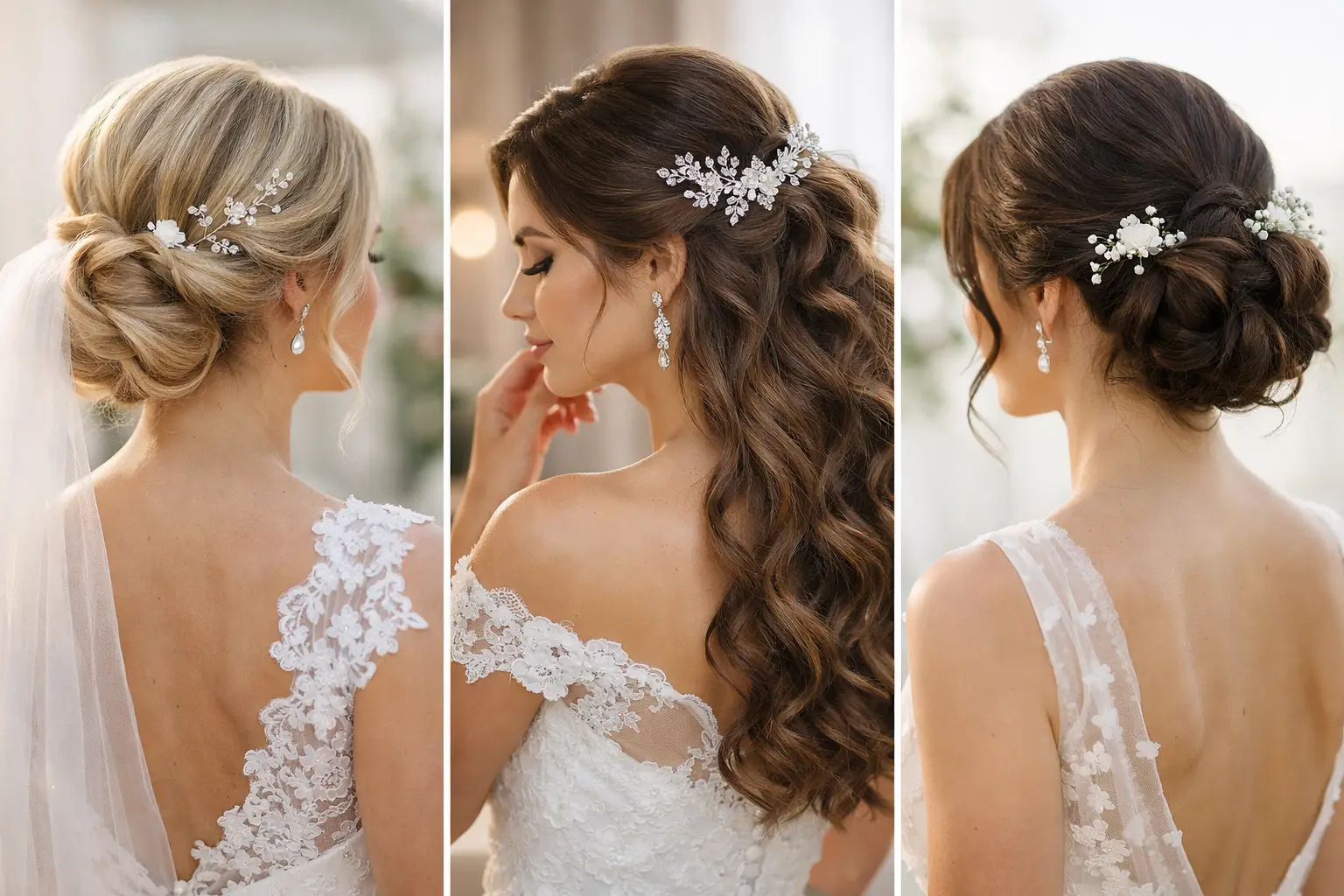
A wedding hairstyle is not simply the finishing touch to a gown. It frames the face in every portrait, establishes the line of the bridal look, and must remain composed through embraces, changing light, ceremony rituals, and a full dance floor. The most compelling wedding hairstyles feel effortless in the moment, yet are engineered with the precision required for high-resolution photography and long celebrations.
For a bride with a clear point of view, the question is rarely whether to wear hair up or down. It is how the hair should move, where it should hold, what it should reveal, and how it will relate to the gown, jewelry, veil, and cultural details that make the look distinctly hers.
Wedding Hairstyles Start With the Whole Look
A hairstyle should be considered in the same conversation as the gown. A high neckline, sculptural shoulder, or intricate back may call for an updo that preserves the garment’s architecture. A silk slip dress or softly draped veil can invite polished waves with more fluidity. Neither choice is inherently more formal. The right decision is the one that creates balance.
The scale of the celebration matters, too. A candlelit dinner in Manhattan allows for a different degree of softness than a waterfront ceremony in Florida or a destination wedding where heat, wind, and travel are part of the design brief. Hair needs to honor the setting without becoming overly controlled. A look can retain movement and still be built to last.
Facial structure and personal style belong in this conversation, but they should never be reduced to a formula. A center part can feel modern and graphic, while a side part may create a more classic, cinematic line. A low chignon can be clean and architectural or romantic and textured depending on placement, finish, and the strands deliberately left near the face. The distinction lives in the details.
The Shapes That Photograph With Intention
The strongest bridal hair silhouettes have a point of view from every angle. The front matters during the ceremony and close portraits. The profile matters during the processional. The back matters when the gown, veil, or hair accessory becomes visible in editorial-style images.
Polished Waves With Controlled Movement
Refined waves remain a natural choice for brides who want hair to feel glamorous without appearing rigid. The most enduring version is not a uniform curl pattern. It has a considered bend, shine in the right places, and enough structure at the root to prevent the style from falling flat by the first round of portraits.
This option works beautifully with strapless gowns, clean necklines, and statement earrings. It can also complement a dramatic veil, provided the veil placement does not compress the wave pattern. For humid weather or very fine hair, waves require more preparation and may be best reserved for a ceremony-forward schedule with a planned style change later in the evening.
The Low Bun as Couture Structure
A low bun is among the most versatile wedding hairstyles because it can move between minimal, romantic, and highly ornate. Sleek versions pair naturally with sharp tailoring, modern satin, and bold jewelry. A softer bun, built with dimensional texture, can support lace, embroidery, or a more ethereal gown without feeling overly sweet.
Its strength is practical as well as visual. It gives the neck and shoulders clarity, creates a stable foundation for a veil, and can accommodate accessories with confidence. The placement should be determined by the gown’s back and the bride’s posture. Too low, and it may disappear in photographs. Too high, and it can interrupt the intended line of the neckline.
Half-Up Hair With a Purpose
Half-up styling is often requested for its softness, but its success depends on proportion. The secured section needs enough intentional structure to keep the crown lifted and the face open. The remaining hair should have a finish that looks luxurious from a distance as well as close up.
This approach suits brides who feel most like themselves with their hair down but want the security of a more composed silhouette. It is particularly elegant with delicate hair vines, pearls, or a veil positioned beneath the secured section. The trade-off is that loose lengths remain more exposed to weather, friction, and movement than an updo.
Braids, Texture, and Ornament
Braids can be subtle, sculptural, or ceremonial. A fine braid woven into an updo can add dimension without reading as bohemian. A more visible braid may become the defining line of the hairstyle, especially when paired with fresh flowers, jeweled pieces, or heritage adornment.
For South Asian and multicultural celebrations, hair artistry requires both visual sensitivity and technical planning. A bridal style may need to support a dupatta, tikka, passa, floral gajra, veil, or more than one change of attire. These elements are not afterthoughts. Their weight, placement, and cultural significance should inform the foundation of the hairstyle from the beginning. The result should feel contemporary and polished while honoring the traditions the bride chooses to carry.
Longevity Is a Design Decision
The most beautiful reference image has limited value if it does not account for the actual day. Hair density, texture, length, extensions, climate, and the timing of the ceremony all affect what is realistic. A soft updo can hold for hours, but it may need strategic pinning beneath its surface. Glossy waves can appear touchable, but they need the correct product balance to avoid separating under lights or becoming heavy in humidity.
This is where production experience makes a visible difference. Bridal hair has to perform in still photography, video, and in-person conversation. Flash can reveal excess product. Wind can expose weak structure. A close-up camera can make an unconsidered parting or accessory placement feel more obvious than it did in the mirror.
An artist should build for those realities without taking away the bride’s ease. The goal is not hair that looks sprayed into place. It is hair that retains its shape, dimensionality, and presence as the day becomes more lived-in.
The Trial Is Where the Look Becomes Personal
A bridal hair trial is not an appointment to copy an image. It is the place to test the visual language of the wedding. Bring photographs of the gown, veil, jewelry, and any hair accessories, along with references that identify what you respond to. One image may offer the right texture, another the desired volume, and another the placement that feels most flattering.
Be direct about what you do not want as well. If you dislike a tight crown, overly loose pieces, visible pins, or an aggressively sculpted finish, that information is useful. Luxury beauty is not about imposing a signature style on every bride. It is about translating a bride’s taste into a look that reads beautifully in her particular setting.
A thoughtful trial also reveals practical needs. If you are wearing extensions, they should be considered in advance so color, texture, and placement feel integrated. If the ceremony includes a veil removal, second look, or multiple wardrobe changes, the style can be designed to transition gracefully instead of being rebuilt under pressure.
Choosing a Style That Still Feels Like You
A wedding is one of the few occasions when a bride may be photographed from morning through midnight. That can create pressure to choose a look that feels more dramatic than her usual style. There is room for transformation, certainly, but the most memorable bridal beauty preserves recognition. You should look elevated, not unfamiliar.
Consider what you instinctively do with your hair on an excellent evening out. Do you tuck it behind one ear? Prefer a clean middle part? Feel more confident when your neck is exposed? Those instincts are useful starting points. A skilled artist can heighten them into something ceremonial, camera-ready, and enduring.
At BridalGal, this is approached as image-making with a personal center: couture-informed hair artistry shaped for the gown, the rituals, the room, and the photographs that will outlast the evening. Choose the hairstyle that lets you move through all of it with composure, then let it become part of the memory rather than something you have to manage.