


Multicultural Wedding Beauty, Styled With Intention
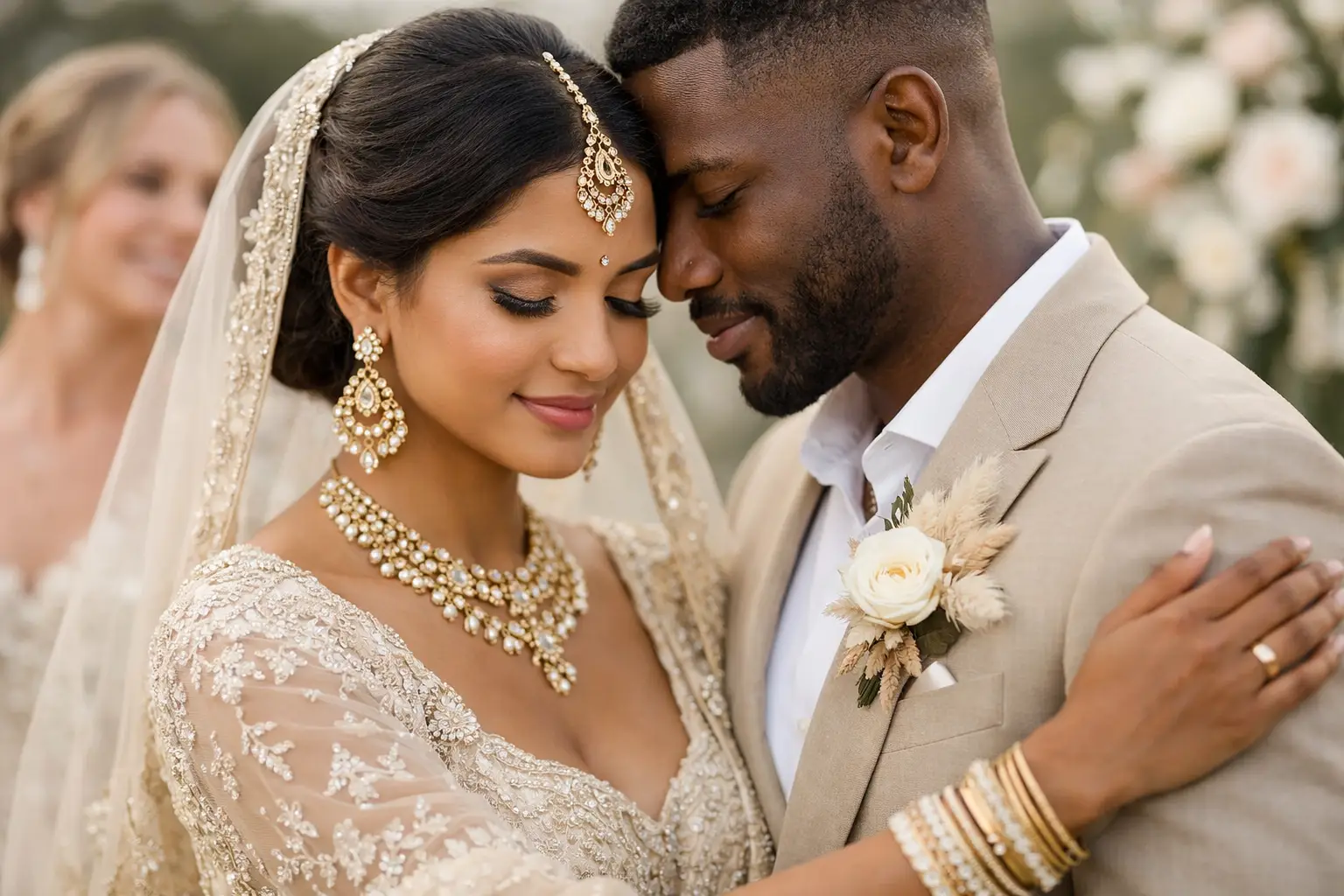
A bridal look can change three times before dinner, and each version may carry its own meaning. A silk sari, a cathedral veil, a qipao, a henna ceremony, a second gown, a family portrait taken before the procession – multicultural wedding beauty must honor all of it without making the bride feel costumed or divided between identities.
The most compelling work begins with a simple premise: heritage is not a theme. It is lived experience, family history, personal taste, and often a collection of traditions meeting in one room. Beauty artistry should give those details clarity, polish, and presence – especially when the day will be seen close-up by loved ones and preserved through photography, film, and video.
Multicultural Wedding Beauty Is a Study in Context
A multicultural celebration is not automatically defined by two cultures. It may involve one bride bringing together regional traditions, a couple building a ceremony that reflects multiple faiths, or a modern wedding weekend that shifts from a formal religious event to a fashion-forward reception. The artistry must respond to the actual rhythm of the celebration rather than relying on a generic idea of “ethnic” bridal beauty.
That distinction matters. A bold red lip can be extraordinary for one ceremony and feel disconnected from another. Full, sculpted glam can complement the weight and grandeur of a lehenga, while a softer luminous finish may better suit a civil ceremony, a garden reception, or a bride who wants her skin to remain the focal point. There is no hierarchy between understated and dramatic. The right choice is the one that feels intentional in the setting, under the clothing, and on the woman wearing it.
Cultural fluency also means understanding that certain details have significance beyond aesthetics. A maang tikka needs to sit correctly at the hairline. Dupatta placement must feel secure and photograph beautifully from every angle. Jewelry, florals, head coverings, and ceremonial accessories all affect the silhouette. Hair and makeup are not separate from the look. They are part of its architecture.
The Bridal Look Must Move Between Moments
Luxury weddings rarely happen in a single visual environment. A bride may begin in a hotel suite with window light, walk into a ceremony beneath strong midday sun, step into a candlelit ballroom, and finish the evening on a dance floor under production lighting. For destination events, heat, humidity, wind, and travel add another layer of consideration.
This is where production experience becomes essential. A polished complexion is not simply about coverage. It is about choosing textures that hold their finish through embraces, happy tears, flash photography, and hours of celebration without becoming flat or mask-like. Strategic complexion work, balanced skin preparation, and intelligent layering create the kind of refinement that remains fresh in person and dimensional on camera.
The same is true of hair. A style should be evaluated not only from the front, but in profile, from the back, in motion, and beside the neckline of the gown or blouse. A sleek low bun may frame dramatic earrings and a high collar with precision. Glossy waves can bring softness to a structured gown. A textured updo can support a veil, crown, or dupatta while still looking modern in editorial portraits. Longevity matters, but movement matters too. Hair that never moves can look overly rigid; hair with no structure can lose its shape before the reception begins.
Trial Appointments Are Where the Story Takes Shape
A thoughtful trial is not a rehearsal for a single makeup application. It is a design conversation. The most useful starting points are the wardrobe, ceremony schedule, jewelry, venue, reference images, and the bride’s everyday relationship with beauty. A bride who rarely wears foundation may still want a high-glam reception look, but the transition should feel considered rather than unfamiliar.
Reference images are valuable when they communicate mood, finish, and proportion. They are less useful as an exact blueprint. The same eye shape, skin tone, lash density, or lighting condition rarely appears twice. An accomplished artist translates the feeling of an image to suit the bride’s own features, not the other way around.
The trial also creates space to test decisions that are difficult to make on the wedding morning: whether a bold eye or a statement lip should lead, how much contour reads beautifully in photos without looking heavy at close range, and whether hair needs extra support for accessories or weather. For brides wearing multiple looks, it is the moment to map transitions so the final change feels effortless to guests.
Honor Tradition Without Freezing It in Time
There is a persistent misconception that culturally specific bridal beauty must look traditional in only one prescribed way. In reality, modern brides often want to reference heritage while bringing their own point of view to the celebration. That may mean classic bridal eyes paired with fresh skin, a traditional red lip with a contemporary brushed brow, or jewelry and textiles that lead the palette while makeup remains restrained.
The balance depends on the bride, the occasion, and the garment. Ornate embroidery, rich color, and heirloom jewelry can support a quieter beauty direction. Conversely, a minimalist gown may invite a more sculptural eye, a polished chignon, or a vivid lip. Neither approach diminishes culture. When the proportions are right, the full look feels composed.
For South Asian bridal beauty in particular, makeup must hold its own beside saturated fabrics, elaborate jewelry, and the visual energy of a larger celebration. That does not always require the heaviest possible application. It requires depth where the camera needs it, skin tones that remain true under varied lighting, and detail work precise enough to look impeccable in close portraiture. The goal is richness, not excess.
Why Inclusive Artistry Is Technical, Not Just Personal
Every artist should be able to work across skin tones, hair textures, facial structures, and cultural styling needs. Yet genuine inclusion involves more than carrying a wide foundation range or knowing a few reference points. It is a technical discipline: understanding undertones, preventing flashback, selecting pigments that retain their intended color, working with different hair densities and curl patterns, and adapting placement to individual features.
It also requires listening without assumptions. Not every South Asian bride wants a conventional South Asian bridal look. Not every bride wearing a veil wants soft romance. Not every couple wants their traditions blended into one visual language. Sometimes the most elegant choice is to let each event stand distinctly on its own.
For a wedding with multiple ceremonies, consistency can still unite the weekend. The artist may repeat a skin finish, signature brow shape, or preferred hair texture while evolving the color story and intensity for each outfit. The result is a series of looks that feel connected, rather than a collection of unrelated transformations.
Choose Artistry That Understands the Full Frame
The best bridal beauty is experienced at intimate distance and at the scale of a room. It should complement the bride’s natural presence during a quiet first look, then remain striking in wide ceremony images and reception film. This is why couture sensibility and camera knowledge belong in the same conversation as wedding expertise.
At BridalGal, that perspective is shaped by work across bridal, fashion, photography, and visual production. The approach is not to impose a signature look on every client, but to create a finish that is tailored, elevated, and durable enough for the full life of the event.
When selecting a hair and makeup artist, ask how they approach your specific schedule, wardrobe changes, cultural accessories, and visual priorities. Look closely at whether their portfolio shows range as well as polish. A beautiful image is promising; a body of work that respects different faces, fabrics, ceremonies, and lighting conditions is far more revealing.
Your wedding beauty should not ask you to choose between tradition and modernity, softness and glamour, or personal comfort and photographic impact. Give your artist the details that matter most, then allow the look to be built around the version of you who is ready to be seen, celebrated, and remembered.