


Modern South Asian Beauty Trends for Brides
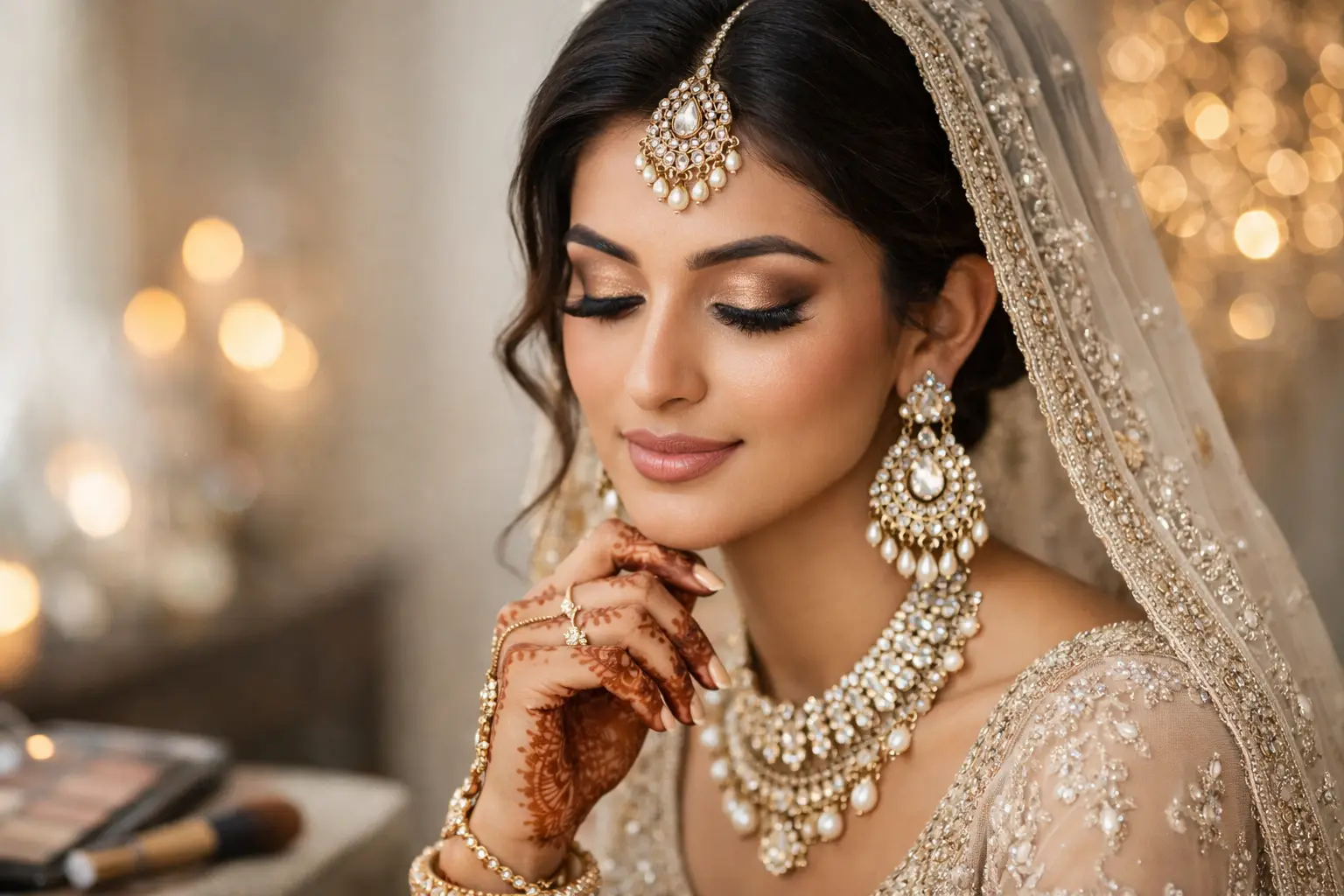
A South Asian bridal look is never simply makeup and hair. It is part of the visual language of the celebration: the embroidery catching candlelight, the jewelry framing the face, the ceremony’s colors, the family photographs that will live for generations. Modern South Asian beauty trends honor that richness while making room for a more personal, fashion-aware point of view.
The most compelling looks are not about stripping tradition away in favor of minimalism. They are about editing with intention. A bride may choose a softly luminous complexion instead of a fully matte base, a sculpted bun beneath her dupatta rather than a heavily ornamented updo, or a defined eye paired with a nuanced neutral lip. The effect is polished, dimensional, and unmistakably bridal without feeling fixed in time.
Modern South Asian Beauty Trends: Dimension Over Excess
The modern bridal shift is toward dimension. Complexion is perfected but allowed to retain the appearance of skin. Cheeks have warmth and lift. Highlight is placed with restraint, so it reads as radiance in photographs rather than reflective texture under flash. This is especially relevant for multi-event celebrations, where makeup must remain elegant through ceremony lighting, portrait sessions, dancing, and close-up video.
The best complexion choices depend on skin type, climate, wardrobe, and the finish of the jewelry. A bride wearing high-shine kundan or polki may want a more velvet complexion so the face and accessories do not compete. For a daytime garden event or a coastal Florida celebration, a satin finish can feel fresh and refined, provided the skin is carefully prepared and strategically set.
Color matching remains nonnegotiable. South Asian skin tones hold remarkable variation in depth and undertone, and a beautiful finish is built on accurate foundation selection, considered correction, and bronzing that adds life rather than turning the complexion orange or gray. Luxury beauty is often most visible in what does not announce itself: a seamless hairline, an even décolletage, and skin that looks flawless at every distance.
The Return of the Softly Sculpted Eye
The bridal eye is still a focal point, but the current interpretation is more tailored than a uniform sweep of glitter. Diffused espresso, plum, bronze, antique gold, and deep olive create depth with greater sophistication than stark black alone. A soft wing, smoked lash line, or elongated outer corner can shape the eye beautifully while preserving the bride’s own features.
Lashes are becoming more customized as well. Rather than relying on one dramatic strip style, artists are mixing lengths and density to create lift, definition, or a more editorial silhouette. The choice is practical as much as aesthetic. A heavier lash can be exquisite for an evening reception or couture portrait, while a lighter, wispy design may feel more comfortable for a bride who wants to recognize herself throughout a long wedding day.
There is also renewed appreciation for kajal and kohl, used with precision. Tightlined along the upper lash line, softly smoked beneath the eye, or concentrated at the outer corners, it can reference tradition without dictating a single kind of look. The key is placement. On camera, a deliberate veil of depth reads far more beautifully than a line that has migrated after an emotional ceremony.
A Lip Color With Presence
The modern South Asian bridal lip is not automatically nude, and it is not automatically red. It is chosen in conversation with the complete look. Rosewood, berry brown, warm pink, terracotta, muted brick, and rich wine are all appearing in bridal beauty because they provide presence without forcing the entire face into one familiar formula.
For a bride in a red lehenga, a softly blurred brick lip can create an elegant tonal story. With ivory, blush, or pale gold, a rosy neutral may give the face balance while keeping the eyes expressive. A bold red remains timeless, particularly for a ceremony or formal portrait, but its undertone matters. Blue-red, orange-red, and brown-red each carry a different energy against the skin and garments.
Longevity matters here. Bridal touch-ups should preserve shape and color, not require a full reset after every greeting, meal, or kiss. A carefully layered lip with a comfortable finish is often more effective than an overly dry matte formula, especially across a celebration that extends late into the evening.
Hair That Supports the Silhouette
Hair is moving away from rigidity and toward controlled movement. This does not mean casual hair. It means a style with intentional softness: a sleek low bun with a gentle curve at the nape, glossy waves with a clean side part, or a structured half-up style that lets the length remain visible beneath a dupatta.
The choice should begin with the bridal silhouette. A high-neck blouse, statement earrings, and layered necklaces may call for hair swept away from the face. A minimalist gown or lighter ceremony outfit can support cascading waves or a fashion-forward ponytail. For multiple looks, the ability to transition is valuable. Hair that begins in a polished bun can be released into textured waves for the reception, creating a distinct second moment without requiring an entirely new design.
Traditional adornment remains central, but placement is becoming more considered. Fresh flowers, hair jewels, passa, matha patti, or a finely placed tikka should frame the face and work with the style’s architecture. More is not always more. One exceptional element, secured beautifully, can have greater impact than competing accessories.
Tradition Is Not a Trend Forecast
South Asian beauty is not one aesthetic, one region, or one bridal ritual. Pakistani, Indian, Bangladeshi, Sri Lankan, Nepali, and diasporic traditions each carry distinct references, and individual families may have their own expectations around color, jewelry, hair adornment, or ceremony attire. A modern approach begins with listening rather than applying a generic idea of “South Asian bridal.”
This is where a consultation has real value. A bride may want a contemporary editorial finish while retaining the significance of a red bridal outfit, a family heirloom, or a specific ceremonial detail. Another may be blending two cultural traditions and need beauty that feels cohesive across both. The artist’s role is to translate those choices into a look that feels elevated, respectful, and entirely her own.
For destination weddings, practical considerations become part of that translation. New York winter can affect skin texture differently than Florida humidity; a coastal ceremony requires a different strategy than an indoor ballroom reception. Makeup must withstand heat, tears, flash photography, and high-definition video, while hair must hold its shape without looking lacquered.
Couture Influence, Personal Finish
Fashion’s influence is clear in the renewed interest in monochromatic color stories, high-shine healthy hair, softly contoured cheeks, and unexpected accents of color. Yet bridal beauty is not a runway replica. A look can have editorial clarity and still feel warm, romantic, and wearable at close range.
That distinction matters for brides who want photographs with a couture sensibility but do not want to feel transformed into someone else. The most successful result is specific: the eyes are enhanced for her eye shape, the complexion reflects her preferred level of coverage, and the hairstyle respects how she normally carries herself. At BridalGal, that balance is treated as visual craftsmanship, from the first portrait to the final dance.
As you consider modern South Asian beauty trends, begin with the details that already matter to you: the color of your outfit, the weight of your jewelry, the feeling you want when you see yourself in the mirror. A refined bridal look should not compete with those choices. It should bring them into focus.