


Traditional Versus Western Bridal Makeup
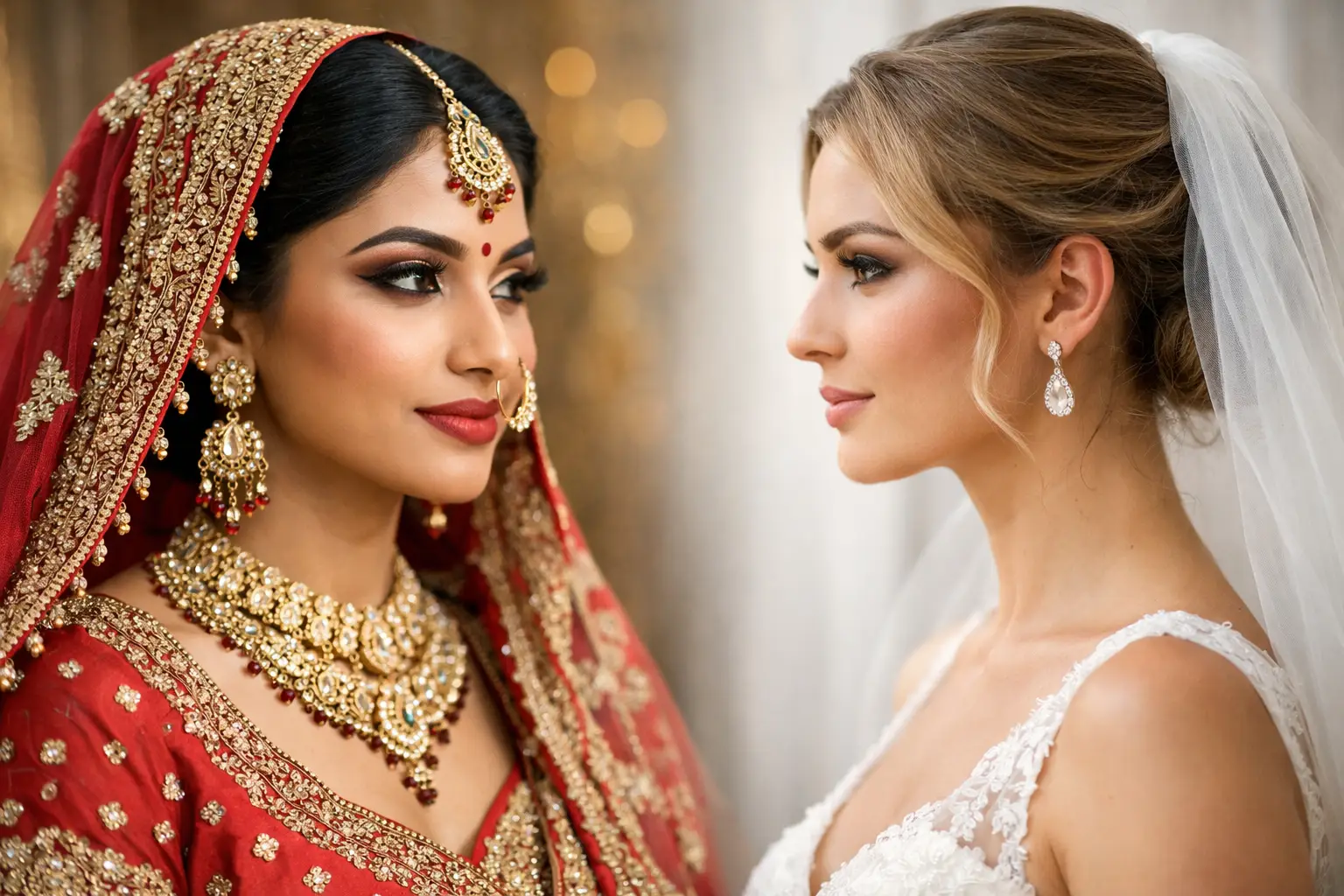
A bridal look can carry family history, religious symbolism, fashion instinct, and the demands of a twelve-hour celebration all at once. The conversation around traditional versus western bridal makeup is not about choosing one standard of beauty over another. It is about deciding what should lead: ceremony, culture, personal style, or a carefully composed balance of all three.
For multicultural brides in particular, makeup is often asked to do more than look beautiful. It must honor the visual language of a ceremony while feeling current in photographs, elegant in motion, and unmistakably personal when the bride sees herself.
Traditional Versus Western Bridal Makeup: The Real Difference
Traditional bridal makeup is rooted in the customs of a specific community, region, or faith. Its defining qualities may include a particular color story, a ceremonial bindi, expressive kohl-lined eyes, richly defined lips, or a complexion finish designed to complement heirloom jewelry and formal bridal attire. In South Asian bridal beauty, for example, the look is often intentionally luminous and detailed, with enough depth in the eyes and complexion to hold its presence beside intricate embroidery, gold jewelry, and saturated textiles.
Western bridal makeup is less a single tradition than a contemporary bridal category. It often favors skin that appears fresh and refined, softly sculpted features, neutral or rose-toned palettes, individual lashes, and a lip color chosen for ease of wear. The goal is commonly described as natural, but a professional bridal interpretation of natural is still highly considered. It requires strategic correction, structure, layering, and light-aware placement so the face remains polished from a close embrace to a high-resolution portrait.
Neither approach is inherently more dramatic or more understated. A traditional look can be softly romantic; a western look can be sharply editorial. The distinction lies in the visual references and ceremonial role behind the choices.
When Tradition Leads the Beauty Direction
A traditional bridal look begins with listening. Before selecting a foundation or eye shape, an artist should understand the wedding events, garments, jewelry, family expectations, and the bride’s own relationship to the tradition. A look for a mehndi, sangeet, nikah, Hindu ceremony, church service, tea ceremony, or reception may call for different levels of definition and different styling decisions.
Color is often meaningful. Red, maroon, berry, gold, and warm bronze can bring clarity and richness to traditional South Asian bridal dressing, while a softer palette may be right for a bride wearing ivory, blush, or pastel embroidery. These are not fixed rules. A modern bride may want a cool-toned eye with her red lehenga, a muted lip with statement jewelry, or a clean complexion that lets a dramatic veil and ceremonial adornment take focus.
The artistry is in creating enough presence without allowing the makeup to compete with the bride herself. Dense lashes, liner, contour, and lip color need precision, especially when a bride will be photographed under daylight, ballroom lighting, flash, and video lighting in the same day. Makeup that feels exquisite at the mandap but disappears in reception images has not fully done its job.
Detail is part of the composition
Traditional beauty frequently involves details that need technical planning. A bindi or forehead adornment should sit in harmony with the brows and hairline. Eye makeup should remain visible without being crowded by lashes or glasses. Complexion products must wear comfortably beneath heat, movement, and affectionate greetings. The base also needs to complement the neck, décolletage, and any areas revealed by the blouse or gown.
For brides wearing substantial jewelry, makeup benefits from deliberate scale. A softly defined face may be the most sophisticated choice when the jewelry is maximal. Conversely, a sleek gown or minimal styling can support a stronger eye or more sculpted complexion. Luxury is not always about adding more. It is about knowing where visual emphasis belongs.
The Western Bridal Aesthetic and Its Appeal
The modern western bridal look is often designed around polish that does not announce every product used to create it. The complexion may have a satin finish, with targeted luminosity rather than obvious shine. Brows are groomed and lifted, eyes are softly dimensional, and lips are shaped in tones that feel harmonious rather than distracting.
This approach is ideal for brides who want their wedding beauty to feel timeless, particularly when the dress, venue, or photography direction is clean and fashion-led. It also suits clients who rarely wear substantial makeup and want to recognize themselves without sacrificing the refinement required for professional photography.
Yet the word natural can create confusion. A barely-there application may look lovely in person but can read flat under a camera. A bridal artist builds dimension in subtle layers: correction where needed, strategic contour, carefully blended shadow, and a finish that avoids excessive reflection. The result should appear effortless, even though it is built with considerable intention.
Soft does not mean unfinished
A western-inspired look still needs longevity. Tears, humidity, kisses, dancing, and extended wear affect every face differently. Cream products may create a beautiful skin finish, but they need the right setting technique. A nude lip may feel modern, but it must be chosen carefully so it does not disappear against the bride’s complexion. Soft lashes can open the eyes, but their length and density should be tailored to the eye shape rather than selected from a trend.
The most compelling version of this aesthetic has structure beneath its softness. It is graceful in daylight, elegant in candlelight, and refined in close-up images.
The Modern Bride Does Not Have to Choose
Many of the most memorable wedding looks sit between categories. A bride might wear traditional attire and request a luminous, fashion-forward complexion with muted lips. Another may choose a western gown for the ceremony, then change into a lehenga and deepen the eye makeup for the reception. A bride may want classic Hollywood liner for a cultural celebration, or a delicate wash of color for a formal western ceremony.
This is where cultural fluency becomes essential. Fusion should not reduce a tradition to an accessory or apply a generic “ethnic” look to every bride. It should be built from specifics: the garment’s color and craftsmanship, the jewelry’s warmth or coolness, the bride’s features, her comfort level, and what the rituals mean to her.
A trial appointment is the right setting for this conversation. Rather than arriving with one reference image and trying to reproduce it exactly, bring images that reveal what you are drawn to: the skin finish, brow shape, liner placement, lip depth, or overall mood. Also bring photographs of your outfit and jewelry when possible. The final direction becomes more cohesive when every element is considered together.
Makeup That Performs Beyond the Mirror
Bridal makeup is viewed at multiple distances and through multiple lenses. Guests see the bride across the room. A photographer captures stillness and detail. Video records expression, movement, and changing light. The makeup must translate across all of them without becoming heavy or mask-like.
This is especially relevant for destination weddings and multi-event celebrations. Climate can shift the behavior of the skin, while different venues can change the perception of color. Miami humidity, a sunlit New York rooftop, and an evening ballroom each ask something different of the complexion. A professional application adapts product texture, prep, setting, and color intensity to the setting rather than relying on one formula.
At BridalGal, this balance is approached as visual craftsmanship: a look should feel elevated in person, photograph with clarity, and hold its composure through the pace of the day. Whether the reference point is ceremonial glamour, modern bridal softness, or couture-inspired restraint, the work begins with the woman wearing it.
Choose the makeup direction that makes you feel most present in your own celebration. The strongest bridal look does not simply match a trend or a tradition. It gives both your reflection and your memories the same feeling of recognition.