


Bridal Updos That Hold Their Poise All Day
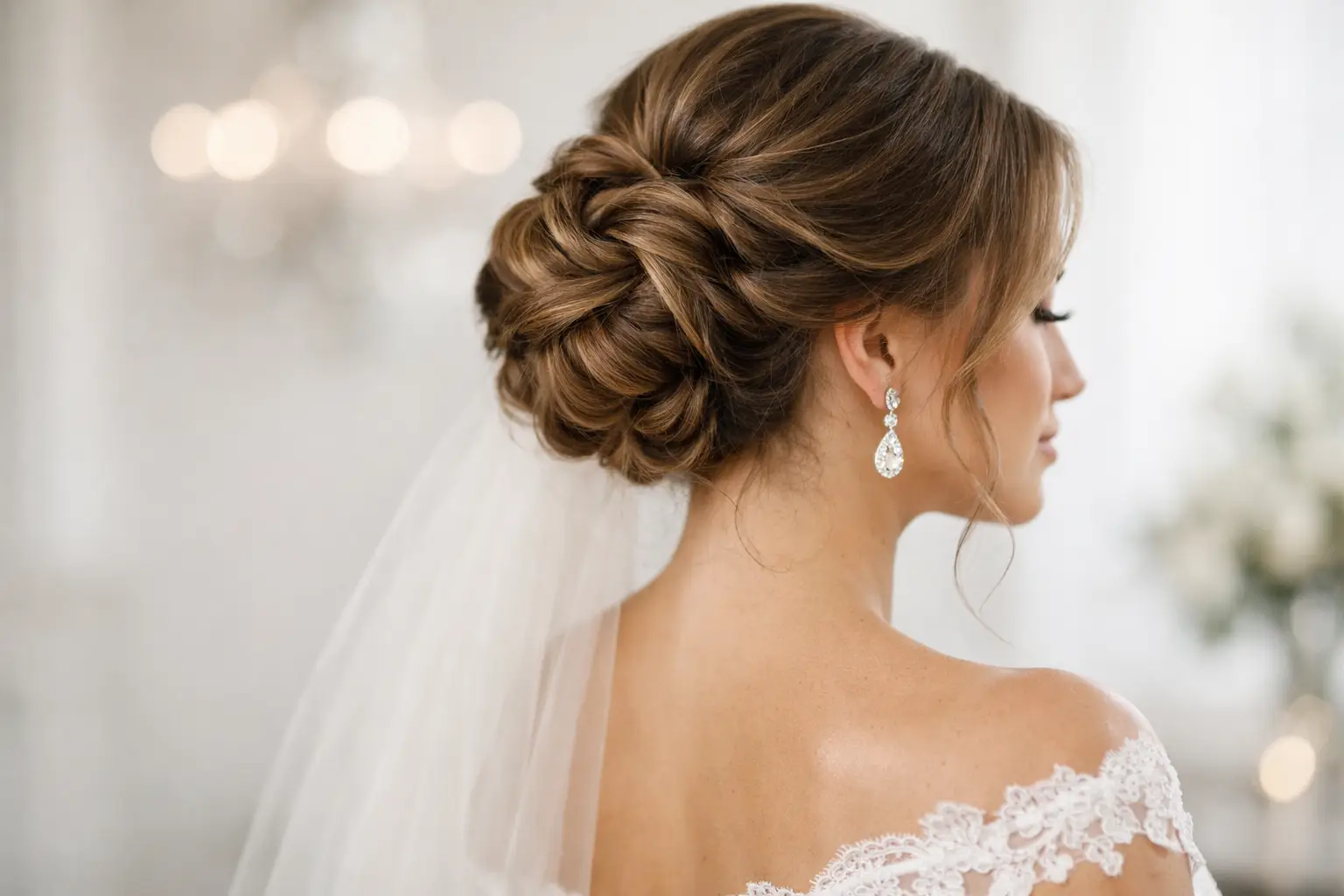
A bridal updo is never just a hairstyle seen from the front. It is a silhouette in motion: photographed beneath ceremony light, viewed over a shoulder during a first dance, and held close through embraces, veils, jewelry changes, and hours of celebration. The most memorable bridal updos feel composed from every angle while still looking like the woman wearing them.
For a New York ballroom wedding, a Florida waterfront celebration, or a destination ceremony shaped by multiple traditions, the right updo begins with proportion. It must complement the gown, the neckline, the scale of the veil, and the bride’s natural features. It also needs to perform for high-resolution photography and video without becoming overly rigid in person. That balance is where bridal hair becomes true artistry.
Choosing Bridal Updos by Silhouette
The strongest choice is rarely dictated by a trend alone. A bride with a high neckline or detailed bodice may benefit from an elongated chignon that reveals the line of the neck. A strapless gown can carry more volume at the crown, while an open-back dress often calls for a style that creates interest from behind. The hairstyle should complete the visual composition rather than compete with it.
A low chignon remains a perennial choice because it is polished, versatile, and naturally elegant. Its placement can be adjusted to feel sleek and architectural, softly textured, or romantic with face-framing movement. For brides wearing a cathedral veil, a lower bun also offers a practical, secure foundation for placement without interrupting the profile.
A sculpted French twist has a more editorial presence. It suits clean-lined gowns, couture tailoring, and celebrations where the beauty direction is intentionally minimal. The modern version is not necessarily severe. A controlled softness at the hairline or a few deliberate bends through the twist can keep it personal and luminous.
For a more expressive finish, a textured bun offers depth and dimension on camera. This is particularly beautiful with dimensional color, natural curls, or layered hair, where the surface of the style catches light differently throughout the day. Texture should still be purposeful. Excessive pulling and pinching can photograph as disarray rather than romance, especially in close-up imagery.
The Camera Changes the Decision
A hairstyle that appears effortless in a mirror can read very differently under flash, cinema lighting, or bright outdoor sun. This is why a trial should consider not only the dress and accessories, but also the visual conditions of the wedding day.
Very smooth hair reflects light beautifully, yet may lose detail in photographs if the shape is too flat. A highly textured style creates more visible dimension, though it requires thoughtful control to avoid looking frizzy in humidity or wind. The ideal finish depends on the bride’s hair type, venue, and planned imagery. A sleek city ceremony and a beachside event do not ask the same things of a hairstyle.
Hair color also matters. Dark, glossy hair often benefits from clear structure and separation so the shape remains visible. Highlighted or naturally light hair can carry softer, more intricate texture because its dimension is already apparent. For editorial-quality results, the profile, crown, and back view should each have intention. Guests may first see the bride from the front, but photographs will preserve every angle.
Veils, Dupattas, and Statement Accessories
Accessories should be considered early, not treated as a final addition. A veil has weight, placement requirements, and a visual line that can alter the entire architecture of the updo. A heavy veil needs a stable anchor point; a blusher may call for a placement that allows it to fall cleanly across the face without disrupting the crown.
For South Asian bridal beauty, the relationship between hair, dupatta, tikka, passa, and earrings deserves particular attention. These elements carry cultural meaning as well as visual impact. The hairstyle must support them comfortably and securely while preserving a refined, modern finish. A center-parted low bun can create a beautiful frame for a maang tikka, while a side-swept style may better complement a passa or asymmetrical jewelry.
Statement hairpins, pearls, florals, and jeweled combs can elevate an updo, but restraint is often more luxurious than excess. One exceptional placement at the base of a chignon may have greater effect than embellishment scattered throughout the hair. Consider the gown’s beading, the jewelry’s scale, and the ceremony setting before adding another detail.
What Makes an Updo Last
Longevity is built well before the final pin is placed. Hair preparation, product selection, sectioning, and internal structure determine whether an updo remains graceful after the ceremony. A style should have movement, but movement is not the same as fragility.
Fine hair may need density created through preparation or discreet support. Thick hair may need strategic distribution of weight so it does not pull downward as the day progresses. Naturally curly and coily textures can create extraordinary structure and softness, but they should be shaped in a way that honors their behavior rather than forcing them into an unfamiliar finish.
Weather is equally decisive. New York summer humidity, Florida heat, and destination winds call for different preparation than a climate-controlled winter celebration. Brides should be candid about their venue plans, including outdoor portraits, boat transfers, rooftop cocktails, or a high-energy dance floor. The artistry can then account for the real conditions, not an idealized version of them.
A durable style should still be touchable. Hair that has been over-sprayed or pulled too tightly can feel uncomfortable and appear lacquered under close photography. The goal is a finish with memory: secure enough to return to its intended shape after a hug, a gust of wind, or a change of wardrobe.
The Trial Is a Design Appointment
The bridal hair trial is where instinct becomes direction. Bring images that communicate an overall feeling, but remain open to interpretation. A reference photo may have different hair density, face shape, extensions, lighting, or accessory placement than your own. Its value is in identifying what you are drawn to: the polished crown, the undone texture, the quiet profile, or the drama of the veil.
Wear a top with a neckline similar to the gown, and bring the actual veil, hair jewelry, or ceremonial adornments whenever possible. If you are planning more than one look, discuss the transition in advance. A reception change can be as simple as removing a veil and releasing a few pieces around the face, or it can involve a complete transformation into a more textured, fashion-forward style.
This is also the moment to discuss comfort. The most beautiful updo should not distract from the experience of getting married. If you are sensitive at the hairline, wear a heavy dupatta, or anticipate a long ceremony, those details inform the construction. Luxury is not only how the hair photographs. It is how confidently you can inhabit it.
A Refined Approach to Bridal Hair
The current preference for soft bridal hair does not mean every style needs loose tendrils and an intentionally undone finish. Likewise, classic structure does not need to feel dated. The most compelling bridal updos borrow from fashion and tradition with discernment, creating a look that feels current without becoming tied to a fleeting moment.
At BridalGal, that approach is shaped by couture sensibility, multicultural fluency, and the demands of professional image-making. The finished style is designed to belong equally in the room, in the album, and in the images that will be revisited for decades.
Choose the updo that lets your gown, your heritage, and your own presence come forward clearly. When the structure is thoughtful and the finish is personal, you will not spend the day wondering whether your hair is holding. You will simply be present for every photograph, every ritual, and every beautiful turn of the celebration.