


Best Bridal Hairstyles for Veils That Photograph Well
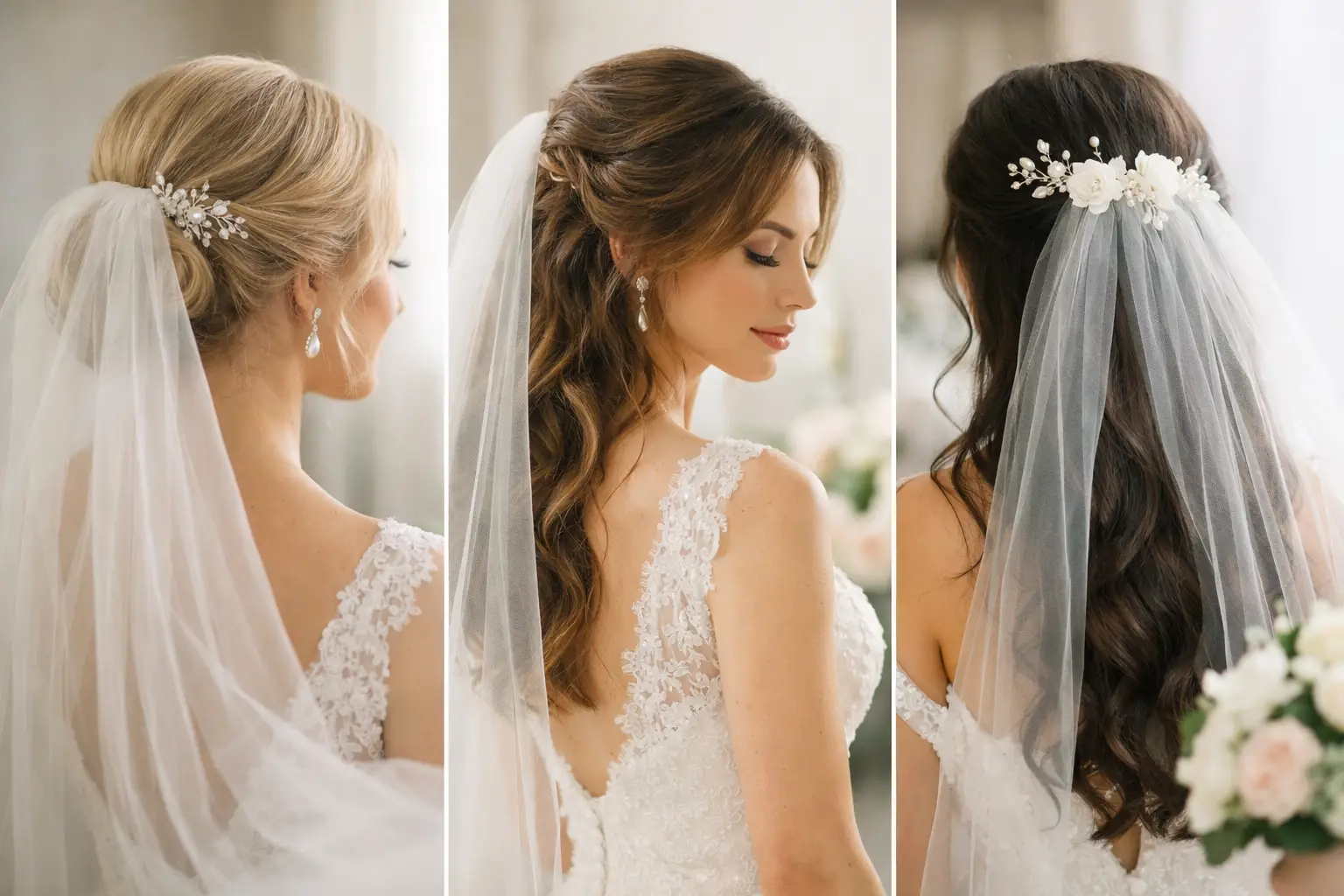
A veil changes the architecture of a bridal hairstyle. It introduces movement, weight, texture, and a second reveal that must feel intentional from the ceremony aisle to the final portrait. The best bridal hairstyles for veils are not chosen from a reference image alone. They are designed around the veil’s length, attachment point, gown neckline, cultural traditions, and the way the bride wants to feel when she turns, embraces, and dances.
For a luxury celebration, the goal is not simply to secure a veil. It is to create a finished composition that holds its elegance under daylight, flash photography, close-up video, and hours of celebration.
Choosing a veil-ready hairstyle
The starting point is the veil itself. A light blusher and fingertip veil can sit beautifully over a broad range of hair designs, while a cathedral veil needs a more deliberate anchor and a silhouette that remains visible beneath its volume. Lace edging, scattered crystals, embroidery, and heavier tulle can all influence how much texture or polish the hair needs.
Your gown matters just as much. A clean, sculptural gown often invites a sleek chignon or polished ponytail, allowing the veil to create softness behind it. A romantic lace gown may suit brushed-out waves, a dimensional half-up style, or an airy low bun. With dramatic shoulders, a high neckline, or ornate jewelry, the hairstyle should create visual breathing room rather than compete for attention.
Placement is the detail that separates a beautiful style from one that looks disconnected. A veil placed above a bun creates height and a more traditional silhouette. Tucking it below a low chignon exposes the hairstyle and can feel more modern, especially in profile. Neither is inherently better. It depends on whether the bride wants the veil to frame the hair or fall from it almost invisibly.
Best bridal hairstyles for veils, by silhouette
The low chignon for timeless refinement
A low chignon remains one of the most versatile choices for veils because it gives the comb a stable, discreet foundation. It can be sleek and center-parted for a couture effect, softly textured for a garden or coastal setting, or shaped with gentle volume at the crown for a more formal ballroom ceremony.
For a cathedral veil, the chignon should be built with enough internal structure to support the comb without showing pins or creating a bump in the wrong place. The veil can sit directly above the bun for a classic entrance, or just beneath it when the bride wants the knot itself to be fully seen. This style is particularly strong with open-back gowns, statement earrings, and elegant second-look wardrobe changes.
Sculpted waves for movement and glamour
Soft waves and vintage-inspired sculpted waves are exquisite with a veil, but they require thoughtful attachment. Hair that is too silky or overly brushed may not give the comb enough grip, so the stylist creates a concealed anchor at the crown or beneath the top layer of hair.
This look works best with lighter veils, especially fingertip, waltz, or chapel lengths. A very full cathedral veil can flatten the wave pattern or cause unnecessary tangling unless the style has been planned specifically for its weight. For brides who want their hair fully down, a veil positioned at the upper crown preserves facial framing while allowing the length to move beautifully in photographs.
The half-up style for soft dimension
A half-up hairstyle offers the romance of flowing hair with the security of an upstyle. It provides a natural place for veil placement, usually at the crown where the twisted, braided, or sculpted upper section creates a hidden base. The result is feminine without becoming overly precious.
This is a compelling option for brides wearing floral appliqué, delicate embroidery, or a blusher that they want to fold forward without disturbing the hairstyle. The proportion must be customized. Too much height can look dated, while too little structure may let the veil slide. The most polished versions keep the crown refined and let the softness appear through the lengths.
The high bun for a statement entrance
A high bun creates a strong, elongated profile and makes an exceptional partner for a dramatic veil, especially when the gown has a clean shoulder line or modern architectural shape. The veil is generally secured beneath the bun so the sculptural form remains visible. This gives the fabric a graceful fall down the back without obscuring the hairstyle.
It is also practical in warm climates, destination settings, and long celebrations. The trade-off is that the balance has to be exact. A high bun, heavy veil, and bold headpiece can become visually crowded if each element is competing for height. The strongest design usually lets one feature lead.
Braided and textured upstyles for cultural detail
For South Asian and multicultural bridal celebrations, the veil may be only one part of a more layered styling story. A dupatta, head jewelry, floral adornment, or ceremonial accessories may need to sit in harmony with the hair while honoring meaningful traditions. A textured low bun, braided upstyle, or carefully structured crown can provide the support these elements require without sacrificing softness.
The artistry lies in making technical security look effortless. Accessories should feel integrated rather than placed on top at the last moment, and the hairstyle should hold through rituals, greetings, dance, and multiple wardrobe moments. When there are two drapes or a veil and dupatta, placement should be tested well before the wedding day to avoid excess weight at one point on the head.
Short hair with a veil
Short hair does not limit veil options. A polished bob, pixie, or cropped curl pattern can look striking with a birdcage veil, a narrow tulle veil, or a comb placed just behind one ear. For a longer veil, a discreet anchor can be created beneath the surface of the hair, often with a small padded base or fine, concealed pins.
The key is proportion. A large, heavily gathered veil can overwhelm a cropped silhouette, while a clean, lightly gathered design can look exceptionally fashion-forward. The veil should complement the haircut’s shape, not cover the very line that makes it distinctive.
Veil placement affects every photograph
A beautiful front-facing portrait is only one test. The hairstyle must read from the side, back, and overhead angles, where the veil comb and its base are often most visible. During a bridal preview, it is wise to photograph the hair with the actual veil in natural light and under flash. This reveals whether the comb shows through fine hair, whether the tulle catches in curls, and whether the placement hides a detail the bride loves.
Comfort deserves equal attention. A veil should feel secure, not tight. It should be removable without dismantling the hairstyle, particularly if the bride wants to wear it for the ceremony and portraits but release it before the reception. A professionally placed veil can be removed by a designated attendant with one clear instruction: lift the comb straight upward, rather than pulling it backward through the hair.
The bridal preview is where the design becomes personal
Bring the actual veil, hair accessories, and as much information about the gown as possible to the preview. A photo of the dress is helpful, but fabric swatches, neckline details, and jewelry choices reveal far more about the final balance. If the ceremony includes a blusher, practice the moment it is lowered and lifted. If the celebration includes a dupatta or headpiece, test the full arrangement rather than treating each accessory separately.
At BridalGal, this kind of preparation is part of creating a look that feels editorial in its finish yet entirely natural in motion. The most memorable bridal hair is never a copy of a trend. It is a composed response to the bride’s features, wardrobe, traditions, and atmosphere of the day.
Choose the hairstyle that makes you want to turn around when you see it from the back. That is the view your guests will hold onto as you walk down the aisle, and the one your veil should elevate.