


Indian Wedding Beauty Case Study for Modern Brides
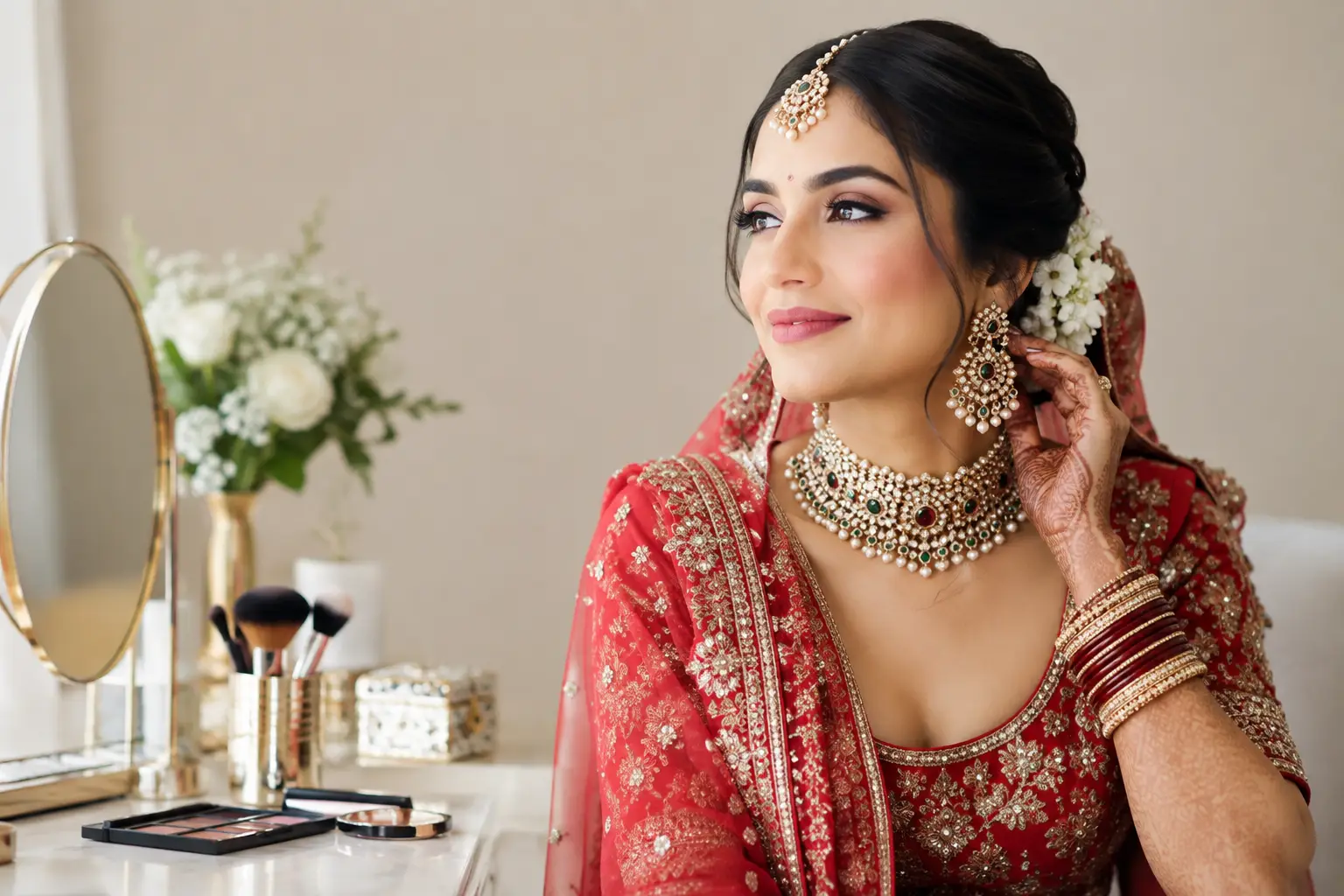
A bridal look can be technically flawless and still feel incomplete if it does not belong to the woman wearing it. This Indian wedding beauty case study considers the artistry behind a modern South Asian bridal vision: one that respects the visual language of ceremony while holding its own beside couture, candlelight, flash photography, and high-definition film.
The client profile is representative of the multicultural brides BridalGal serves across New York, Florida, and destination celebrations. Her wedding included a morning ceremony, a vibrant reception, multiple wardrobe changes, and the expectation that every close-up would feel refined rather than overworked. The beauty direction was not simply glamorous. It needed to be enduring, culturally aware, and distinctly hers.
The Indian Wedding Beauty Case Study: The Brief
The bride wore a richly embellished red lehenga for the ceremony, followed by an ivory and gold reception ensemble with a more sculptural silhouette. Her jewelry was substantial: a maang tikka, earrings, layered necklaces, bangles, and a nose ring. Each element carried presence, which meant the makeup could not compete for attention. It needed a controlled luminosity, defined structure, and enough depth to remain visible within the scale of the overall styling.
She wanted skin that appeared like skin, not a matte mask. She also wanted expressive eyes without the heaviness that can arrive when eyeliner, lashes, shadow, and jewelry are all pushed to their maximum intensity. Her hair needed to accommodate a dupatta securely for the ceremony, then transition into a polished reception look without beginning the evening again from zero.
This is where a bridal consultation becomes a creative conversation rather than a product checklist. The questions are visual and practical: How warm is the ceremony light? Will there be a first look outdoors? Is the bride accustomed to a strong eye? How does the family define traditional bridal beauty? Which moments matter most in the photographs? The answers shape the look long before the first brush touches skin.
Building Dimension for Photography and Film
South Asian bridal makeup is often described as dramatic, but drama is only one part of the equation. Camera-ready artistry depends on dimension. A face photographed under daylight, ballroom lighting, and direct flash needs carefully placed contrast, controlled shine, and color that remains true through changing conditions.
For this look, complexion began with strategic skin preparation and thin, layered coverage. The objective was a satin finish that looked polished in person while preserving natural movement around the eyes and mouth. Concealer was concentrated where it served the image, not spread everywhere in the name of perfection. Cream contour created quiet structure beneath the foundation, while a soft powder veil protected the finish through the ceremony without flattening it.
The glow was intentionally edited. A bridal face with ornate jewelry and a detailed lehenga already reflects considerable light. Highlight was placed high on the cheekbones and at the inner corners of the eyes, leaving the center of the face elegant rather than overtly metallic. Under flash, this distinction is significant. The result reads luminous in photographs instead of shiny.
Eyes With Presence, Not Weight
The eye design relied on warm bronze, antique gold, and a deep espresso definition at the lash line. These tones harmonized with the embroidery without matching it too literally. A precise wing gave the eyes lift, while softly diffused shadow preserved a couture finish. Individual and clustered lashes were selected for shape and separation, avoiding a dense strip that could obscure the bride’s expression.
A red or maroon bridal palette asks for restraint elsewhere. Rather than a pale nude lip that could disappear against the richness of the attire, the final lip was a rosewood tone with a subtle warm undertone. It provided enough color for photographs while allowing the eyes and jewelry to lead.
The trade-off is always balance. A more editorial, saturated lip can be extraordinary for a reception entrance, especially against ivory or metallic dressing. For a daytime ceremony, however, it may pull focus from the bride’s features. In this case, a long-wear rosewood offered the most versatility, with a deeper lip option reserved for the evening transition.
Hair Designed Around the Dupatta
Hair is not separate from South Asian bridal makeup. It is architecture. It must hold jewelry, support draping, frame the face, and remain comfortable across hours of movement, embraces, portraits, and ritual.
The ceremony style was a center-parted low bun with a clean, softly sculpted surface. This silhouette gave the maang tikka a clear focal point and created a stable foundation for the dupatta. The bun was not made overly tight. A secure style should not read severe, particularly when the bride is wearing detailed bridal textiles and significant jewelry close to the face.
Placement was tested before final pinning. The weight and tension of a dupatta can change the balance of the hairstyle, especially if it is secured low at the back of the head. The artistic goal was to make the drape appear effortless; the technical work happened underneath through anchoring, distribution of weight, and thoughtful placement around the crown.
For the reception, the bun was released into a brushed, glossy wave with one side tucked behind the ear to reveal the earrings. This change introduced movement and a slightly more fashion-led profile while retaining the same essential beauty story. It is a useful approach for brides who want two visual chapters without a complete hair and makeup redesign between events.
The Timing That Protects the Finish
An elevated bridal look is as dependent on timing as it is on technique. Indian wedding mornings can be full before the artist arrives: family arrivals, garments being steamed, jewelry being organized, photographers entering the suite, and a room full of people who love the bride and need her attention.
For this case, the beauty schedule allowed time for calm. Hair was prepared first, then makeup was completed before final wardrobe details. The dupatta, jewelry, and touch-up decisions happened after the bride was dressed, when the full composition could be seen. This sequence prevents a common issue: a beautiful makeup look assessed in isolation that suddenly feels too subtle or too strong once the complete bridal ensemble is in place.
A well-considered touch-up kit was kept close through portraits and ceremony. It included the chosen lip color, blotting papers, a small powder option, and tools for any necessary lash or hair adjustment. The point was not constant retouching. It was confidence. The bride could be present in each moment knowing that the finish had a plan behind it.
What Made the Look Feel Personal
The most successful part of this direction was not the gold shimmer or the polished bun. It was the restraint. Every choice was calibrated to the bride’s features, her wardrobe, and the cultural importance of the day.
There is no single formula for Indian bridal beauty. Some brides want a traditional red lip and bold kohl-rimmed eyes. Others prefer a soft neutral ceremony look and a high-glam reception transformation. Skin tone, jewelry color, family traditions, venue, photography style, and personal comfort all matter. A contemporary bridal artist should understand the codes of the occasion without reducing the bride to a preset look.
For multicultural weddings, this fluency becomes even more essential. A bride may be honoring one side of her family through attire and another through ceremony, or combining a Hindu wedding with a Western reception. Beauty should create continuity across those worlds. It should feel intentional in every frame, never like two unrelated looks placed beside one another.
The strongest bridal artistry leaves room for recognition. When the bride sees herself after the final details are placed, she should see elevated skin, compelling eyes, and a considered silhouette. More than that, she should see herself, fully present for a day designed to be remembered.