


Bridal Hair Timeline for a Polished Wedding Day
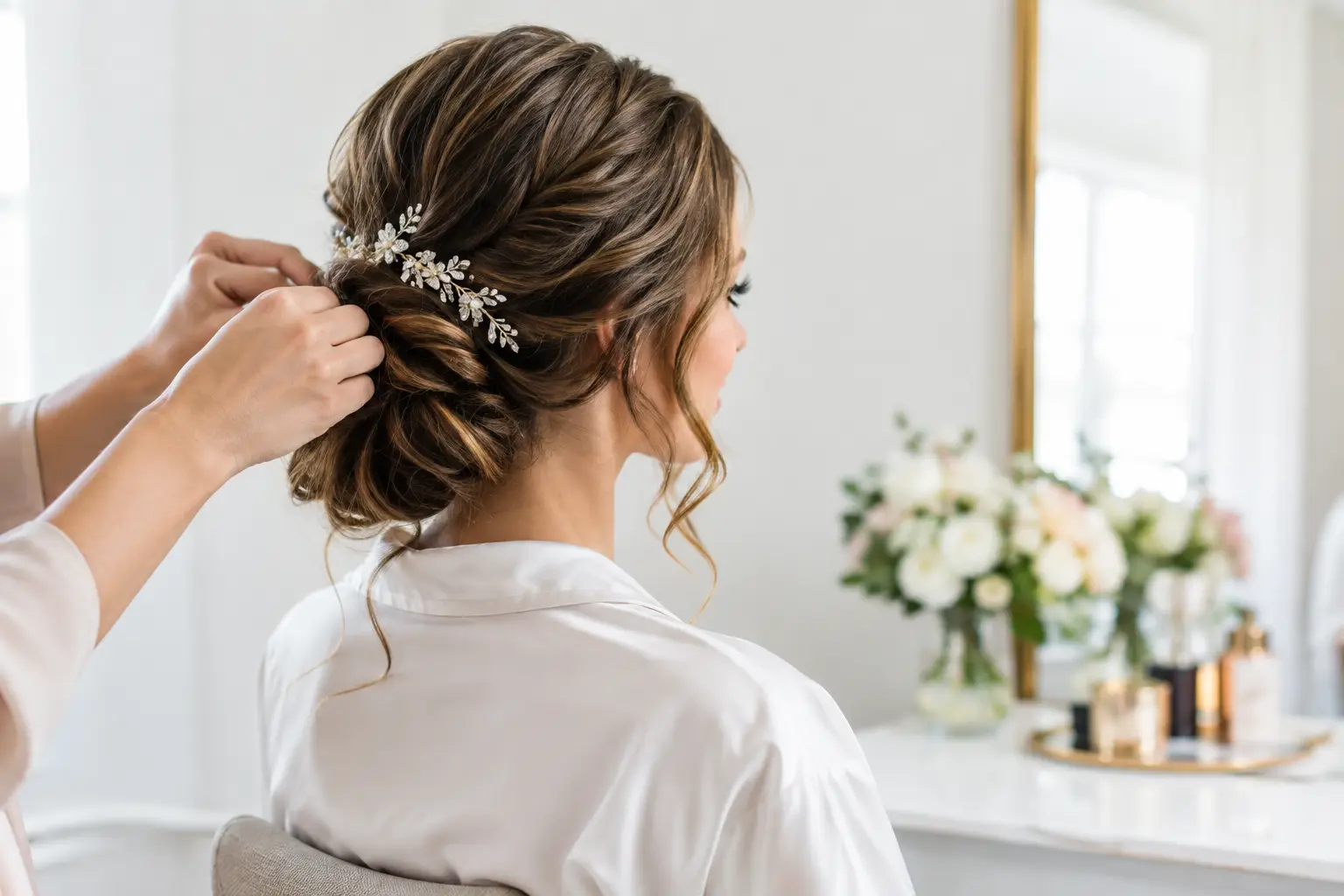
The most beautiful bridal hair never feels rushed. A considered bridal hair timeline gives the style room to be shaped, photographed, veiled, celebrated, and still look intentional at the end of the night. It is the quiet structure behind hair that feels effortless in person and holds its presence across flash photography, cinematic video, embraces, weather, and hours of movement.
For a luxury wedding, timing is not simply about being ready for the ceremony. It is about protecting the visual rhythm of the entire day. The gown, jewelry, hair accessories, portrait schedule, cultural traditions, and makeup direction should all inform the plan.
Begin Your Bridal Hair Timeline 6 to 9 Months Out
The hair conversation should begin once the wedding’s visual language is becoming clear. You do not need every detail finalized, but an artist should understand the setting, season, ceremony time, wardrobe, and the feeling you want to create. A sculpted chignon has a different purpose at a black-tie Manhattan ballroom than soft, brushed-out waves at a coastal Florida celebration. Both can be refined. The construction, finish, and staying power will be different.
Bring inspiration with a discerning eye. Rather than presenting twenty unrelated images, identify the qualities you respond to: a clean center part, a soft crown, a fuller silhouette, glossy texture, or a low placement that allows an open-back gown to remain visible. Your artist can then translate that direction into a look designed for your features, hair density, and wedding wardrobe.
This is also the moment to consider extensions, color appointments, a hairpiece, veil, dupatta placement, or fresh florals. Extensions are not only for length. They can create the density needed for a larger braid, a couture bun, or waves that retain their shape in photographs. If they are part of the plan, they should be color-matched and tested before the wedding morning, not introduced as an improvised solution.
For South Asian and multicultural celebrations, the planning conversation may be more expansive. A bride may wear a veil for one event, a dupatta for another, then change into a reception look that calls for an entirely different silhouette. The timeline should honor each tradition without treating it as an afterthought. Secure placement, jewelry weight, head coverings, and outfit-change timing all affect how the hair is designed.
Schedule the Trial 3 to 4 Months Before
A bridal trial is a design appointment, not a rehearsal to rush through. Schedule it when your gown direction and accessories are sufficiently defined, ideally three to four months before the wedding. If possible, wear a white or similarly toned top with a neckline that resembles your dress. The effect of hair is always connected to the line of the shoulders, neckline, and jewelry.
A strong trial should examine more than the front view. Your hairstyle must read beautifully in profile, from behind during the ceremony, and from above if your photographer is working with a balcony, staircase, or overhead perspective. It should also make sense alongside the makeup. A polished updo can support an expressive eye and statement earring, while flowing waves may call for restraint elsewhere so the finished image remains balanced.
Speak honestly about how you wear your hair in daily life. If you never wear it away from your face, an extremely sleek updo may feel foreign no matter how elegant it appears in a reference image. Conversely, if you dislike hair falling forward, a loose wave style may create unnecessary distraction during the ceremony. The goal is not to copy a photograph. It is to create a version of that feeling that moves naturally with you.
Ask the artist to test the accessory placement and discuss the removal plan. A veil should come out without loosening the hairstyle beneath it. A dupatta should feel secure without flattening volume or creating discomfort. These details are where professional bridal work reveals itself.
The Week Before: Prepare for Finish, Not Drama
The final week is for preservation. Avoid an unplanned major cut, dramatic color change, or a new treatment that may alter texture. If your colorist is refreshing highlights or gloss, leave enough time for the result to settle naturally and for any needed adjustment.
Confirm the beauty schedule with your planner, photographer, and wardrobe team. Your hair artist needs to know when you must be dressed, when first look begins, and whether travel between locations is involved. A first look scheduled at 1:00 p.m. does not mean beauty can end at 1:00 p.m. It means the bride should be fully dressed, accessorized, and ready for portraits before then, with a margin for the unexpected.
Wash-day instructions should come directly from your artist because they depend on the chosen finish. Some styles perform best on freshly washed hair with no heavy conditioning products. Others benefit from texture prepared the night before. Do not assume unwashed hair is always better. Modern styling products and techniques can create grip without sacrificing a clean, luminous finish.
Wedding Morning: Build in a Calm Buffer
On the wedding day, the bride is typically not first in the chair. Starting with attendants, mothers, or family members creates a calmer room and protects the bride from being fully finished too early. The exact order depends on the number of services, the size of the artistry team, and whether anyone has a time-sensitive responsibility such as photography, dressing, or a traditional ceremony preparation.
The bride’s hair should usually begin with enough time for precision, but not so early that the style must survive unnecessary hours before portraits. For many weddings, hair begins before makeup and is refined again after makeup is complete. This allows for a polished foundation, then a final adjustment of face-framing pieces, parting, shine, and accessory placement once the entire beauty look is visible.
There are exceptions. If the hairstyle includes elaborate braiding, a sculptural updo, a high-volume blowout, or extensive accessory work, it may need to begin earlier. A multi-look South Asian wedding may require an entirely separate schedule for each outfit and ceremony. The right sequence is always tailored to the complexity of the work, not borrowed from a generic wedding checklist.
Plan for 20 to 30 minutes after hair and makeup are technically complete. This is the window for getting into the gown, placing the veil or dupatta, securing jewelry, and allowing the beauty team to make final refinements. It is also when a hairstyle changes from beautiful to fully bridal.
Protect the Look Through Photography and Ceremony
The final moments before portraits matter. Once the gown is on, avoid pulling sweaters or robes over the head. Have a button-front shirt, robe, or zip-up layer available during beauty preparation. Keep water and snacks close, but be mindful of glossy lip color and delicate necklines once you are dressed.
Your artist should leave you with a concise touch-up plan. This does not need to become a full styling kit. Usually, it means knowing who will hold the veil, how to remove it, where pins are placed if an adjustment is needed, and when to schedule a quick check before the ceremony or reception entrance. For humid outdoor celebrations, soft styles may relax slightly by design. The objective is not helmet-like stillness. It is a controlled evolution that remains elegant in photographs.
If there is a wardrobe change, arrange a dedicated hair transition. A reception ponytail, released waves, or a new accessory can give the evening its own point of view without requiring a complete restart. This is particularly effective when the ceremony style is formal and the reception calls for more movement, volume, or editorial energy.
A Bridal Hair Timeline Should Reflect the Celebration
A wedding day is not a production set, yet the best beauty planning borrows the discipline of one. Every person knows the call time, the visual priorities are clear, and there is space for artistry rather than panic. At BridalGal, that balance is central to creating hair that feels luxurious while performing for the camera from every angle.
Your timeline should leave room to breathe, especially before the gown goes on. When hair is planned around the life of the celebration rather than only the ceremony clock, you can be fully present for the moments that matter: the first look, the walk down the aisle, the embrace of family, and the final dance with your style still unmistakably your own.