


Editorial Makeup That Holds Up on Camera
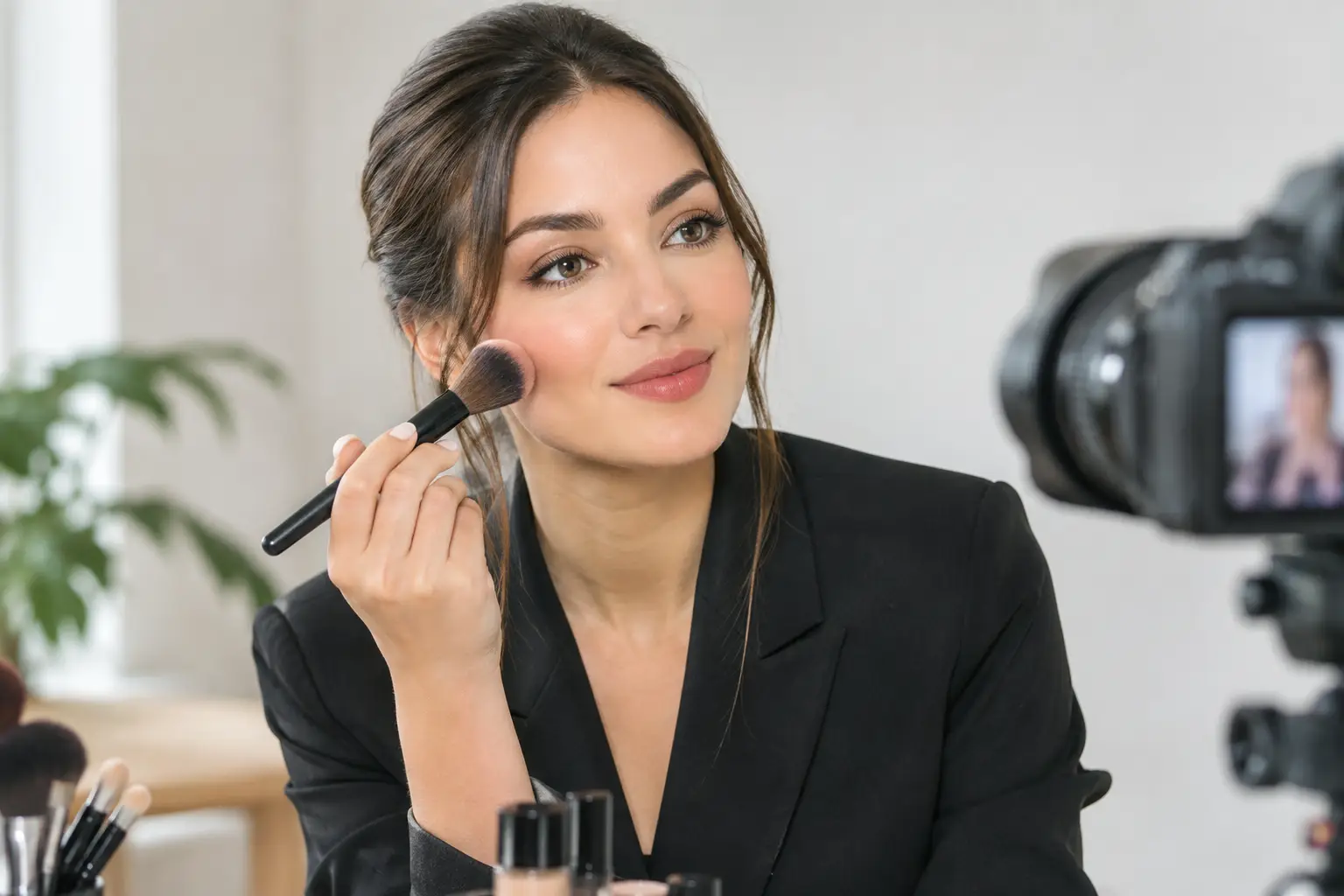
A beauty look can appear exquisite at arm’s length and still disappear under studio lighting. Editorial makeup is built for that distinction: it gives the face intention, dimension, and presence when the final image is a photograph, a fashion film, or a close-up that reveals every choice.
For a bride, designer, photographer, or production team, the goal is not simply more makeup. It is a considered visual language. Skin must retain life without looking unfinished. Color needs to register without overwhelming the wardrobe. Features need definition that reads through changing light, movement, lenses, and retouching. The most memorable images often depend on this balance.
What Makes Editorial Makeup Different
Editorial beauty is created in conversation with the full frame. Hair, garment, jewelry, set design, lighting, pose, and camera direction all affect how a makeup look should be designed. A luminous complexion beneath a cathedral veil calls for a different approach than a sculptural eye paired with couture tailoring, even if both are photographed in the same afternoon.
The work begins with concept rather than a preset formula. Is the story polished and romantic, modern and minimal, richly ceremonial, or high-fashion and graphic? Each direction requires a different relationship to skin finish, contour, brow structure, lip shape, and color placement. The artistry should make sense from the first frame to the last.
This is why a true editorial look often feels precise rather than excessive. A strong lip may be balanced by restrained skin. A softly blurred eye may be paired with a more structured complexion. If the gown, sari, lehenga, or accessory carries intricate detail, makeup can provide quiet definition rather than compete for attention. Luxury lies in knowing where to edit.
Editorial Makeup for Photography, Video, and Film
The camera is exacting, but not all cameras are exacting in the same way. Still photography can hold a moment of high polish, rich pigment, and sculptural detail. Video asks for continuity as the face turns, speaks, laughs, and moves through varied environments. Film may demand an even more nuanced approach, where skin texture and color behavior are visible in close-up.
Lighting changes the equation. Direct flash can flatten dimension and emphasize heavy layers. Window light may reveal texture that looked invisible in a hotel suite. A warm sunset, a cool ballroom, and production lighting each shift the way foundation, bronzer, highlight, and lip color appear. Makeup that performs beautifully is calibrated for the actual conditions, not just the mirror.
Skin preparation is foundational. The desired finish might be velvety, radiant, satin-soft, or deliberately luminous, but it should be intentional and stable. Thoughtful prep, strategic complexion layers, and controlled powder placement create a finish that reads as skin while remaining polished under scrutiny. Highlighter, for example, can bring a beautiful lift to the high points of the face, yet too much reflective product may create distraction under flash or hot lights.
The same discernment applies to contour. Editorial contour is not a uniform set of stripes applied to every face. It follows bone structure, facial proportions, and the story of the image. On camera, a soft shadow at the cheekbone or temple can create elegant definition. Applied too heavily, it can look gray, rigid, or disconnected from the complexion.
Texture Is Part of the Image
Contemporary editorial beauty has moved beyond the idea that flawless means fully matte. Skin with a believable finish often photographs with more depth and sophistication. That does not mean shine everywhere. It means placing luminosity where it supports the facial architecture and retaining refinement in areas prone to excess reflection.
Texture also includes brows, lashes, lips, and hairline. Brushed brows can feel modern and dimensional, while a more shaped brow may better complement a formal bridal portrait or a sharply tailored fashion look. Individual lashes can offer movement and softness; a bolder lash can create the graphic intensity needed for a distant runway-style image. Neither is automatically superior. The right choice depends on the visual brief and the camera’s distance from the subject.
Color With Cultural and Couture Awareness
Color carries meaning. This is especially true in multicultural bridal beauty, where a makeup palette may need to honor family tradition, ceremonial dress, heirloom jewelry, and personal style at once. Deep reds, berry tones, gold, copper, rose, jewel colors, and warm neutrals can all be elevated choices, but their success depends on undertone, saturation, and the surrounding textiles.
South Asian bridal makeup, for example, often needs the longevity and definition to stand beside intricate embroidery, vibrant garments, and extended celebrations. The result can be glamorous without becoming mask-like. A richly lined eye, sculpted complexion, or statement lip should feel integrated with the bride’s features and cultural expression, not imposed over them.
Editorial sensibility gives these choices greater range. It allows a bride to wear a traditional red with a modern skin finish, to pair luminous gold with a softly smoked eye, or to choose a refined neutral palette that lets exceptional jewelry lead the image. For fashion and commercial work, it creates room for bolder contrasts, unexpected color stories, and shape-driven beauty that supports the creative direction.
At BridalGal, this fluency is part of the artistry: couture-level polish informed by the realities of weddings, photography, movement, and diverse beauty traditions.
The Value of a Strong Beauty Brief
The best editorial results are rarely accidental. Before an appointment or production day, a focused beauty brief helps establish the visual priorities. Reference images are useful, but they should be treated as direction, not a copy-and-paste request. A look photographed on one model, in one light, with one styling team may need significant adaptation to flatter another person and serve a different setting.
A productive brief considers the wardrobe silhouettes, key accessories, shooting environment, schedule, and intended final use. For bridal clients, it should also account for ceremony timing, portrait windows, reception lighting, and any outfit or hairstyle changes. For productions, it should identify hero shots, close-ups, touch-up access, and whether the look must remain consistent across multiple scenes.
This preparation protects the result. It gives the artist room to make informed decisions about complexion depth, pigment payoff, lash structure, and longevity. It also prevents a common mistake: selecting a look for a single social image when the real assignment is a twelve-hour wedding day or a full production schedule.
When a Softer Look Is the More Editorial Choice
Editorial does not always mean dramatic. A clean, luminous face with softly defined eyes can be as fashion-forward as a saturated lip or a graphic liner, particularly when the styling is strong. The distinction is not the amount of product. It is the level of intention behind it.
For bridal portraits, understated makeup can create an enduring image, especially when the gown, venue, or jewelry already carries visual impact. Yet softness still requires structure. Concealer placement, tonal shaping, lip definition, and carefully selected lashes ensure the face remains present in photographs.
Conversely, a more pronounced beauty look can be exactly right for a late-evening reception, a fashion-forward city wedding, a red-carpet event, or a campaign with bold styling. The trade-off is that each element must be measured. Strong eyes, strong contour, intense highlight, and a vivid lip can compete when all are given equal volume. The most polished looks establish a focal point and let the rest of the face support it.
Beauty That Belongs in the Final Frame
A refined makeup application should remain recognizable as you. It should also meet the moment with enough artistry to hold its own beside couture, celebration, and the camera. That is the particular discipline of editorial work: translating personality and creative direction into a finish that feels immediate in person and enduring in the images that follow.
When planning a wedding, campaign, fashion story, or destination celebration, consider the images as part of the experience rather than an afterthought. The right beauty direction gives every frame a sense of coherence, allowing your expression, style, and presence to remain the center of the story.