


Bridal Trial Versus Wedding Day: What Changes?
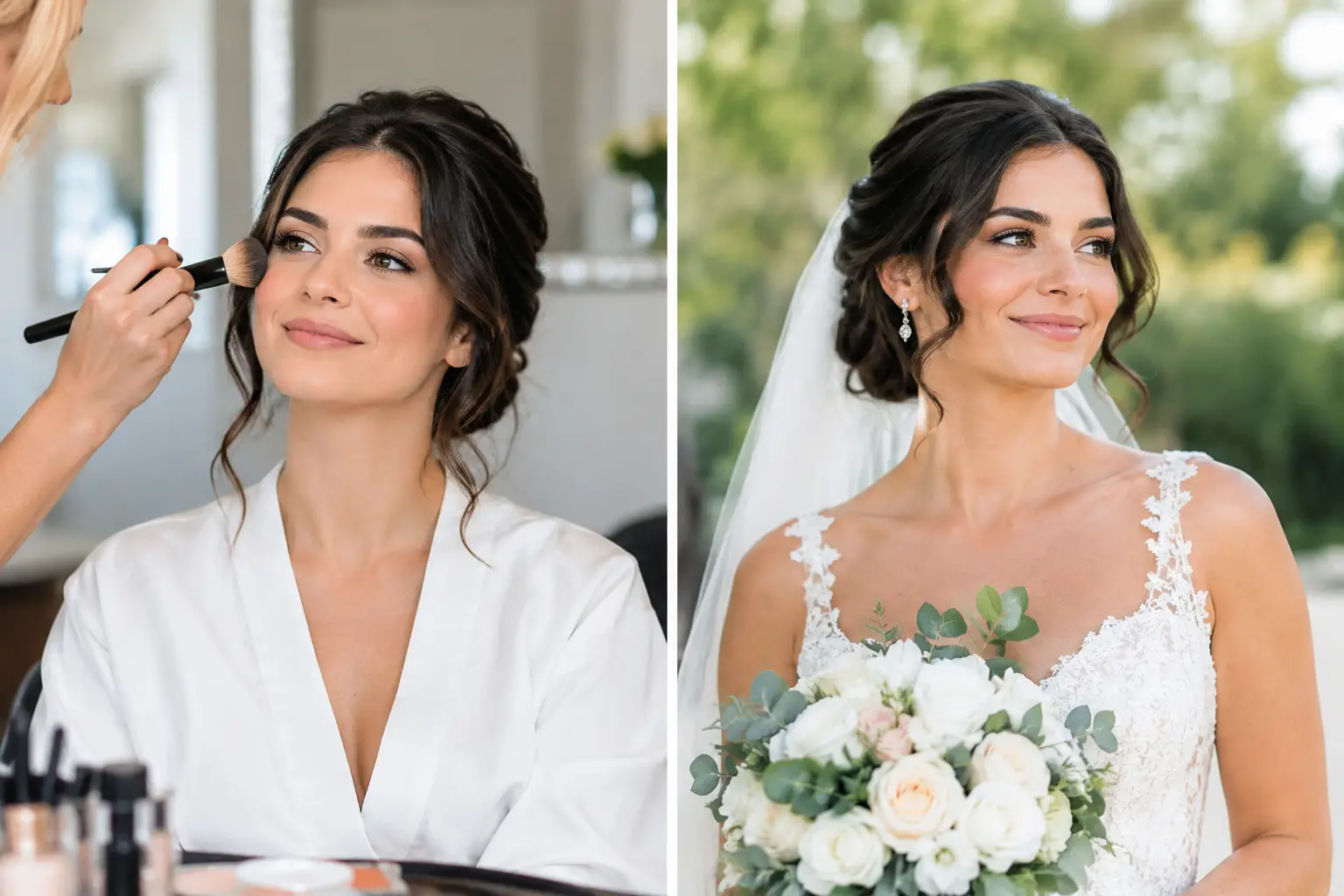
A bridal trial versus wedding day is not a test of whether your chosen look is beautiful. It is the process of refining how that look will live: through a long morning, changing light, close embraces, ceremony rituals, portraits, and an evening that may end well after midnight. The trial reveals the vision. The wedding day delivers its most polished, enduring version.
For a bride who values couture-level finish, the distinction matters. Hair and makeup are not static details. They are part of the visual architecture of the celebration, designed to complement the gown, jewelry, florals, venue, cultural traditions, and the way the day will be photographed and filmed. A thoughtful trial creates clarity; a well-orchestrated wedding morning creates performance.
The Bridal Trial Versus Wedding Day Experience
At the trial, there is room for exploration. You may compare a softly defined eye with a more sculpted shape, decide whether your complexion should read luminous or velvet-matte, or see how an updo changes the neckline of your gown. This is where instinct becomes a precise creative direction. Reference images are useful, but the most successful look is always tailored to your features, coloring, hair texture, wardrobe, and the atmosphere of your celebration.
The wedding day is intentionally more focused. Decisions have already been made, products have been selected with longevity in mind, and the artist is working from a shared visual language. That preparation creates ease, but it does not mean the service is rigid. A few meaningful adjustments are often appropriate: slightly more definition for evening light, a deeper lip for a formal reception, or a revised hair placement to accommodate a dupatta, veil, maang tikka, or statement earrings.
The goal is not to reproduce every trial detail mechanically. It is to honor the agreed-upon direction while responding to the real conditions of the day.
Your Skin May Not Behave the Same Way
Skin has its own calendar. Travel, a final facial, interrupted sleep, hydration, weather, stress, and hormonal changes can all alter its texture and moisture level. A foundation that wore beautifully at a winter trial may need a different preparation strategy for a humid July wedding in New York or Florida. Conversely, dry indoor heat can call for more thoughtful hydration than a bride anticipated.
This is why a trial should establish more than a shade match. It should determine the finish that serves you best, where strategic coverage belongs, how much luminosity your skin can carry in flash photography, and which touch-up approach feels natural to you. Professional artistry is not about masking every dimension of skin. It is about creating a refined complexion that remains believable at conversational distance and immaculate in high-resolution images.
In the final week, resist the urge to introduce unfamiliar skincare or aggressive treatments. The wedding morning is not the moment for experimentation. Arrive with clean, moisturized skin and communicate any changes, such as a breakout, irritation, spray tan, or sensitivity, before the appointment begins. A seasoned artist can adapt when given a clear picture.
Hair Must Perform Beyond the First Photograph
The trial often answers the aesthetic question: Is the bride drawn to polished Hollywood waves, a modern chignon, a textured braid, or sculptural volume? The wedding day answers the practical one: Can the style hold through portraits, a ceremony, embraces, movement, and dancing while still looking touchable?
Hair texture, freshly washed hair, extensions, climate, and headpieces all influence that answer. A style that appears effortless may rely on careful structural work beneath the surface. For a South Asian bride, the weight and placement of a dupatta, multiple veils, kalire, or heirloom jewelry need to be considered before the style is finalized. Pins cannot be treated as an afterthought when adornment carries both visual and cultural significance.
If you are changing looks between ceremony and reception, the trial is the ideal time to discuss what is truly possible within the timeline. A complete restyle may be worth the investment for a fashion-forward reception entrance. In other cases, a considered transformation – releasing a few pieces, shifting the part, adding an accessory, or changing the veil to a hair jewel – delivers a fresh editorial effect without placing pressure on the schedule.
Lighting Changes the Read of Every Detail
A bridal look lives in more than one light source. The trial may take place near a window or in a studio-like environment. Your wedding may include a sunlit first look, a candlelit ceremony, warm ballroom lighting, flash photography, and video under production lighting. Each condition changes how skin, contour, shimmer, and hair dimension are perceived.
This is where a production-informed approach becomes invaluable. Makeup for the camera should not look heavy in person, yet makeup designed only for an intimate mirror can disappear in professional imagery. The answer is calibrated dimension: complexion that is perfected without flattening it, eyes that remain expressive in photographs, and features that retain structure under varied light.
Bring details to the trial whenever possible. A photograph of the gown is helpful, but a swatch of fabric, an image of the ceremony space, and the actual jewelry can reveal far more. Ivory silk, cool-toned beading, gold embroidery, and a high-shine satin finish each affect the ideal balance of color and radiance.
The Schedule Is Part of the Beauty Design
The most exquisite work can feel rushed if the wedding morning lacks a realistic schedule. Trials tend to be leisurely because the focus is discovery. On the wedding day, beauty must coexist with photography, getting dressed, family arrivals, transportation, and sometimes multiple ceremonies. Timing affects not only comfort, but the final result.
A bride is typically scheduled early enough to allow time for dressing, portraits, and a quiet final check before departure. The artist should know whether you need to be fully ready before a first look, whether you are wearing a blouse or top that can be removed without disturbing hair, and when headpieces or veils will be placed. For larger bridal parties, a carefully planned sequence keeps the room composed rather than crowded.
It is also wise to reserve a few minutes for the details no one wants to rush: setting the lip color, securing the veil, checking the hairline, and taking in the moment. Luxury is often felt as time. A calm room supports a calm bride.
Tradition Deserves Its Own Consideration
Multicultural bridal beauty is never one-size-fits-all. The visual language of a Western black-tie ceremony differs from that of a Hindu wedding, a Sikh Anand Karaj, a tea ceremony, a Nigerian celebration, or a weekend of events that moves between several traditions. The trial is the place to discuss these distinctions openly, including which elements are essential, what may change between events, and how modern styling can coexist with family heritage.
For some brides, that means designing separate looks with a cohesive through-line. For others, it means creating one elevated foundation that can transition through wardrobe changes and ceremonial adornment. The best choice depends on the number of events, the pace of the day, the significance of each outfit, and how distinct you want each visual chapter to feel.
At BridalGal, this level of consideration is central to the artistry. The work is not simply about selecting a glamorous look. It is about building a beauty direction that feels personal, culturally fluent, and exceptional from the first portrait to the final dance.
What to Bring Forward From Your Trial
Leave the trial with decisions, not uncertainty. Your final direction should include the overall finish, hair structure, lip tone, accessory placement, extension plan if applicable, and the approach to touch-ups or look changes. If something felt almost right rather than completely right, say so. Precision is a gift to your wedding-day experience.
A trial is also the right time to decide where flexibility belongs. You may want the same eye and complexion with the option to select between two lip tones based on the final bouquet and lighting. You may love waves but prefer an updo if the forecast is humid. These are not contradictions. They are intelligent contingencies, established before the pressure of the day.
When the wedding morning arrives, let preparation do its work. Your beauty should feel considered, photograph beautifully, and still allow you to recognize yourself – only more luminous, composed, and ready for every room you are about to enter.