


Secure Dupatta Styling for an All-Day Bridal Look
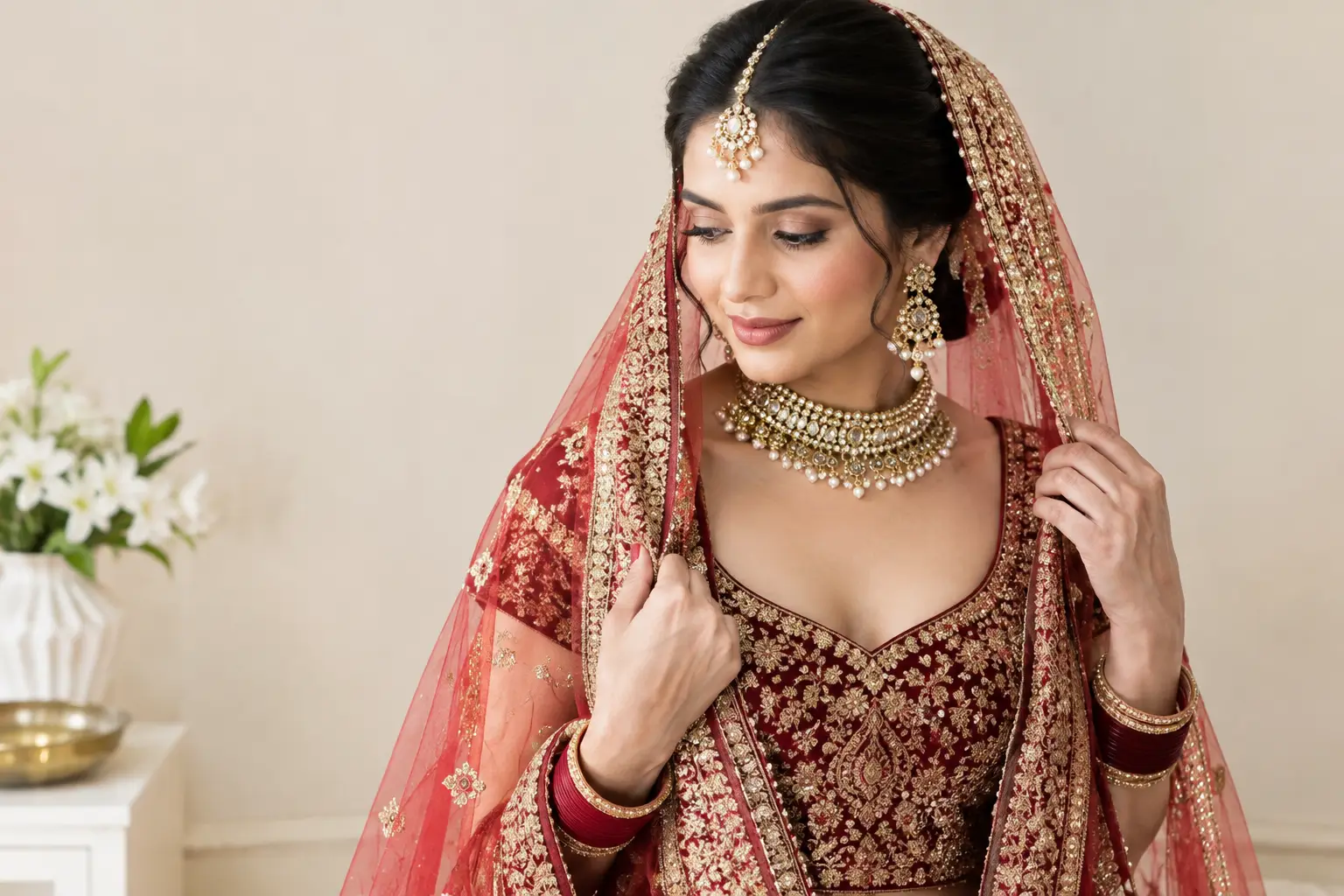
A bridal dupatta should move with the bride, not require her attention. The most successful secure dupatta styling feels effortless in photographs and on the dance floor, yet it is carefully engineered around the hairstyle, blouse construction, jewelry, ceremony rituals, and the weight of the textile itself. For a South Asian or multicultural bride, that balance is not merely technical. It protects the integrity of a look designed to carry heritage, personal style, and couture-level presence from the first portrait through the final celebration.
A veil-like net dupatta with a delicate border behaves very differently from a heavily embroidered velvet or silk piece. A bridal artist and draping specialist should plan for that difference early, rather than attempting to solve it minutes before the ceremony. Security begins with intention: where the fabric will sit, how it will frame the face, and what it must withstand throughout the day.
Begin With the Bridal Silhouette
A dupatta is part of the silhouette, not a last accessory. Before it is pinned, consider the neckline, shoulder line, sleeve shape, and the visual weight of the lehenga or sari. A broad border placed too far forward can overpower the face. One positioned too far back may disappear in front-facing portraits or pull against the hairstyle.
For a classic bridal placement over the head, the front edge should create an elegant frame without casting a shadow across the brows or obscuring the hairline. The fabric needs enough ease at the crown to preserve the shape of the hairstyle. Tension is the enemy here. When a dupatta is pulled flat across a bun or textured updo, it can distort the style and create an uncomfortable pressure point that becomes obvious by the ceremony.
A shoulder drape offers a more relaxed, fashion-led effect, particularly for a reception, civil ceremony, or editorial portrait session. It can be secured at one shoulder and anchored discreetly at the waist, allowing the border to read as a deliberate line across the body. This approach is especially beautiful when the blouse has sculptural shoulders, detailed sleeves, or an open back worth preserving.
Choose Placement Before Pins
The strongest hold comes from a clear placement plan, not from adding more pins. Too many pins can snag fine netting, make removal difficult, and create visible lumps under translucent fabric. A clean installation typically uses a few well-considered anchor points that distribute weight rather than concentrating it at the crown.
For a head drape, the most reliable anchors are usually close to the crown, where the hairstyle has been structured to support them. Pins should catch a stable internal foundation, such as a braid, padded base, or carefully placed extension weft, rather than only loose hair. The pin direction matters: crossed pins offer better resistance than parallel pins, provided they remain concealed and do not pull at the scalp.
With a shoulder drape, secure the first point where the fabric meets the blouse or shoulder seam, then establish the second point at the opposite side or waistband. If the border is heavily embellished, support its weight from underneath rather than pinning directly through the most ornate section. The goal is a polished fall of fabric, not a visibly fastened one.
Match the Pin to the Fabric
Fine net, tulle, and organza need a light touch. A small, smooth bobby pin or a subtle stitch at the underside of the border may be more appropriate than a large hairpin. Silk and satin can show punctures or pull easily, so placement should be tested in an inconspicuous area whenever possible.
Heavier textiles such as velvet, brocade, or densely embroidered net require more structural support. Their weight can shift gradually as the bride walks, hugs family members, or leans during rituals. In these cases, a reinforced hairstyle and a second anchor point are often more valuable than simply adding several pins near the hairline.
Build Security Into the Hairstyle
Bridal hair and dupatta styling should be designed together. A sleek low bun offers a refined, dependable base for a head dupatta, especially when the bun is constructed with internal support. A braided bun or textured chignon provides even more grip for pins while retaining softness in photographs.
For brides wearing the dupatta low over the forehead, the hairline must be thoughtfully finished. Soft face-framing pieces can be exquisite, but they should not be responsible for holding the drape in place. The structural anchors belong farther back, where they can disappear into the hairstyle. This preserves a graceful front view while keeping the construction secure.
Long, loose waves can accommodate a lighter dupatta, particularly for a modern bridal portrait or a brief ceremony moment. They are less ideal for a substantial head drape that must remain stable for several hours. There is no universal rule, but there is a practical one: the more weight the fabric carries, the more intentional the hair foundation should be.
At BridalGal, this coordination is treated as part of the finished beauty composition. The dupatta must complement the hair and makeup in still photography, motion, and close-up moments, rather than competing for attention or compromising comfort.
Respect Jewelry, Makeup, and Ceremony Movement
A maang tikka, passa, matha patti, or statement earrings can transform the way a dupatta sits. Jewelry should be placed before the final drape whenever it will occupy the same visual space. Otherwise, the fabric may cover a chain, catch on an ornament, or force an awkward adjustment after everything is already secured.
The makeup design also deserves consideration. A dupatta placed too low can brush against the forehead, transfer complexion product, or disturb the polished edge of the brows. If the fabric will rest near the temples, allow a little air between the border and the skin. This keeps the face luminous and allows the bride to move naturally without repeatedly checking her placement.
Ceremony traditions matter as much as aesthetics. A bride who expects blessings, embraces, a garland exchange, or a lengthy seated ceremony needs a drape that can tolerate close interaction. Discuss these moments with the styling team in advance. A dramatic editorial placement may be perfect for portraits but impractical for a ceremony involving frequent movement or multiple wardrobe transitions.
Secure Dupatta Styling for Multiple Looks
Many brides wear more than one dupatta: one over the head and another draped across the torso, or a ceremony dupatta followed by a lighter reception piece. This can create magnificent depth, but it requires restraint. Competing borders, excessive bulk at the shoulders, and mismatched proportions can distract from the gown or lehenga.
When layering two dupattas, let one establish the principal frame and let the other create movement. The head dupatta may be lighter and more transparent so the hairstyle, jewelry, and facial expression remain visible. The second can carry richer embroidery or color across the body. Secure each piece independently, so removing one does not destabilize the other.
For a reception change, ask for a plan that preserves the hairstyle. Removing a head dupatta should not mean dismantling the bun, loosening jewelry, or disturbing the makeup. A skilled team can build in concealed anchor points that allow a transition to feel intentional rather than improvised.
Prepare for the Hours No One Sees
The best test of a bridal drape is not the mirror. It is movement. Before leaving the suite, walk, sit, turn your head, raise your arms gently, and practice an embrace. These simple motions reveal whether the fabric is catching on an earring, sliding from one shoulder, or pulling at the crown.
Keep a small touch-up kit with spare pins matched to the hair color, a few safety pins for garment emergencies, and a clean cloth for delicate fabric. This is not an invitation for constant adjustments. It is quiet insurance for a long celebration, especially during travel between venues or outdoor portraits where wind can change the behavior of even a well-secured dupatta.
Most importantly, avoid treating comfort as a compromise. A bride who feels restricted will look restricted. The right drape should feel ceremonial, beautiful, and completely hers – secure enough to hold its place, light enough to let her be present in every moment.