


Matte Versus Dewy Makeup for Your Wedding
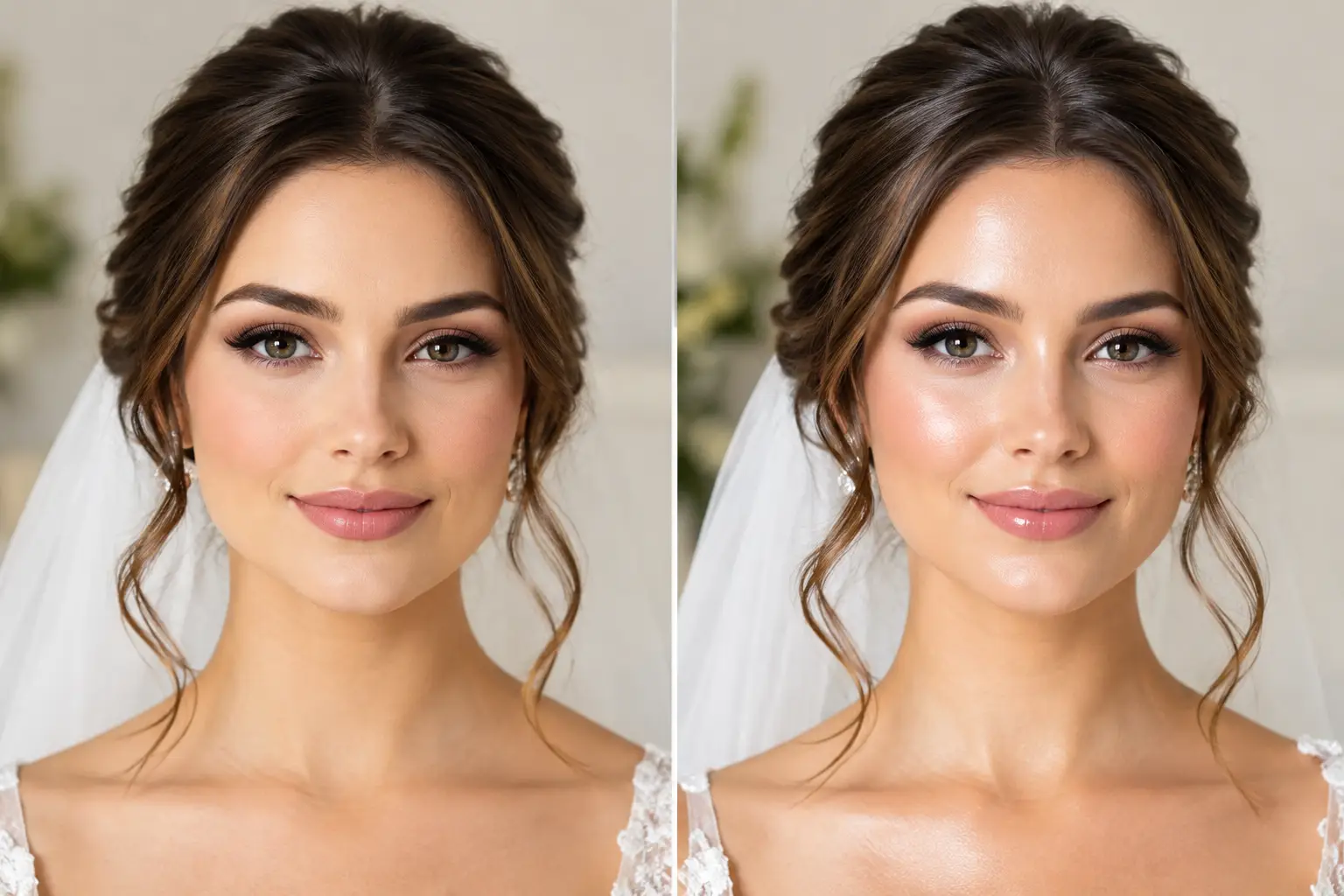
A bridal complexion is not chosen in a ring light. It is chosen for the hush before the ceremony, the first embrace outdoors, a flash-lit reception entrance, and photographs that will live far beyond the evening. Matte versus dewy makeup is therefore less about following a trend than selecting the finish that will honor your skin, your setting, and the visual language of your celebration.
The most compelling bridal makeup rarely sits at either extreme. A fully matte face can appear exquisitely polished in certain settings yet feel flat under soft daylight. An intensely dewy complexion can look fresh and luminous in person while reading as shine under warm lights, humidity, or close-up video. The artistry lies in placing luminosity and control with intention.
Matte Versus Dewy Makeup: What Each Finish Really Means
Matte makeup is often misunderstood as heavy, dry, or overly powdered. In a refined application, matte refers to a controlled, velvet-like surface with minimal reflective sheen. It can still look dimensional. Skin retains the appearance of skin when foundation is matched precisely, complexion products are layered sparingly, and contour, blush, and highlight are blended with a light hand.
A dewy finish has a visible reflectivity that catches light across the high planes of the face: cheekbones, temples, the bridge of the nose, and sometimes the eyelids. Its appeal is immediate. It suggests rested, hydrated, youthful skin, particularly in natural light. But dew is not simply moisturizer and glow products. On a wedding day, it requires thoughtful skin preparation, strategic setting, and a clear understanding of how the venue’s light will translate on camera.
There is also a middle ground that is often ideal for bridal beauty: satin. A satin complexion has a softly radiant quality without a wet sheen. It can be polished enough for a formal ballroom and alive enough for portraits at golden hour. For many brides, this balanced finish is the quiet luxury of makeup: perfected, never overworked.
Choose the Finish for the Full Wedding Day
The question is not only, “What looks beautiful at the first look?” It is, “What will look composed after hugs, happy tears, outdoor portraits, dinner, dancing, and repeated photography?” Wedding makeup is performance makeup, even when the result appears effortless.
A matte or soft-matte finish is especially persuasive for celebrations in heat, humidity, or long periods of outdoor movement. It also suits a bride who naturally becomes oily through the T-zone or who wants a defined, couture-inspired effect. A structured gown, a sculptural updo, a bold lip, or ornate South Asian bridal jewelry can carry a more velvet complexion beautifully. The finish provides a calm, polished foundation for the richness of the entire look.
Dewy makeup is especially captivating for intimate garden ceremonies, coastal destinations, modern city weddings with abundant window light, and editorially relaxed fashion. It complements fluid fabrics, luminous skin tones, sheer veils, and softly textured hair. Yet a dewy finish needs boundaries. A luminous cheekbone is elegant; excessive shine across the center of the face can distract from the eyes and weaken definition in photographs.
Season matters, but it is not the only deciding factor. New York winter air can leave skin dehydrated and asking for a more radiant approach, while an air-conditioned summer ballroom may allow more glow than an outdoor July ceremony. Florida heat often calls for strategically controlled skin, but that does not mean abandoning luminosity. It means creating glow where it photographs beautifully and setting the areas that tend to shift first.
Skin Type Is a Guide, Not a Rule
Oily skin is frequently directed toward matte makeup, and dry skin toward dew. That shorthand can be useful, but it is incomplete. Skin condition changes with travel, climate, stress, skincare, and the wedding schedule. More importantly, the finish of the makeup should reflect the bride’s desired image, not only the label assigned to her skin type.
For oily or combination skin, a soft-matte base with finely placed cream blush and restrained highlight often creates the most elegant result. The complexion remains controlled through the T-zone while the cheeks retain life. Powder should be used as an editing tool, not a mask. A finely set forehead, nose, and chin can coexist beautifully with a luminous cheek and softly reflective collarbone.
For dry or mature skin, the goal is not maximum shine. It is comfort, flexibility, and light. Rich skin preparation, a flexible foundation formula, and cream-based complexion products can prevent makeup from emphasizing texture. A satin finish is often more forgiving than a high-shine glow because it gives light back to the face without calling attention to every natural detail.
Textured skin deserves the same nuance. Heavy matte formulas may cling to dry areas, while excessive radiance can emphasize unevenness. The answer is usually a carefully prepared canvas and selective finish placement. Beautiful makeup does not erase humanity from the skin. It creates harmony between real skin and a polished visual result.
Photography, Video, and Flash Change the Conversation
A bridal look is experienced in person, but it is also interpreted by lenses. Professional photography can make a softly luminous complexion appear radiant and dimensional. Direct flash, however, may amplify products with large shimmer particles or a slippery surface. Video can reveal movement in makeup that a still image does not: separation around the nose, shine on the forehead, or foundation that has shifted after several hours.
For this reason, a camera-ready complexion is built in transparent layers. Skin prep supports the makeup rather than sitting on top of it. Foundation is pressed into the skin in thin applications. Concealer is focused where it is needed. Cream and powder products may be paired to create longevity without sacrificing softness. The final finish is then adjusted for the bride’s lighting plan.
A flash-friendly glow is not glitter. It is a smooth, refined reflectivity with no obvious stripe of highlighter. Likewise, a photographically successful matte face is not powder-heavy. It has depth in the eyes, warmth in the cheeks, and enough variation in tone to prevent the complexion from looking one-dimensional.
For multicultural bridal beauty, this precision is especially meaningful. Complexion products must respect undertone and dimension across a broad range of skin tones. On deeper skin, a thoughtful luminous finish can be extraordinary, but ashy powder or poorly chosen highlight can compromise the effect. On lighter skin, excess brightness can turn reflective under flash. The finish must be tailored to the individual complexion, the ceremony traditions, and the visual richness of the bridal wardrobe.
Let the Wardrobe and Beauty Direction Lead
Makeup should feel connected to the whole composition. A sleek satin gown, architectural bouquet, and clean chignon may invite a velvety, softly contoured complexion. A beaded lehenga, luminous silk sari, or couture gown with intricate embellishment may call for skin that has more light and warmth, balanced by a polished T-zone and defined eyes.
Consider the jewelry as well. Gold, diamonds, pearls, and colored stones each reflect light differently near the face. With elaborate bridal adornment, a controlled satin base often gives the eye a place to rest. With minimal jewelry and a modern gown, a dewy cheek and glossy lip can become part of the statement.
The desired emotional effect matters just as much. Matte makeup can feel poised, cinematic, and undeniably formal. Dewy makeup can feel romantic, modern, and intimate. Neither is more luxurious. Luxury is the confidence that every element has been considered, from the first portrait to the final dance.
A Trial Should Test More Than the Mirror
A bridal trial is the right place to compare finishes, but the mirror is only one measure. Photograph each option in window light, indoor light, and flash. Notice how the makeup feels after several hours. Consider whether the glow remains intentional after a few tears or whether the matte areas still look comfortable when you smile.
Bring references, but do not feel bound by them. A saved image may have been edited, shot in a studio, or created for a brief editorial moment rather than a fourteen-hour wedding day. An experienced artist can translate the mood of that reference into a finish that serves your own skin, attire, climate, and photography plan.
The best bridal complexion should never announce the technique before it reveals the bride. Choose the finish that lets you feel composed in person, luminous in photographs, and entirely yourself when the day becomes beautifully real.