


Couture Bridal Trends for a Lasting Bridal Look
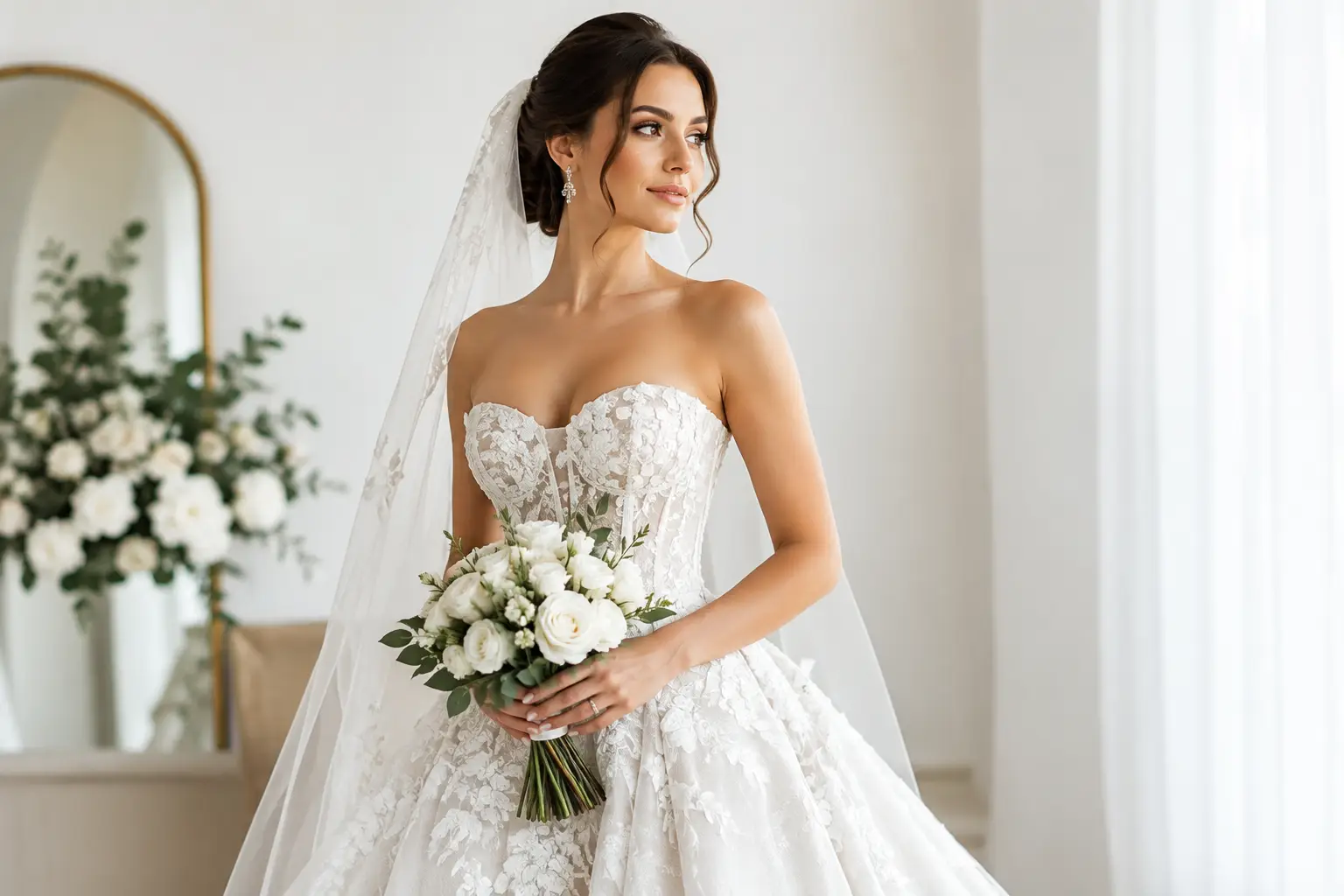
A couture gown can transform the way a bride carries herself before she says a word. The same should be true of her beauty. The most compelling couture bridal trends are not about chasing a viral detail or recreating a runway face exactly as seen. They are about proportion, finish, and the kind of considered artistry that feels extraordinary in the room while remaining refined in photography and film.
For a modern luxury wedding, beauty is part of the overall visual direction. It should honor the gown, the venue, the ceremony, and the bride’s own sense of self. That calls for a look with presence, not excess.
Couture Bridal Trends Are Moving Toward Intention
Couture-inspired bridal beauty is becoming more edited. There is a clear shift away from applying every trend at once and toward choosing one or two elements that create impact: a sculptural bun with clean skin, a luminous eye with a softly restrained lip, or a classic veil paired with sleek, fashion-forward hair.
This restraint does not mean minimal effort. Quite the opposite. A polished complexion that appears effortless often requires meticulous skin preparation, thoughtful color correction, strategic coverage, and placement that respects the face in daylight as much as it does under evening light. The finish is elevated because the work behind it is precise.
The goal is a beauty look that belongs to the bride rather than competing with her. When the gown is heavily embellished, a quieter beauty direction can make the entire composition feel more expensive. When the gown is architectural and spare, a richer lip, a defined eye, or a statement hairstyle may provide the necessary counterpoint.
Skin With Dimension, Not Shine
The modern couture complexion is luminous, but it is not wet-looking. It has dimension: soft radiance on the high points of the face, believable warmth through the complexion, and strategic powder where the camera tends to find unwanted shine.
For bridal clients, this distinction matters. A reflective complexion can be beautiful in a close editorial portrait, yet may become overly glossy after ceremony emotions, dancing, humidity, or extended portrait sessions. The more enduring approach is skin that looks alive and hydrated while maintaining structure around the center of the face.
Coverage is also becoming more personalized. Some brides want their freckles, natural undertones, or beauty marks visible. Others prefer a perfected, full-coverage canvas for a formal ballroom celebration or a multi-day South Asian wedding. Neither approach is more sophisticated. The couture standard is simply that the result looks intentional, balanced, and beautifully finished at every distance.
The Return of Defined, Romantic Eyes
Bridal eyes are regaining definition, though not in a harsh or overly graphic way. Diffused liner, lifted outer-corner shaping, soft bronzed shadow, and individual lashes create a polished frame without making the eye look heavy. This is especially effective for ceremonies that move from natural light into candlelight or a reception ballroom.
Brown, espresso, plum, antique gold, and softened black are often more versatile than a stark line. They bring depth to the eye while allowing the bride’s expression to remain visible. The effect is cinematic rather than theatrical.
For brides wearing ornate couture, a defined eye can offer a sense of visual clarity among intricate details. For those in minimalist silk or structured crepe, it adds enough refinement to keep the overall look from feeling unfinished. The exact intensity depends on the gown, the lighting, and how the bride normally wears makeup. A bride who never wears liner may feel far more herself in a softly smoked lash line than in a dramatic wing, no matter how current the latter may be.
Couture Bridal Trends in Hair Favor Shape and Texture
Hair is moving beyond the idea that every formal bridal style must be either a loose wave or a tightly secured updo. Couture bridal hair is increasingly defined by silhouette. The profile from the side, the shape at the crown, the movement at the nape, and the relationship between hair and neckline all deserve attention.
A clean chignon remains timeless, particularly with high-neck gowns, dramatic shoulders, cathedral veils, and statement earrings. What changes is the finish. A low bun may be glossy and sculpted, softly folded with visible texture, or intentionally undone around the face. Each choice tells a different story.
For brides who prefer wearing their hair down, brushed waves continue to have a place, but they benefit from editorial discipline. The most polished version has a clear parting, controlled volume, and movement that lasts through photographs rather than falling flat by the reception. A deep side part can feel distinctly glamorous; a center part paired with a veil can feel modern and serene.
Accessories are also becoming more selective. Instead of layering multiple pieces, many brides are choosing one exceptional element: a pearl-edged veil, a sculptural comb, a jeweled hairpiece, or a fresh floral moment placed with intention. The accessory should finish the silhouette, not crowd it.
Veils, Dupattas, and Cultural Detail as Design Language
For multicultural weddings, couture beauty begins with fluency. A dupatta placement, a maang tikka, a nath, heirloom jewelry, a mantilla, or a blusher veil is not an afterthought. It affects hairstyle architecture, balance at the hairline, makeup proportions, and comfort throughout the day.
South Asian bridal beauty, in particular, offers a powerful example of how tradition and contemporary fashion can coexist. The bride may choose richly defined eyes, dimensional skin, and a sculpted hairstyle to support ceremonial jewelry and embroidery, then shift into a sleeker reception look with a change of lip color or hair placement. The artistry lies in respecting the meaning of each element while ensuring the final image feels cohesive.
Cultural detail should never be reduced to a trend. The most beautiful results come from understanding what a piece represents to the bride and how it will be worn during the day. That knowledge informs practical decisions, from securing a veil for portraits to preserving comfort during a lengthy ceremony.
The Best Trend Is One That Performs
A couture bridal look must work beyond the first reveal. It needs to hold through embraces, tears, weather, flash photography, video, and close-up portraits. This is where production-level experience matters. A makeup look can be exquisite in person yet require different finish choices when a photographer is using direct flash. Hair that appears effortless can still need a strong internal structure to survive a destination breeze or a packed dance floor.
A thoughtful trial is the place to test these realities. Bring images of the gown, jewelry, veil, ceremony setting, and any second-look wardrobe. Share whether the wedding includes outdoor portraits, a first look at midday, a late reception, or multiple events across the weekend. The more complete the visual picture, the more tailored the beauty direction can become.
It is also helpful to separate inspiration from imitation. A reference image may capture the right mood but not the right skin tone, eye shape, hair density, or gown silhouette. Use it to identify what you are drawn to: the luminous skin, the brushed brow, the dramatic bun, the old-Hollywood parting. From there, the look can be translated into something personal.
At BridalGal, the approach is rooted in this balance of couture sensibility, multicultural understanding, and camera-ready craftsmanship. The result should feel complete in the mirror, unforgettable in the room, and quietly powerful years later when you return to the photographs.
Choose the details that make you stand taller in your gown. That feeling, more than any passing trend, is what gives bridal beauty its lasting elegance.