


Airbrush Makeup Comparison for Wedding Looks
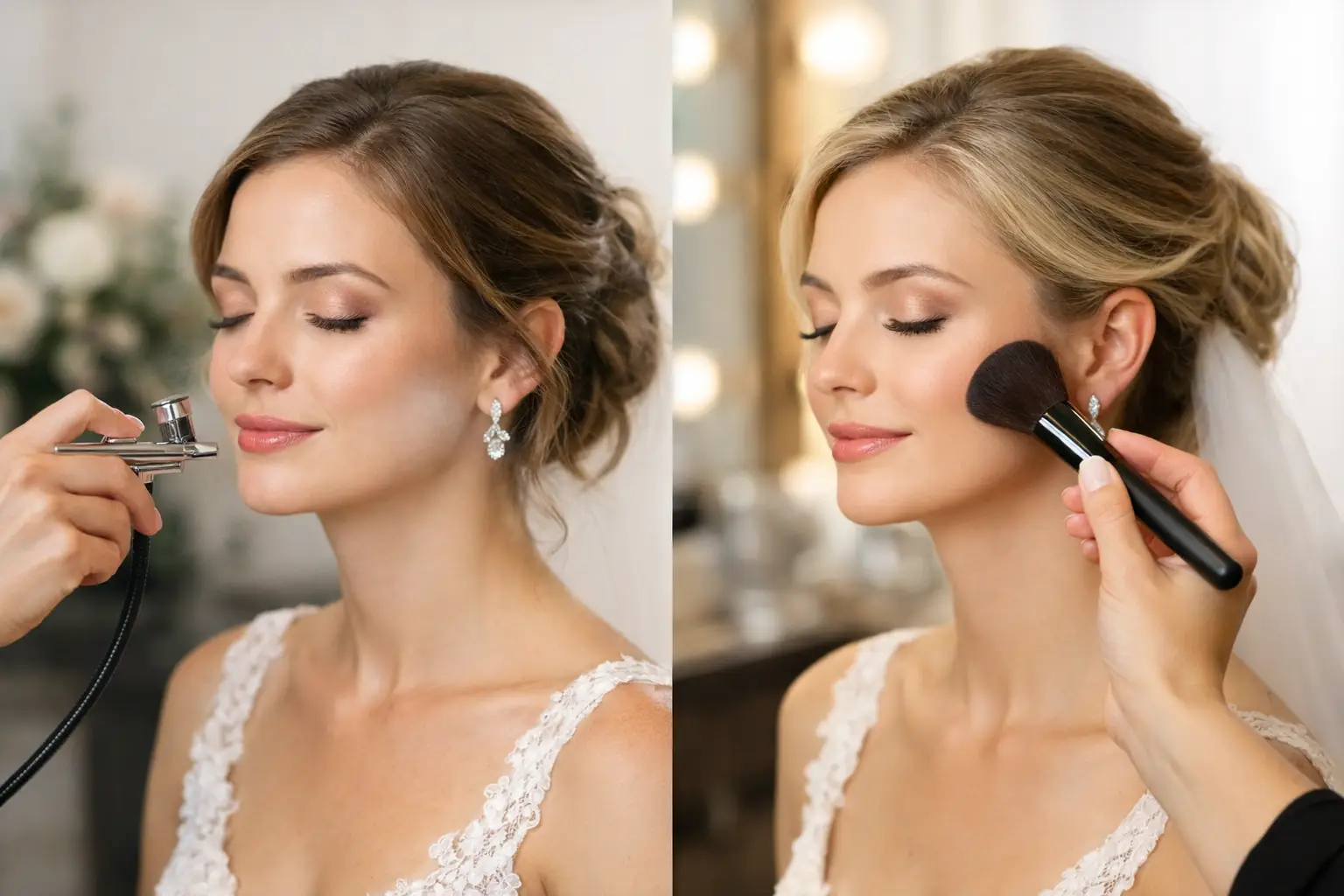
A bridal complexion is asked to do more than look beautiful at first glance. It must hold its character through close embraces, ceremony tears, flash photography, daylight portraits, candlelit receptions, and hours of movement. This airbrush makeup comparison considers the question brides ask most often: is airbrush truly the best choice, or is traditional application the more elegant option for your wedding day?
The answer is not universal. Airbrush makeup can create an exceptionally refined, weightless-looking finish, but it is not automatically superior for every skin type, climate, cultural celebration, or desired bridal look. The most successful choice begins with the skin, the schedule, the wardrobe, and the way the celebration will be photographed.
Airbrush Makeup Comparison: The Essential Difference
Airbrush foundation is applied with a small compressor and stylus that disperses product in a fine mist. Rather than being pressed, buffed, or sheered onto the skin with a brush or sponge, the foundation is layered in controlled passes. The result can appear exceptionally even, particularly from a conversational distance and through the camera lens.
Traditional foundation is applied by hand using brushes, sponges, and sometimes fingertips. This method offers an artist more immediate control over placement, texture, and correction. It can be worked into areas that need additional coverage, softened around the eyes, and blended with creams, liquids, and strategic powder for a more dimensional complexion.
Neither approach is a shortcut to flawless makeup. Skin preparation, thoughtful color matching, precise concealer work, and the artist’s understanding of light remain far more influential than the delivery system alone.
Finish: Soft Focus Versus Skin-Like Dimension
Airbrush is often chosen for its polished soft-focus effect. It can minimize the visual contrast of mild redness, uneven tone, and small textural variations without looking heavily layered. For a bride who wants a clean, perfected complexion and prefers not to feel a traditional foundation texture on her skin, this can be a beautiful option.
Its trade-off is that airbrush can feel less flexible when the complexion needs substantial spot correction. A misted foundation layer may look immaculate across the face, yet discoloration, active blemishes, under-eye darkness, or hyperpigmentation often still require traditional concealer placed by hand. This is not a failure of airbrush. It is simply the difference between an all-over finish and detail work.
Traditional application can create a more editorial skin finish when it is expertly layered. A luminous foundation beneath selective powder, cream contour, tailored blush placement, and subtle highlight produces a complexion with visible life and contour. For fashion-forward brides, this can feel especially compelling in close portraits and in person.
The concern that traditional foundation must look thicker is outdated. The quality of the formula, restraint in application, and careful preparation determine whether makeup looks refined. A well-executed traditional complexion can be as light in appearance as airbrush, with more opportunity for tailored radiance.
What this means for high-definition imagery
Photography and video do not ask for identical makeup. A flash photograph can flatten features, while video exposes movement and changing light. Airbrush tends to read smoothly across both, especially when applied in thin layers. Yet traditional makeup can offer richer sculpting and color payoff, which may be preferable for bridal portraits, fashion imagery, and events with dramatic lighting.
The goal is not to make skin disappear. It is to create a complexion that looks intentional from every angle: luminous in daylight, composed under flash, and still believable when a loved one is standing close enough to see the beauty of real skin.
Coverage and Complexion Matching
Coverage is where an airbrush makeup comparison becomes more personal. Airbrush can be built from sheer to medium-full coverage, depending on the formula and technique. It is excellent for evening overall tone and can create a beautiful veil over the décolletage, shoulders, or back when the gown calls for visible skin.
For deeper complexions, olive undertones, and richly nuanced skin tones, shade selection deserves particular care. A complexion is rarely one single color from forehead to jawline, and bridal makeup should never reduce that dimension to a flat mask. Traditional products generally offer greater flexibility for mixing custom shades and adjusting warmth, golden undertones, red undertones, or neutral balance in real time.
This matters in multicultural bridal beauty, where attire, jewelry, henna, family traditions, and ceremonial color often influence the entire visual composition. A red lehenga, gold embroidery, a white gown, or a richly colored reception look each reflect light differently against the skin. The foundation should complement the full palette rather than merely match a swatch.
Many artists use a hybrid approach for precisely this reason: airbrush for the smooth base, then hand-applied concealer, bronzer, blush, and finishing touches where the face needs dimension. For some clients, traditional foundation and complexion products remain the stronger choice from start to finish. The best technique is the one that honors the individual face.
Wear Time Through Ceremony and Reception
Both airbrush and traditional makeup can wear beautifully for a full wedding day when paired with appropriate skin prep and setting products. Airbrush is frequently praised for its resistance to humidity, transfer, and long hours. Certain formulas can be particularly effective for outdoor celebrations, destination weddings, and clients who prefer a lighter feel.
Still, longevity is not the same as invincibility. Tears, oil production, perspiration, affectionate kisses, and a tightly fitted veil can affect any makeup application. A bride with very dry or textured skin may find that an overly matte airbrush formula emphasizes areas of dehydration later in the day. A bride with very oily skin may need shine control regardless of the foundation method.
Traditional makeup allows an artist to combine formulas across the face: more hydrating where the skin is dry, more matte through the center, and more durable around areas prone to movement. This customized architecture can be especially valuable for long South Asian wedding days, multiple wardrobe changes, outdoor portraits, and receptions that extend well into the evening.
A touch-up plan matters more than a promise of all-day perfection. Blotting papers, lip color, and a small amount of powder can preserve freshness without disturbing the complexion. The ideal bridal makeup wears gracefully rather than demanding attention from the bride.
When Airbrush Is the Right Choice
Airbrush is often an excellent choice for brides who want a smooth, understated, camera-ready finish; have relatively even skin; are marrying in warm or humid conditions; or prefer a softly matte complexion. It can also be especially effective when the neck, chest, or shoulders need a polished, consistent finish for a strapless or sculptural gown.
It is equally worth considering for editorial and commercial work where the visual direction calls for a pristine, controlled surface. Under the right lighting and with the right skin preparation, airbrush can offer an almost cinematic refinement.
That said, clients seeking a dewy, highly dimensional fashion complexion may prefer traditional application or a hybrid technique. Those managing pronounced dryness, active texture, significant discoloration, or a need for elaborate complexion correction should discuss their priorities openly during the trial. The artist should assess the skin in person, not make a blanket recommendation based on a trend.
The Bridal Trial Is Where the Decision Becomes Clear
A trial should not be treated as a simple product test. It is an opportunity to see the complexion alongside the bridal hairstyle, gown tone, jewelry, and planned level of eye and lip definition. Take photographs in window light, indoor light, and flash. Notice how the makeup feels after several hours, not only when it is first applied.
Ask for the finish you want in clear visual language: softly luminous, velvet matte, polished skin, sculpted editorial, or glamorous evening. An experienced artist can translate that direction into products and technique without forcing every bride into an airbrush formula because it sounds more specialized.
At BridalGal, the focus is always on a complexion that supports the complete image: couture styling, cultural detail, personal features, and the camera’s eye. Airbrush may be part of that composition, but it should never be the entire conversation.
Choose the method that makes you feel composed when the day becomes emotional, fast-moving, and beautifully photographed. The most luxurious bridal finish is not defined by the tool used to apply it. It is defined by how naturally it carries you through every moment that matters.