


Is Airbrush Makeup for Wedding Right for You?
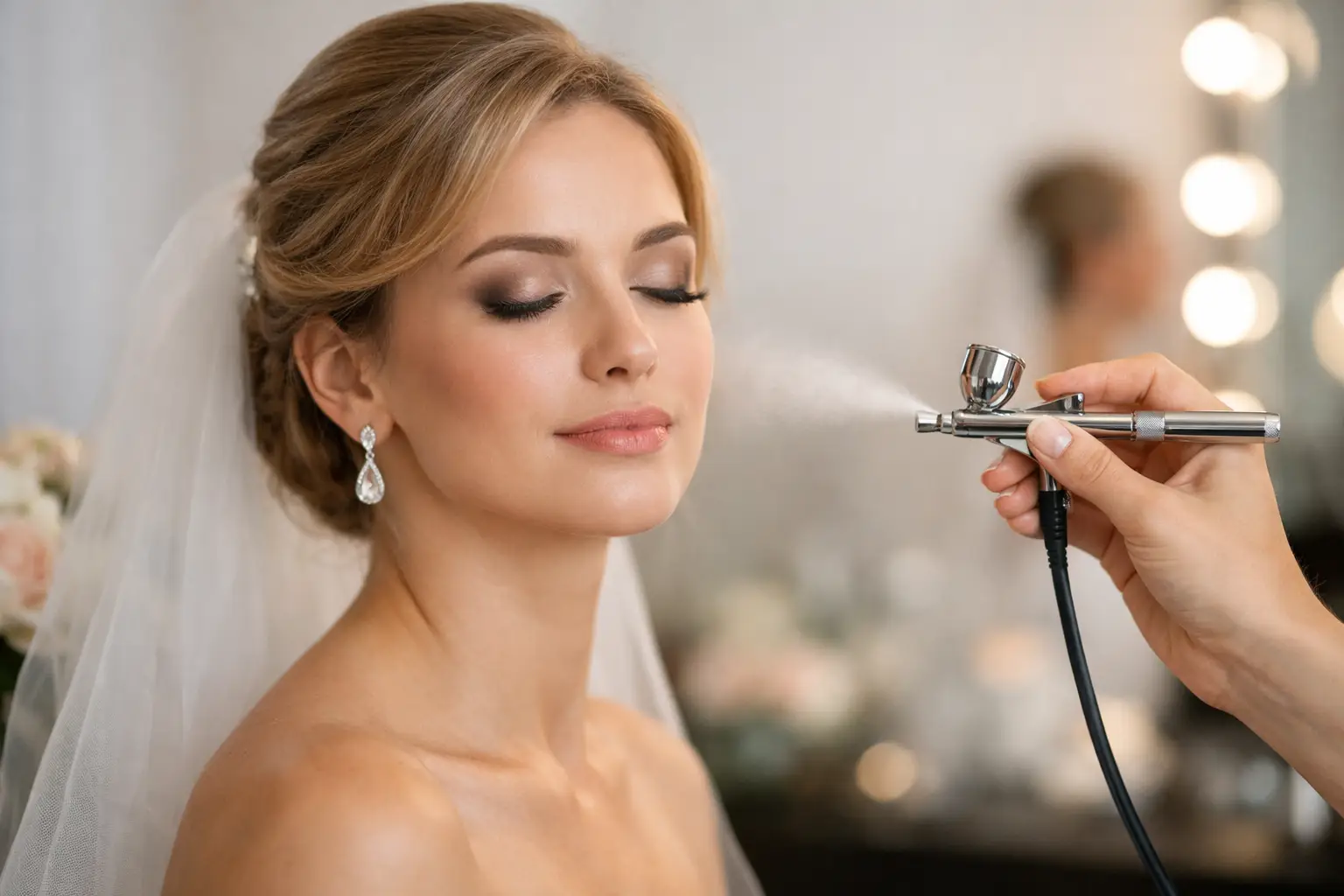
A bride may love the idea of airbrush makeup for wedding day because it promises a refined, camera-ready finish that feels lighter than a traditional full face. But the right choice is not about the technology alone. It is about your skin, your ceremony conditions, your wardrobe, your cultural traditions, and the way you want to recognize yourself when the photographs become part of your family history.
Airbrush is a beautiful option for many celebrations, from a Manhattan ballroom reception to a sunlit Florida ceremony or a destination wedding abroad. Its appeal lies in precision: a fine mist of complexion product creates an even veil of coverage that can look exceptionally polished in person and on camera. Still, it is not automatically the best method for every bride. A considered consultation is where the real artistry begins.
What Airbrush Makeup for Wedding Days Does Differently
Airbrush foundation is applied through a small compressor and stylus rather than with brushes or sponges. The product is dispersed in exceptionally fine layers, allowing an artist to build coverage gradually while preserving a skin-like finish. When color matching and skin preparation are handled well, the result can appear smooth, luminous, and quietly perfected rather than visibly made up.
The technique is especially valued for its long wear. Many formulas are water-resistant and designed to set down with minimal transfer, which is useful for a full schedule of portraits, vows, embraces, dinner, dancing, and late-night goodbyes. It is also a strong choice for clients who prefer a lightweight sensation, particularly in warm weather or beneath a veil, dupatta, or more elaborate bridal styling.
For photography and video, airbrush can create a remarkably consistent complexion. Fine layers help soften minor unevenness without the heavier texture that sometimes appears when too much product is pressed into the skin. Under professional lighting, its finish can read as polished and dimensional.
That said, a luminous face is never created by foundation alone. Skin preparation, targeted concealing, strategic powder, cream color, and thoughtful placement of highlight all matter. Airbrush is a complexion method, not a replacement for complete bridal artistry.
The Finish: Soft Focus, Not a Filter
The most successful airbrush application does not announce itself. It lets the bride’s features lead. This is particularly important for a luxury wedding look, where the goal is often a complexion that feels immaculate from the first look through the final portrait, without becoming flat or mask-like.
Airbrush works beautifully for brides with normal, combination, or oil-prone skin who want a smooth satin or soft-matte base. It can be an elegant choice for skin with mild discoloration, redness, or uneven tone because thin layers can be placed with control. The result is often less bulky than trying to achieve the same coverage with a conventional cream or liquid foundation.
Dry or textured skin calls for more discernment. Airbrush will not erase flaking, pronounced texture, or dehydration. In fact, a fast-setting formula can emphasize those concerns if the skin is not prepared properly. A skilled artist may choose a more hydrating traditional foundation, use airbrush only in selected areas, or combine both techniques for a finish that is more forgiving and expressive.
Mature skin also benefits from an individualized approach. The finest airbrush layer can be beautiful, but placement and product selection are everything. A complexion does not need to be covered uniformly to look finished. Often, selective correction around the center of the face paired with a sheer perimeter creates the most sophisticated result.
How It Wears Through a Long Celebration
Bridal beauty must perform beyond the mirror. It must hold through changing temperatures, tears, hugs, flash photography, and the close proximity of the people you love. Airbrush has a deserved reputation for durability because many formulas resist humidity and remain stable once set.
Yet long wear is not the same as no maintenance. Natural oils, perspiration, and emotion are part of a wedding day. A bride wearing airbrush should still have a discreet touch-up plan: blotting papers for shine, a lip color for reapplication, and perhaps a small amount of powder if the venue or weather demands it. The goal is to preserve the intended finish, not to overcorrect every trace of real life.
For South Asian and multicultural bridal celebrations, wear demands can be especially complex. Multiple events, vibrant textiles, extended ceremonies, outdoor portraits, and frequent wardrobe changes require makeup that can remain composed without compromising skin comfort. Airbrush can be excellent for these occasions, especially when paired with a thoughtfully layered eye and lip look. But it must also be chosen with consideration for the bride’s preferred coverage, the colors in her garments, and the possibility of makeup transfer around a high neckline, jewelry, or headpiece.
A traditional foundation application can sometimes be easier to adjust during a longer day, particularly if more coverage needs to be added in a specific area. It can also offer greater flexibility for creating a dewy editorial complexion. There is no hierarchy between the two methods. There is only the method that serves the finished look best.
Airbrush or Traditional Makeup? The Better Question
Rather than asking which technique is superior, ask what kind of complexion you want to wear. Airbrush often suits brides seeking lightweight, even, durable coverage with a refined satin finish. Traditional makeup offers exceptional versatility, particularly for dry skin, highly textured skin, detailed spot concealing, and rich skin finishes that need to look luminous in changing light.
Many couture-level bridal looks are not strictly one or the other. An artist may use airbrush foundation for the broad planes of the face, then apply cream foundation or concealer where additional coverage is needed. Cream blush and bronzer can restore warmth and dimension. A finely milled powder may set only the areas that need it. This layered approach allows the complexion to look alive, not overly uniform.
The same principle applies to body makeup. Airbrush can create an even finish on the shoulders, chest, arms, or back when a gown reveals more skin. For a strapless dress, a sculpted neckline, or a fashion-forward reception look, this can be particularly effective. It should always be matched carefully to the face and allowed sufficient setting time before dressing.
Your Trial Is Where the Decision Becomes Clear
A bridal trial should feel less like a test and more like an editorial fitting. Bring images that communicate mood rather than simply copying another person’s features. Share photographs of your gown, ceremony setting, jewelry, and any additional outfits. If you are wearing a red lehenga, an ivory sari, a richly embroidered reception gown, or a minimalist silk dress, those visual elements influence how your complexion, blush, and eye makeup should be balanced.
At the trial, speak plainly about how you normally wear makeup. If you rarely wear foundation, a full-coverage airbrush finish may feel unfamiliar, even if it photographs beautifully. If you love a perfected complexion and want more assurance around redness or hyperpigmentation, airbrush may offer exactly the level of polish you have been looking for.
It is also wise to wear the trial makeup for several hours. Observe it in daylight, near a window, under indoor lighting, and in photographs. Notice how it feels as much as how it looks. A luxury bridal look should remain comfortable enough for you to be present in your own celebration.
For destination weddings, consider climate well before the event. Heat, humidity, dry mountain air, or sea breeze can all affect skin behavior. An experienced artist will adapt prep, formula, and setting technique to the location rather than relying on a single standard routine. This is where production experience matters: makeup must be designed for the conditions in which it will be seen.
The Details That Make It Look Expensive
An airbrush complexion is only as elegant as the choices around it. Correct undertone matching is essential, especially for deeper complexions and multicultural bridal beauty, where an overly ashy or overly warm base can alter the entire look. The skin should retain dimension through carefully placed color, not be lightened into sameness.
Flashback is another consideration. The face, neck, chest, and any visible body skin should be harmonized so the complexion reads as one continuous tone in flash photography. Your artist should also account for the finish of your skincare, sunscreen, and primer. Products that seem beautiful in isolation can react differently beneath lights and camera lenses.
BridalGal approaches these decisions as visual craftsmanship, balancing real-skin elegance with the demands of photography, video, and a closely observed celebration. The most convincing makeup is not simply long-wearing. It is calibrated to the bride, the wardrobe, and the light.
Choose airbrush when it supports the version of yourself you want to see in the mirror: composed, radiant, and entirely present. The best bridal makeup never competes with the moment. It gives you the confidence to step into it.