


Bridal Makeup for Photography That Lasts
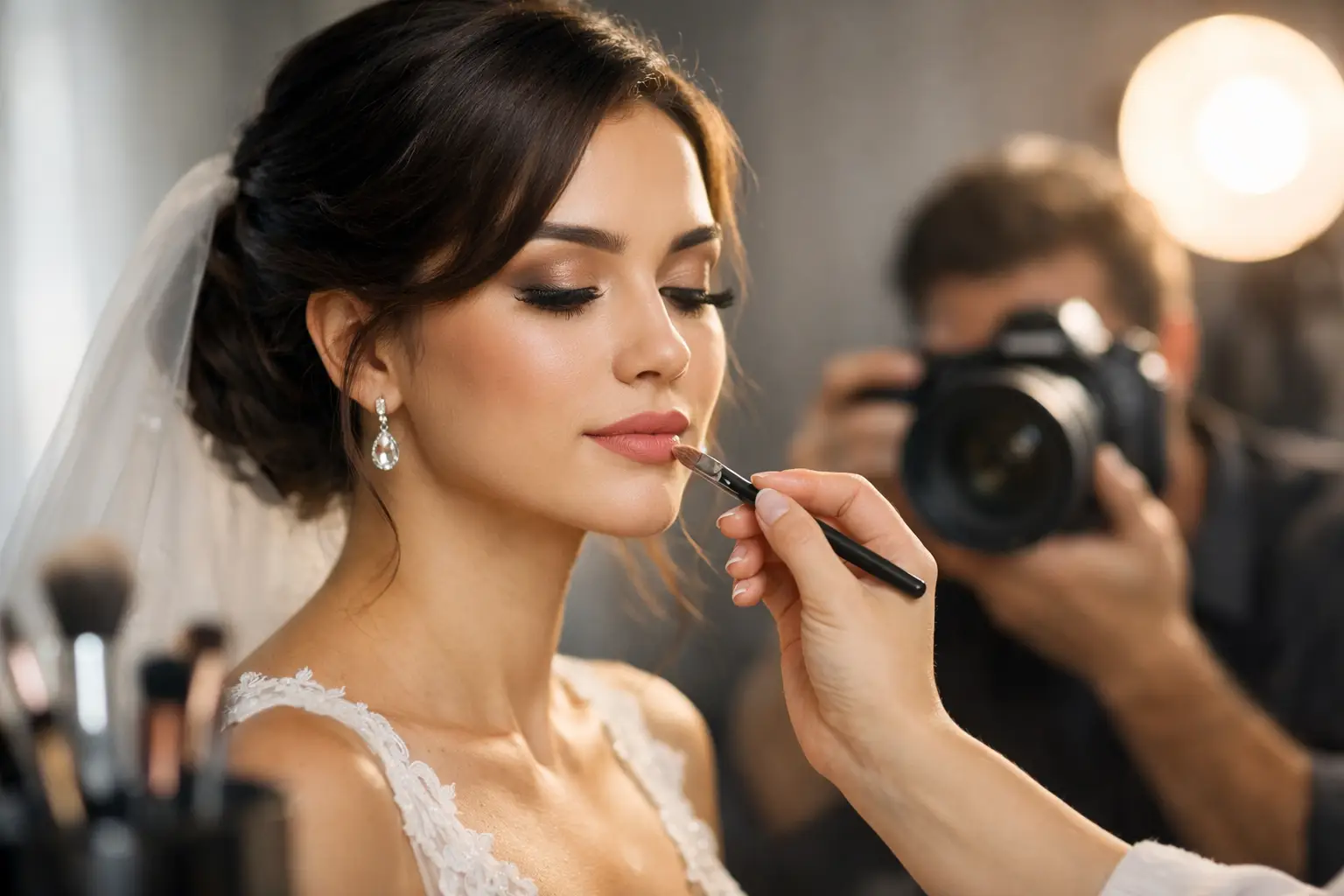
A bridal portrait can be taken in a quiet hotel suite, beneath direct noon sun, under a mandap rich with color, or on a candlelit dance floor. Bridal makeup for photography must meet each of those conditions without losing the quality that matters most: the bride still looks like herself, only more polished, composed, and luminous.
That standard asks more of makeup than a beautiful first impression. Wedding imagery captures close-up skin texture, changing light, movement, emotion, and hours of celebration. The goal is not to create a heavy camera face. It is to build a considered complexion and feature story that looks refined through a photographer’s lens while feeling elegant at conversation distance.
What Bridal Makeup for Photography Must Do
Photography does not simply record makeup. It interprets it through light, camera settings, editing style, and proximity. A look that appears soft in a mirror may read flat in a flash photograph. A foundation that feels comfortable for a ceremony may oxidize or separate after humidity, tears, greetings, and dancing. The right approach considers the entire visual environment, not one isolated portrait.
For a luxury wedding, that environment often includes multiple moments with distinct lighting. There may be window-lit getting-ready images, formal family portraits, an outdoor first look, a ceremony under warm florals, and reception photography under ambient light. If the celebration includes traditional South Asian events, the beauty design may also need to complement the intensity of a red lehenga, gold jewelry, a maang tikka, or the saturated palette of a sangeet without competing with it.
This is why a bridal look should be planned as a composition. Skin, brows, eyes, cheeks, lips, hair, wardrobe, and accessories all need to hold one visual point of view. A luminous complexion works best when the highlight placement is controlled. A dramatic eye requires enough dimension in the complexion and lip to keep the face balanced in photographs. Every choice should have a purpose.
Begin With Skin That Looks Like Skin
The most enduring bridal skin is neither overly matte nor excessively glossy. It has a soft, dimensional finish: hydrated where light naturally meets the face, refined where shine can distract, and carefully set in areas most likely to move. Think of it as tailored skin rather than a mask of coverage.
Preparation is foundational. A makeup artist assesses hydration, texture, sensitivity, oil production, and how the skin responds to products before selecting the base. The same formula is not ideal for every bride. A dry complexion may need richer hydration and a flexible foundation, while an oil-prone complexion may benefit from strategic mattifying layers that preserve a natural glow on the high points.
Coverage should be selective. Color correction and concealer can neutralize darkness or discoloration without forcing a full-coverage foundation across every inch of the face. This matters in close-up photography, where thick product can settle into expression lines or create a visibly different texture from the neck and décolletage.
Flashback is another consideration, especially for evening receptions. Some powders and sunscreen-rich formulas can reflect white in flash images when applied too heavily. That does not mean avoiding powder altogether. It means using it with precision, testing the overall finish when possible, and setting only where the complexion needs longevity.
Dimension matters more than shine
A camera can flatten the face, particularly under bright studio-style lighting or direct flash. Soft contour, tailored blush placement, and restrained highlight restore structure without appearing sculpted beyond recognition. Cream products can create a beautiful skin-like dimension, while finely milled powders help lock in the finish where needed.
The language of glow deserves restraint. A reflective highlight across textured areas, the center of the forehead, or too close to the under-eye can become more visible in photographs than it does in person. A refined bridal glow comes from healthy-looking skin, not from a layer of shimmer.
Build Eyes That Hold Their Shape
Eyes tend to carry a bridal image, especially in portraits where the veil, jewelry, and gown frame the face. They also need to withstand real emotion. Tears, long wear, humidity, and the natural warmth of a crowded celebration can challenge even the most beautiful eye makeup.
The answer is not always a darker eye. It is a stable one. Long-wear cream and powder layers, thoughtfully placed liner, and lashes selected for the bride’s eye shape create definition that remains visible without looking harsh. A soft brown liner may photograph more naturally than stark black for a daytime garden wedding. Conversely, a black wing or kohl-rimmed eye can be exactly right for an evening celebration, a couture gown, or a traditional bridal look with significant jewelry and color.
False lashes should enhance the eye, not obscure it. A lightweight, customized lash can lift and open the gaze while preserving the bride’s expression. Very dense lashes may be striking in editorial imagery, but they can cast shadows or hide the lid detail in wedding photographs. It depends on the desired aesthetic, the photographer’s style, and how close the camera will be.
For multicultural bridal beauty, color placement is especially meaningful. Jewel tones, metallics, henna, and heritage accessories can inform the makeup palette in a way that feels intentional rather than costume-like. Gold, bronze, berry, rose, emerald, and warm neutral tones each perform differently against skin undertones and fabric colors. The strongest result honors the tradition while keeping the face modern and beautifully legible on camera.
Choose Color With the Full Look in Mind
A bridal lip should be chosen after considering the gown, bouquet, jewelry, complexion, and ceremony lighting. The familiar request for a “nude lip” is a useful starting point, but nude is not one color. It may be a rose beige, caramel, mauve, warm peach, or muted berry depending on the bride’s natural lip tone and the rest of the makeup.
A lip that is too pale can disappear in photographs, particularly against a white gown or in bright outdoor light. A lip that is too opaque can look disconnected from a soft, luminous complexion. Layered color often offers the best balance: liner for shape, a lipstick with enough pigment to retain presence, and a small amount of balm or gloss where a reflective finish suits the look.
Blush deserves the same attention. It gives life to the complexion after foundation, contour, and powder have refined the skin. A slightly more visible blush application can be appropriate for photography, but it should still be diffused. The aim is a natural warmth that remains visible in images, not a stripe of color that dominates the face.
Timing Is Part of the Beauty Design
Even exceptional makeup benefits from a thoughtful wedding-day schedule. Rushing encourages unnecessary powder, hurried lash application, and missed opportunities to assess the finished look in different light. A calm beauty timeline allows the artist to complete the makeup, make final refinements after hair is styled, and ensure the bride is ready for portraits with time to breathe.
A trial is the ideal setting to make the creative decisions that should not be left to the wedding morning. It is where the artist can study the bride’s features, test color direction, talk through references, and understand what “natural,” “glamorous,” or “soft” means to that particular client. It is also the moment to discuss skin sensitivities, lash comfort, cultural traditions, outfit changes, and whether a touch-up look is needed for later events.
Bring visual context to the trial: images of the gown or lehenga, jewelry, veil, accessories, and a few photographs that communicate the desired mood. Reference images are useful, but they should guide the direction rather than dictate a copy. A makeup look that flatters one face, lighting condition, and camera treatment may need to be translated differently for another.
At BridalGal, the approach is rooted in that translation: couture-level polish shaped around the individual bride, her cultural expression, and the visual demands of the day.
The Detail Most Brides Forget: Movement
A wedding face is photographed while smiling, hugging, crying, laughing, eating, and dancing. Longevity comes from product selection, but also from allowing the makeup to move naturally with the skin. Over-setting can make a complexion feel rigid. Under-setting can leave it vulnerable to shine and transfer. The artistry lies in knowing where to reinforce and where to preserve softness.
Keep a small touch-up kit close by, especially for a long celebration. Blotting papers, the chosen lip color, a compact powder used sparingly, and a few cotton swabs are usually enough. The goal is maintenance, not rebuilding the makeup between every photograph.
When choosing your bridal beauty direction, ask one simple question: will this still feel like me when I see the photographs years from now? The most beautiful answer is not a trend or a formula. It is a look that lets your presence, your style, and the significance of the day remain unmistakably yours.