


How to Style Bridal Curls That Last All Night
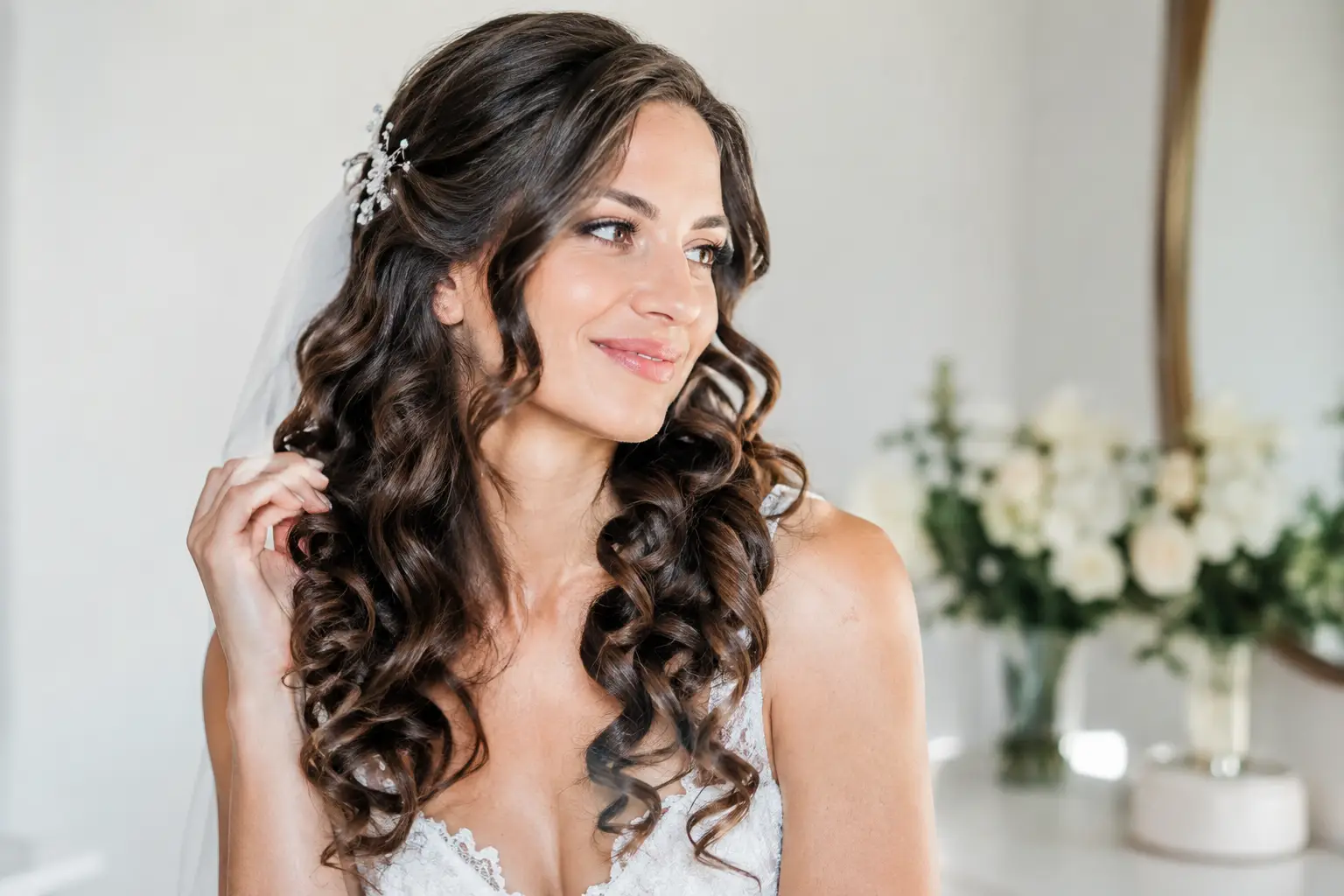
A bridal curl is not simply a curl with hairspray. It is a composed shape designed to flatter the gown, hold its presence through hours of celebration, and remain luminous in still photography and motion. Knowing how to style bridal curls begins with deciding what the hair needs to communicate: softness, couture polish, Old Hollywood glamour, romantic movement, or a sculpted foundation for a veil, dupatta, or heirloom accessory.
The most beautiful result rarely comes from using the same curl pattern throughout the head. It comes from preparation, intentional direction, and a finish that looks refined from every angle.
How to Style Bridal Curls for the Camera
Bridal hair is viewed more closely than almost any other event style. Guests see it in person, a photographer captures its dimension in daylight and flash, and video reveals how it moves when the bride turns, hugs, dances, and walks. The goal is not stiffness. It is controlled movement with a structure that does not collapse.
Begin with the visual language of the wedding. A silk column gown and architectural earrings may call for clean, brushed S-waves with a defined side part. A heavily embroidered lehenga or ornate sari can support more volume and a richer, more dimensional curl pattern. For a garden ceremony, airy curls may feel appropriate, but they still need an internal framework to survive humidity and open-air movement.
Face shape matters, though it should not become a set of rigid rules. Height at the crown can lengthen a rounder face, while softness around the cheekbones can balance a more angular profile. The part is equally influential. A deep side part creates drama and works beautifully with a one-shoulder neckline or a statement earring. A center part feels modern and symmetrical, especially when the curls are tucked behind the ears or paired with a veil placed low at the crown.
A trial is the right place to test these decisions with the actual accessories whenever possible. The gown neckline, veil weight, jewelry scale, and cultural headpiece placement all affect where the hair should sit. A style that photographs beautifully without a dupatta may need a different anchor system once fabric and pin placement enter the design.
Start With the Right Foundation
Long-lasting bridal curls are made before the iron is switched on. Freshly washed hair can be too soft and slippery, particularly when it is very fine, healthy, or naturally straight. Hair washed the evening before often offers more grip, but there is no universal rule. Some curl types and scalps require same-day cleansing for lift and freshness.
The priority is balanced texture: clean enough to move, prepared enough to hold. A lightweight mousse or styling foam through the roots and mid-lengths can create memory without making the hair feel coated. A heat protectant is essential, especially for lightened, color-treated, relaxed, or naturally delicate hair. On dense or coarse hair, a smoothing preparation helps the surface reflect light so the finished curls look polished rather than overly expanded.
Blow-dry the hair completely before heat styling. Any residual moisture weakens the set and can create frizz later. Direct the roots with the intended part already in place, then create a smooth foundation with tension from the brush. Volume at the root should be built purposefully, not teased indiscriminately. Too much backcombing can make a beautiful curl arrangement harder to brush, separate, and photograph cleanly.
For textured, coily, or highly humidity-responsive hair, the preparation may include a silk press, blowout, defined natural texture, or added extension work, depending on the desired finish. The correct approach depends on the bride’s hair goals, comfort, and the weather, not on a single definition of bridal beauty. A modern bridal curl can be glossy and brushed, softly textured, or distinctly coiled with intentional shape.
Choose the Curl Pattern Before You Curl
The barrel size sets the scale of the wave, but section size and direction determine its character. Larger barrels create a more relaxed pattern, although they can fall quickly on hair that resists curl. A smaller barrel gives greater longevity and can be brushed into a larger-looking wave once cooled. For many bridal styles, it is wiser to create a slightly stronger curl than the final vision, then soften it after the set has fully cooled.
Uniform curls can look overly formal when left untouched. Instead, alternate the direction of the curl through the back for movement, while keeping the front sections deliberate. Curls directed away from the face open the features and frame the eyes. In a glamorous side-swept look, the visible side may be shaped into more consistent, sculpted waves, while the hidden side provides support and balance.
Sectioning should be clean and proportional. Thick sections heated around an iron may look curled on the outside while remaining smooth at the center, causing the style to lose shape early. Smaller, even sections allow heat to travel through the hair and produce a more dependable result. For very thick hair, a strategic underlayer set is often what prevents the top layer from sinking as the day progresses.
Extensions can add density, length, and a more luxurious silhouette, but they should never be used as an afterthought. They need to match not only color but also texture, sheen, and the bride’s intended movement. When placed thoughtfully, extensions give curls the fullness needed for a couture finish without appearing separate from the natural hair.
Set, Cool, Then Refine
Heat forms the curl, but cooling sets it. Each freshly heated section should be allowed to cool in its shaped position before being brushed out. Pinning the curl temporarily can be especially useful for hair that falls easily, in humid climates, or when the finished style requires a strong wave pattern.
Once every section is cool, remove pins carefully and begin refinement. This is the stage that distinguishes an event-ready finish from a collection of individual ringlets. Use fingers first to preserve softness, then a suitable brush or comb to join the curls into a cohesive silhouette. A small amount of shine product can polish the ends, while a flexible finishing spray supports movement. Heavy oil and excessive spray can weigh down the shape, dull volume, and leave a finish that reads flat in photographs.
The front is where restraint matters most. A few face-framing pieces can feel romantic, but they should look intentional rather than accidentally loosened. The hairline may need light detailing to accommodate baby hairs, a sleek part, a soft wave, or the placement of jewelry. This is particularly relevant for multicultural bridal looks, where a maang tikka, passa, matha patti, veil, or dupatta becomes part of the overall composition rather than an accessory added at the end.
Secure the Style for Real Wedding Conditions
A bridal hairstyle must account for the ceremony, not just the getting-ready suite. Consider wind for waterfront portraits, humidity for summer celebrations, the weight of a cathedral veil, and the number of times an accessory may be removed or repositioned. A curl style can be soft in appearance while still having hidden support beneath it.
Pins should be concealed and anchored into a stable base, especially around a veil comb or dupatta placement. If the bride plans an outfit change, a half-up construction may be more practical than a fully loose style. If the hair will be covered for a ceremony, the artist should create enough volume and shape to recover gracefully once the covering is adjusted. These choices are not limitations. They are the technical details that protect the finished look.
For a celebration with significant dancing, embrace, and travel between venues, a small touch-up plan is wise. A bridal party member can carry extra pins, a travel-size finishing spray, and a clean smoothing brush. The bride should avoid repeatedly touching the curls, which transfers moisture and oils from the hands and separates the pattern prematurely.
Let the Curls Belong to the Whole Look
The strongest bridal curls do not compete with the makeup, gown, or jewelry. They create a frame around all three. A luminous makeup look can support soft, brushed waves; a dramatic eye and ornate jewels may call for a more edited curl shape that keeps the face visible. The relationship between texture and proportion is what makes the result feel elevated.
At BridalGal, the approach is always tailored to the bride’s hair, heritage, wardrobe, and visual setting. The aim is not to make every bride wear the same version of romance. It is to create hair that feels unmistakably hers, then holds its beauty long after the final portrait is taken.
Bring reference images to your trial, but focus on what you love about each one: the volume, the part, the finish, or the movement. That conversation gives your artist the clarity to translate inspiration into curls that are designed for your celebration, rather than borrowed from someone else’s.