


Choosing a Makeup Artist for Saree Wedding Style
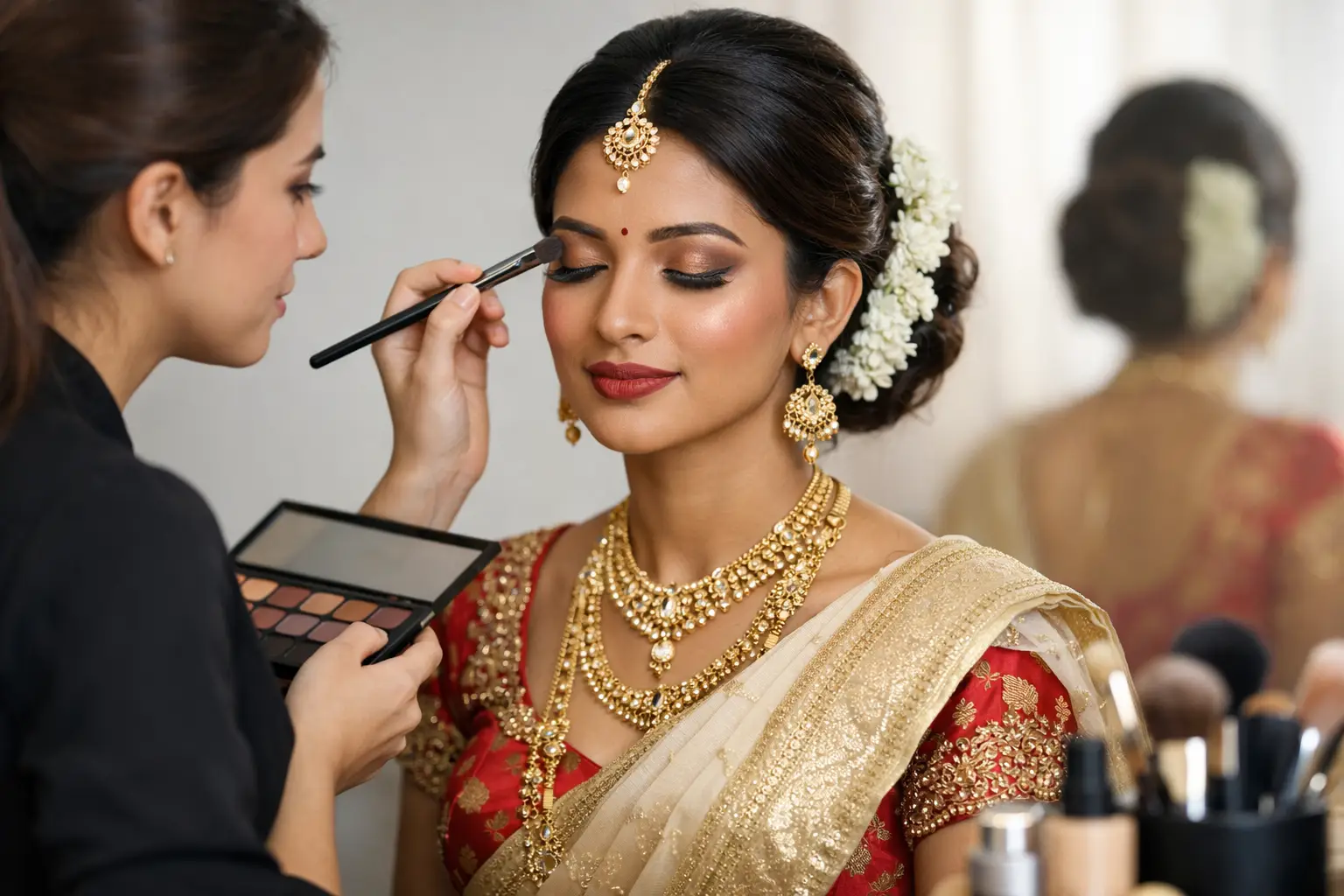
The saree is pinned, the jewelry has its own light, and every detail from the blouse neckline to the border has been selected with intention. A makeup artist for saree wedding celebrations should understand that makeup is not an accessory added at the end. It is the element that brings the entire visual composition into focus – in person, in portraits, and across a full day of ceremony, movement, and celebration.
For a bride wearing a saree, the most compelling beauty look balances heritage with personal style. It should honor the color, drape, and significance of the attire while feeling refined enough for a modern wedding in New York, Florida, or any destination setting. The right artist does more than create a beautiful face. They read the room, the fabric, the light, and the bride.
Why Saree Bridal Beauty Requires a Distinct Eye
A saree creates a strong frame around the face. Whether it is a luminous silk, a richly embroidered bridal weave, a finely pleated chiffon, or a contemporary pre-draped silhouette, its color and texture affect every makeup decision. A saturated red, maroon, emerald, or cobalt saree may call for sculpted warmth and a considered lip. A softer ivory, blush, or gold palette can support radiant skin and more tonal definition. The goal is never to compete with the garment. It is to create proportion.
This is where cultural fluency matters. South Asian bridal beauty can include dramatic eyes, defined brows, glowing complexions, a statement lip, and elaborate jewelry, but no two brides want the same interpretation. Some envision a classic bridal look with kohl-rimmed eyes and rich color. Others prefer polished skin, a softly lifted eye, and a restrained lip that lets couture details take the lead. Both can be authentic when they are executed with precision.
A skilled artist also understands the practical realities behind the glamour. Saree weddings often move through several environments: a ceremony space, family portraits, outdoor arrivals, a ballroom reception, and a dance floor. Makeup needs to retain its dimension under warm indoor lighting, flash photography, video, and close-up embraces without appearing heavy or mask-like.
What to Look for in a Makeup Artist for Saree Wedding Events
Portfolio matters, but the right portfolio tells a specific story. Look beyond a single polished image and consider whether the artist’s work holds up across different skin tones, facial structures, lighting conditions, and bridal aesthetics. A beautiful editorial image can demonstrate taste; a consistent bridal body of work demonstrates judgment.
The strongest artists can make a full-coverage complexion look alive. They know where to build coverage, where to preserve natural skin, and how to create a finish that remains elegant in high-resolution photography. This is especially valuable for wedding days, where a bride may be photographed from a few inches away and from across a room within the same hour.
Ask to see work featuring sarees, lehengas, traditional jewelry, and multicultural celebrations. This is not about placing a bride into a formula. It is about confirming that the artist recognizes the visual language of the occasion. The placement of blush, intensity of liner, shape of a lip, and choice of highlighter all read differently beside a maang tikka, a dramatic necklace, or a heavily embellished pallu.
Hair artistry deserves the same attention. A center-parted low bun, sculptural waves, a polished braid, or a floral-adorned chignon must work with the saree’s drape and neckline while accommodating veils, dupattas, pins, and jewelry. The most luxurious result is engineered to last, yet never looks overworked.
A Trial Should Feel Like Creative Direction
A bridal trial is not simply a test run. It is the first stage of visual direction for the wedding. Arrive with photographs of the saree, blouse, jewelry, venue, and any meaningful references, but leave room for professional interpretation. An experienced artist will see connections that may not be obvious in a saved image: how a gold border changes the ideal highlight, how a deep blouse color affects the eye palette, or how a particular lash shape might photograph under a veil.
The most useful conversation is not “Can you copy this?” It is “What will make this feel like me in this setting?” Be candid about your normal makeup habits, your skin concerns, and the elements you do not want. If you rarely wear a bold lip, your wedding day may not be the moment to commit to one simply because it is traditional. Conversely, if a red lip makes you feel powerful, it can be the detail that makes the entire look feel complete.
A thoughtful trial also considers longevity. Mention the ceremony timing, outdoor exposure, expected humidity, outfit changes, and whether you anticipate tears. A destination wedding in tropical weather requires different product choices and touch-up planning than a winter celebration in Manhattan. The best approach depends on the conditions, not a one-size-fits-all product list.
The Balance Between Tradition and Couture Finish
There is a difference between following a bridal reference and designing a look with presence. Couture-minded beauty considers silhouette, texture, color story, and movement. It makes room for tradition without reducing it to a collection of expected features.
For example, a bride in a heritage red saree may choose softly diffused bronze eyes rather than a heavily cut crease, allowing the jewelry and textile to remain prominent. Another may pair the same saree with graphic liner and a velvety red lip for a more editorial effect. Neither choice is more bridal than the other. The distinction lies in whether the look is coherent, personal, and beautifully finished.
This is also why undertone expertise is essential. Foundation should match the neck and décolletage without flattening the complexion. Concealer should brighten strategically, not create a pale cast in flash photography. Gold, copper, berry, rose, and neutral tones should be selected according to the bride’s undertones and the saree’s actual hue, rather than assumed from a trend image.
At BridalGal, this approach is shaped by multicultural bridal artistry and production-ready technique. The work is designed to feel composed at first glance and even more considered in the photographs a family will revisit for decades.
Plan the Wedding Morning Like a Production
The calmest bridal mornings are structured ones. Hair and makeup timing should account for skin preparation, hair setting, dressing, jewelry placement, portraits, and the inevitable small delays that arrive with a full household. A rushed final 20 minutes can affect not only the beauty result but also how the bride feels when she steps into the ceremony.
Share a clear schedule with your artist in advance and identify who requires services. If there are mothers, sisters, bridesmaids, or additional family members receiving hair and makeup, establish the order early. The bride should have enough time after final touches to dress without pressure, receive jewelry assistance, and take portraits before guests arrive.
Keep a small touch-up plan close by: lip color, blotting papers, and any essentials recommended by your artist. This is not because the makeup should fail. It is because a wedding day includes meals, kisses, happy tears, and hours of celebration. A brief refresh before the reception keeps the look intentional through the final photograph.
Choose an artist whose work makes you feel recognized, not redesigned. When the saree, hair, makeup, and jewelry speak the same visual language, you are free to stop checking the mirror and be fully present for the moment you have dressed so beautifully to celebrate.