


What an Editorial Makeup Artist Brings to Set
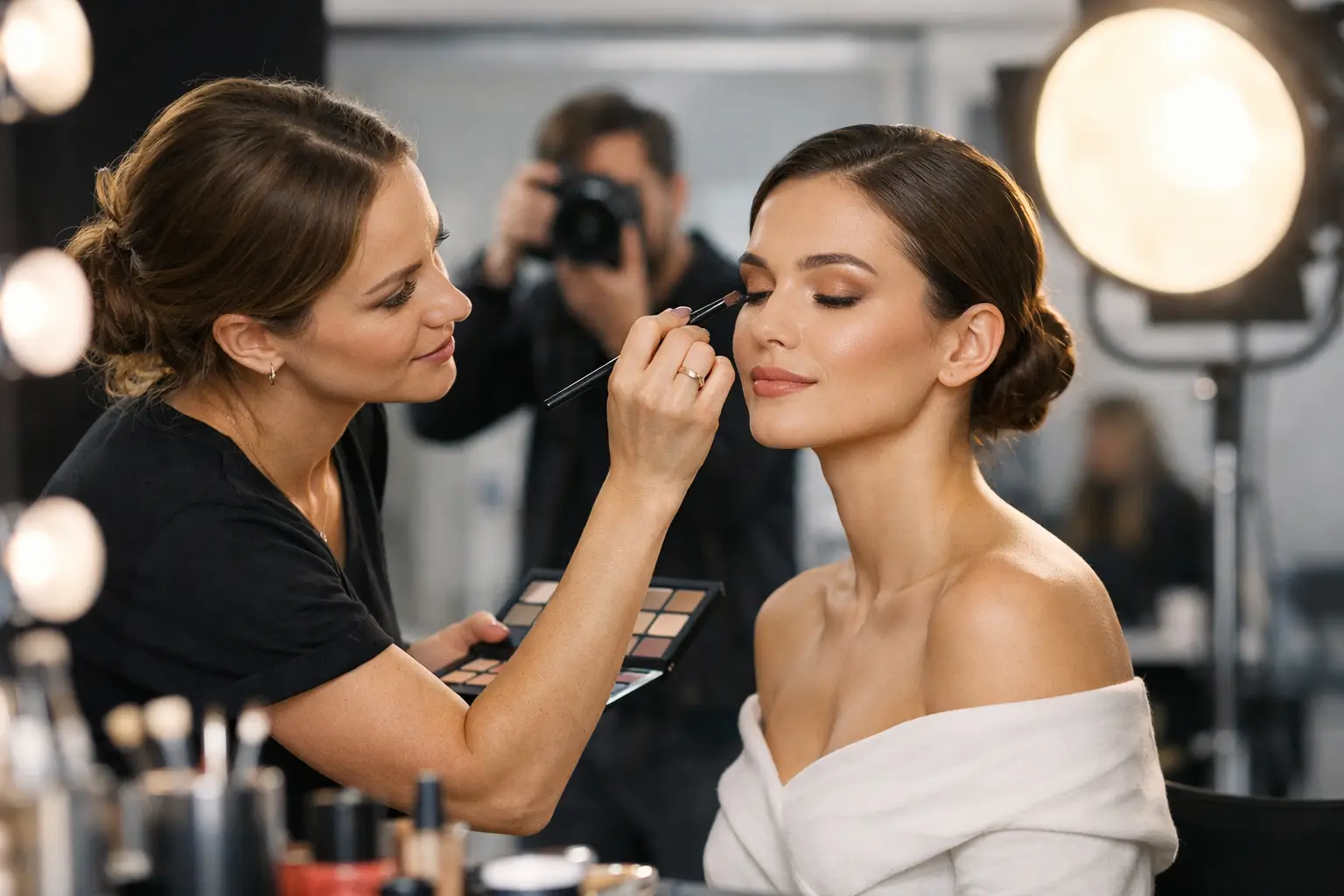
A finished image can feel effortless: luminous skin, a sharply defined eye, hair that moves exactly as the fabric moves. Behind that apparent ease is the judgment of an editorial makeup artist – someone who understands how beauty must perform under lenses, lighting, movement, and the close scrutiny of a final edit.
For fashion, commercial, film, and luxury wedding work, makeup is not an isolated service. It is part of the visual direction. It supports the garment, honors the subject, and gives the photographer or production team a face that holds its dimension from the first frame to the final image.
The Editorial Makeup Artist’s Point of View
Editorial artistry begins with intention. The artist reads more than a reference image or a trend report. They consider the story of the collection, the quality of light, the styling, the location, and the texture of the subject’s skin. A romantic couture story may call for softly sculpted skin and a veil of warmth around the eyes. A modern campaign may need a cleaner complexion, graphic liner, or deliberate contrast between bare skin and saturated color.
The goal is not to place every fashionable technique on one face. It is to create a look with a point of view. That restraint is often what makes an image feel expensive. A strong editorial makeup artist knows when a glossy lip will photograph beautifully and when it will compete with the rest of the frame. They know that a dramatic eye can be compelling, but only if it remains legible under the chosen lighting.
This is where editorial work differs from everyday beauty. The mirror is only one part of the assessment. The real test is how the work translates through a professional camera, at a distance and in close-up, in still photography and in motion.
Makeup That Understands the Camera
Cameras notice details the eye may forgive. Flash can flatten complexion, high-resolution photography can reveal product buildup, and video can expose an overly powdery finish as soon as the talent turns toward the light. Editorial makeup is built with these realities in mind.
Skin preparation is central. The most refined finish does not begin with more foundation. It begins with assessing hydration, texture, tone, and the demands of the day. A dewy fashion image and a long outdoor wedding may both appear luminous, yet they require different product choices and different control. One may benefit from strategically placed sheen; the other may need a finish that stays fresh through humidity, tears, embraces, and hours of celebration.
Color also shifts under production conditions. A blush that looks delicate in person can disappear in a studio. A contour that reads beautifully on a test shot may feel too pronounced in daylight. This is why artists test, adjust, and continue to observe. The work evolves with the set rather than being treated as fixed the moment the chair is turned around.
Hair follows the same discipline. Editorial hair must be designed for the image, whether that means polished waves with controlled movement, a sculptural chignon, or texture that appears spontaneous while remaining consistent between shots. It should complement the necklines, jewelry, headpieces, and profile of the garment. When hair and makeup are considered together, the result feels composed rather than assembled.
Precision Without Losing the Person
A memorable beauty look should never erase the person wearing it. This is especially meaningful in bridal and multicultural work, where beauty carries personal history, family tradition, and a sense of occasion that extends well beyond the photograph.
A South Asian bridal look, for example, may be rich in color, adornment, and ceremonial detail. It calls for artistry that can balance expressive eyes, vibrant textiles, jewelry, and the practical demands of a long celebration. The finish must remain elegant beside intricate lehenga work and strong enough to perform across daylight portraits, ballroom lighting, and video. The answer is not simply more makeup. It is proportion, placement, and a deep understanding of how every element relates.
The same sensitivity matters across all skin tones, facial features, and cultural references. Foundation selection, color correction, undertones, contour placement, and lip color are not generic decisions. They should be tailored with fluency and care. An artist’s technical range matters, but so does their ability to listen closely to what a client wants to recognize in the mirror.
For a bride, editorial-level makeup can offer the best of both worlds: a polished, photograph-ready finish and an unmistakably personal presence. The beauty should feel elevated enough for the images, yet still feel right when she is greeting her family, walking into the ceremony, or seeing her partner for the first time.
Collaboration Is Part of the Craft
On a set, an editorial makeup artist is working within a creative conversation. The photographer may be chasing a particular shadow. The fashion stylist may need the face to balance an ornate gown. The creative director may ask for more edge, less color, or a complexion that feels nearly bare. The artist needs the confidence to execute a clear vision and the flexibility to refine it quickly.
That collaboration is equally valuable at a wedding. Planners, photographers, florists, designers, and dressmakers all contribute to the atmosphere of the day. Beauty should belong to that world. A sleek bun may give a minimalist gown its strongest line. Soft, dimensional makeup may suit candlelit reception photographs better than a matte, heavily contoured approach. The right choices make the entire visual story feel considered.
Production experience also brings practical calm. Touch-up timing, product continuity, sanitation, schedule changes, weather, and fast adjustments are all part of the work. When the day is moving quickly, the ability to stay composed protects the experience for everyone involved.
When Editorial Beauty Is the Right Choice
Editorial artistry is ideal when the images carry real weight. That may mean a bridal celebration with an exceptional wardrobe and a full photography team, a fashion presentation, a brand campaign, an engagement session, a magazine feature, or a film project. In each case, the beauty must do more than look beautiful at arm’s length. It needs to hold a visual identity.
That does not mean every client needs a high-fashion look. Editorial can be soft, classic, romantic, or nearly imperceptible. Its value lies in the level of thought behind the finish. A clean face with brushed brows and a neutral lip can be every bit as editorial as a dramatic smoky eye when it has been shaped for the clothing, mood, and light.
There is also a trade-off worth understanding. A look designed for a close-up campaign may require more precision, maintenance, and time than a relaxed daytime event. A high-shine finish may be beautiful for a controlled shoot but less practical in tropical weather. The strongest artist does not insist on one signature look. They adapt the creative ambition to the real conditions of the assignment.
A Beauty Standard Built for the Final Frame
Luxury beauty is often recognized in the details that do not announce themselves: skin that appears alive rather than masked, lashes that define without distracting, a lip that remains balanced against the gown, and hair that photographs from every angle. These are the choices that create images with longevity.
For Lilly Rivera and BridalGal, this standard is shaped by couture sensibility, multicultural beauty fluency, and experience across weddings and visual productions. It is an approach designed for clients who want more than a finished face. They want artistry that belongs in the frame.
When selecting an artist for an important celebration or production, look beyond a single trend or before-and-after image. Choose someone who can see the whole composition, honor the person at its center, and create beauty that still feels compelling when the moment becomes a photograph.