


Choosing a New York Makeup Artist for Your Day
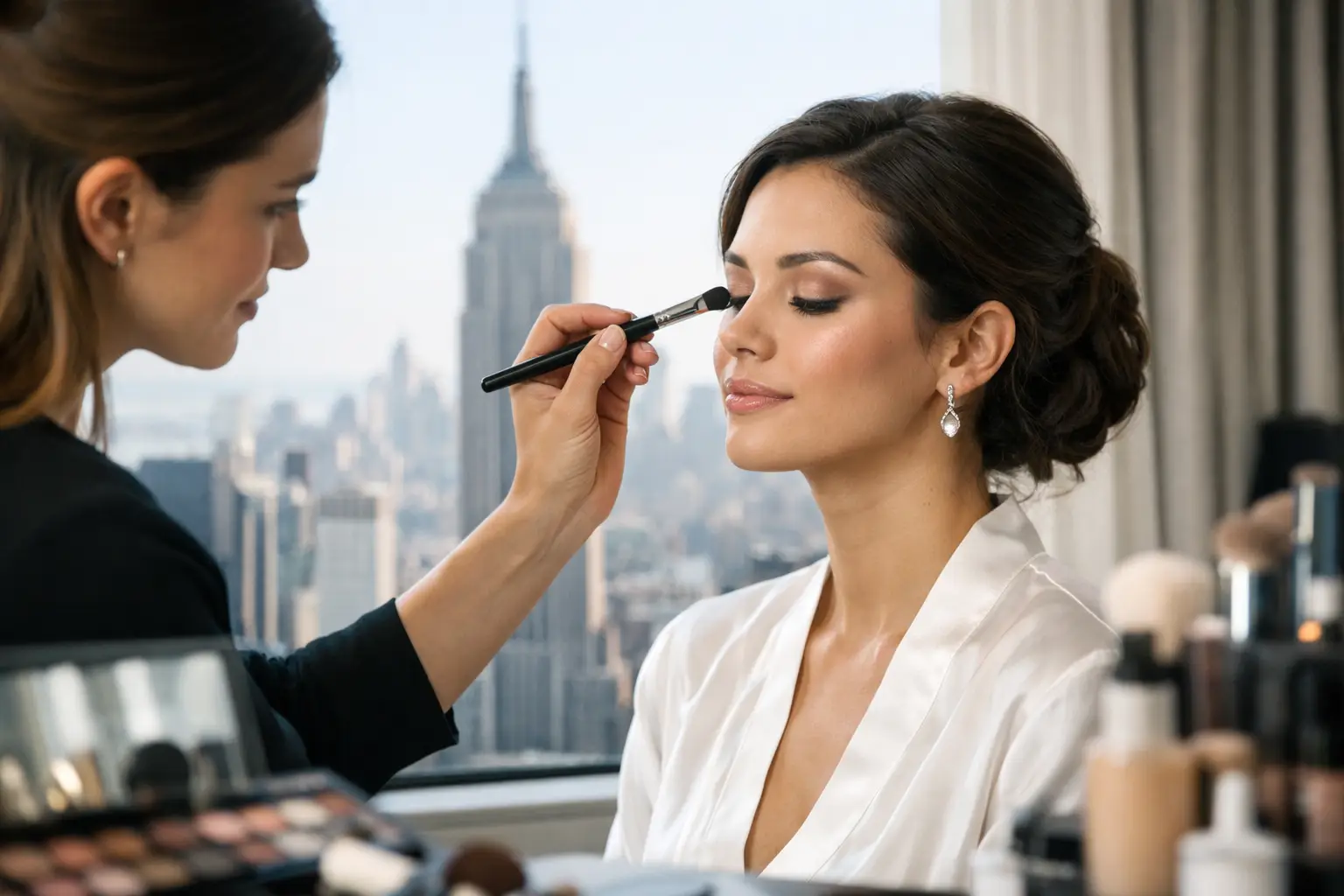
A New York makeup artist is often asked to do more than create a beautiful face. The work must hold its own in a sunlit loft, beneath ballroom chandeliers, through an emotional ceremony, and in high-resolution photography that preserves every detail long after the last dance. For a wedding or visual production, makeup is not an accessory. It is part of the composition.
New York clients tend to arrive with a strong point of view. They may want polished skin that still looks like skin, a couture-level eye that reads in photographs without feeling heavy in person, or a bridal look that honors cultural tradition while feeling unmistakably current. Finding the right artist is less about choosing a trend and more about choosing someone with the technical range, visual judgment, and calm precision to bring that vision into focus.
What Sets a New York Makeup Artist Apart
New York beauty artistry is shaped by proximity to many worlds at once: fashion, film, publishing, luxury hospitality, weddings, and an extraordinary range of cultures. An artist working at this level understands that a look must suit both the person and the setting. A softly defined bridal eye can be exquisite in a candlelit ceremony, while a bolder structure may be needed for a fashion editorial or an event photographed under demanding flash.
The strongest artists do not apply the same signature face to every client. They read bone structure, skin texture, wardrobe, lighting, hairstyle, and the overall visual language of the occasion. They understand when a luminous finish will photograph beautifully and when it may become too reflective under video lighting. They know that a classic red lip can be more modern than a fleeting trend when it is balanced with the right skin, liner, and gown.
This discernment matters in a city where images move quickly. Your beauty look may be seen from across a room, in a close-up on a photographer’s monitor, or in a wedding album designed to be revisited for generations. The goal is not simply to look made up. It is to look considered.
Bridal Beauty Requires a Different Kind of Preparation
Wedding makeup carries a particular responsibility. It must feel special enough for the occasion while remaining recognizable, comfortable, and emotionally true to the bride wearing it. That balance is highly personal. Some clients want luminous, barely-there makeup; others envision sculpted features, defined eyes, and the drama of couture glamour. Neither approach is inherently more refined. The artistry lies in making the choice feel intentional.
A thoughtful consultation should move beyond a collection of inspiration images. Those references are useful, but they need interpretation. A look that is beautiful on a model with a different skin tone, eye shape, or wedding venue may require a different approach. The artist should ask about the ceremony time, the gown, jewelry, hair direction, photography style, and whether the celebration includes multiple outfits or traditions.
For South Asian and multicultural weddings, this conversation becomes even more essential. Bridal beauty may need to complement a lehenga or sari, honor the significance of a ceremony, coordinate with heirloom jewelry, and transition gracefully between daytime rituals and an evening reception. A modern result does not require minimizing tradition. Often, the most compelling looks are built by respecting color, adornment, and ceremony while shaping the makeup with a contemporary editorial eye.
Makeup That Performs Across Every Camera
A makeup look can appear flawless in person and still need adjustment for photography or film. Cameras read contrast, texture, and shine differently than the human eye. Professional artistry accounts for this without making the face look flat or overworked.
Skin preparation is central. Rather than covering every trace of texture, an experienced artist builds a finish that looks fresh at close range and remains balanced under changing light. Strategic complexion work, careful color correction, and precisely placed powder can make the difference between a face that looks luminous in portraits and one that appears overly reflective by the ceremony’s end.
Eyes and lips need similar consideration. A wash of neutral shadow may look beautifully restrained in person, but it can disappear in images if there is no depth at the lash line or crease. A lip color must work with the client’s natural undertone, not just the palette of the invitation suite. These are small decisions, yet they shape the final visual impression.
How to Evaluate an Artist’s Portfolio
A portfolio should reveal more than a set of attractive images. Look for consistency across skin tones, ages, facial features, and lighting environments. An artist with genuine range can create a polished, radiant complexion on many clients without making everyone appear identical.
Pay close attention to close-ups. Is the skin dimensional? Does the makeup sit naturally around the eyes and mouth? Are brows structured without becoming severe? Can you see an understanding of proportion, particularly in dramatic looks? Finished work should feel elevated, but it should also feel believable on the person wearing it.
It is equally useful to look for evidence of different settings. Bridal work demonstrates longevity, emotional sensitivity, and the ability to create a complete look around a client. Editorial, commercial, and film work can demonstrate adaptability, collaboration, and camera awareness. For clients who want fashion-forward beauty without sacrificing polish, that overlap is especially valuable.
A portfolio is also where cultural fluency becomes visible. Artists who work confidently across multicultural celebrations understand that beauty is not one standard applied universally. It is an exchange between personal identity, heritage, style, and occasion.
The Trial Is a Creative Conversation
A makeup trial is not merely a preview appointment. It is where preferences become specific. This is the time to learn whether the client feels most confident with softly sculpted cheeks or a cleaner, fresher complexion; whether a black liner feels essential or too severe; whether a glowing finish lasts comfortably on their skin.
Arrive with inspiration, but leave room for expertise. Sharing what you love is helpful. So is explaining what you do not want: makeup that feels heavy, lashes that are too dramatic, brows that look overly defined, or a complexion that no longer resembles your skin. The more candid the conversation, the more precise the outcome.
There are trade-offs worth discussing openly. A very dewy look may require more maintenance in summer humidity. A statement lip may need touch-ups after meals. Extremely natural makeup can need slightly more definition for photography than expected. A skilled artist will not dismiss these preferences. They will explain how to preserve the spirit of the look while preparing it for the real conditions of the day.
Artistry Is Also an Experience
Luxury beauty service is felt in the details: a well-paced morning, a composed presence, sanitation standards, thoughtful organization, and clear communication with planners, photographers, hairstylists, and family members. On a wedding day, technical skill and emotional intelligence are closely connected. The artist should create an atmosphere that feels focused, unrushed, and reassuring.
For larger bridal parties, timing matters as much as aesthetics. The lead artist must know how to build a schedule that protects the bride’s finishing time, accommodates dressing and photography, and allows the entire group to feel cared for. For destination celebrations, preparation becomes even more layered, with travel planning, climate considerations, and an understanding that the beauty plan may need to adapt to a new setting.
This is where a dedicated team can be valuable, particularly for multi-day weddings or productions with a large cast. Still, size alone is not the deciding factor. What matters is cohesion. Every person receiving services should look polished within the same visual world, while retaining their own features and comfort.
Choosing the Right New York Makeup Artist
The right fit is not always the artist with the most dramatic social presence or the longest list of trends. It is the artist whose work reflects your definition of beauty and whose process gives you confidence. Ask whether their portfolio aligns with your event, whether they have experience with your skin tone and cultural references, and whether they understand the demands of your venue and photography style.
For clients seeking bridal artistry informed by couture, multicultural beauty, and production-ready technique, BridalGal approaches each face as part of a larger visual story. The objective is polished, dynamic beauty that feels exceptional in the moment and remains compelling in every image that follows.
Choose the artist whose work lets you imagine not a different version of yourself, but your most assured presence: beautifully composed, fully seen, and ready for the frame.