


12 Lehenga Bridal Hairstyles With Couture Polish
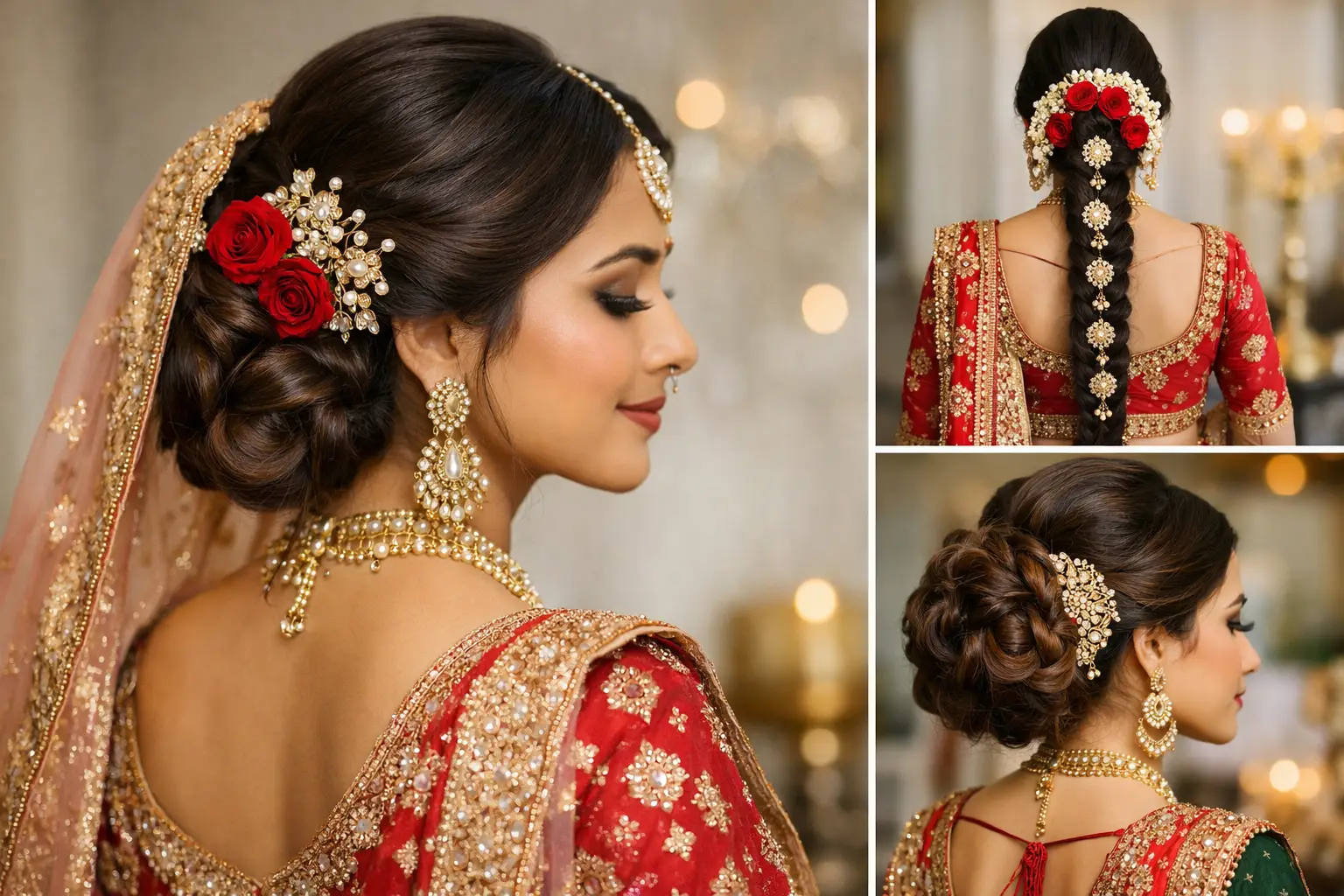
A lehenga can carry extraordinary visual weight: embroidery that catches candlelight, a sculptural blouse, a dupatta placed with intention, jewelry that frames the face. The right lehenga bridal hairstyles do not compete with those details. They create the structure that lets every element read beautifully, from the mandap to the final portrait.
For a bride wearing a heavily worked ensemble, hair is not an afterthought. It is part of the composition. The ideal look respects tradition, supports the placement of a dupatta or hair adornment, and remains polished through photographs, movement, embraces, and hours of celebration.
The Architecture of Lehenga Bridal Hairstyles
A successful bridal hairstyle begins with proportion. A high-neck blouse, a wide choker, a low-back silhouette, or a grand maang tikka each asks the hair to behave differently. The most compelling choices create balance around the face while leaving enough visual space for the garment and jewelry to be seen.
Texture matters just as much. Sleek hair can lend a modern, couture finish to a richly embellished lehenga. Soft dimensional waves bring movement to a lighter, romantic look. A more detailed updo may be the answer when the outfit is maximalist and the bride wants the eye drawn upward toward her face, veil, and jewelry.
The goal is never simply to make the hair look elaborate. It is to make the entire bridal image feel intentional.
12 Looks That Work Beautifully With a Lehenga
1. Center-Parted Low Bun With a Maang Tikka
This is a classic for good reason. A clean center part creates a natural path for a maang tikka, while a low bun offers a refined foundation for a dupatta. It feels ceremonial without becoming overly formal, especially when the bun is softly textured rather than tightly lacquered.
It is particularly effective with a statement necklace or ornate earrings because it keeps the neck and jawline clear. Brides with very fine hair may benefit from discreet padding or extensions to give the bun an elegant, believable scale.
2. Sculpted Hollywood Waves
For a lehenga with contemporary tailoring or a fashion-forward blouse, sculpted waves offer unmistakable glamour. The shape is controlled, glossy, and polished, but it should still move when the bride turns her head. A deep side part creates a dramatic sweep that works beautifully with an asymmetrical neckline or a single statement earring.
This look is best reserved for events where the dupatta is not intended to sit over the head for long periods. Fabric friction and pinning can disturb a precise wave pattern, so placement should be planned before styling begins.
3. Soft Half-Up Waves With Fresh Florals
A half-up style offers romance without sacrificing structure. The crown is lifted and secured, leaving waves through the lengths while providing an anchor for flowers, a lightweight veil, or a pinned dupatta. Jasmine, roses, orchids, or restrained floral accents can be chosen to echo the palette of the lehenga rather than introduce another competing color.
This style suits a daytime ceremony, garden setting, or destination wedding exceptionally well. The trade-off is longevity: loose waves require thoughtful preparation, humidity-aware products, and a secure internal foundation to remain polished late into the evening.
4. Voluminous Low Ponytail
A low ponytail is one of the most versatile modern options. With a lifted crown, wrapped base, and dimensional waves, it feels polished enough for a formal ceremony yet fresh in motion. It can also accommodate a dupatta with less bulk than a large bun.
The key is intention. A ponytail that sits too low or lacks internal structure can flatten in photographs. When properly constructed, it creates an elongated profile and presents beautifully from behind during the walk down the aisle or entrance.
5. Braided Bun With Gajra Detail
A braid integrated into a low bun gives the style ceremonial texture and visual interest from every angle. A gajra can be wrapped around the base for a traditional finish, or placed more sparingly for a cleaner interpretation. This is a strong choice for brides who want their hairstyle to honor a classic bridal language while still feeling tailored to their personal aesthetic.
Consider the scale of the flowers carefully. A delicate gajra can complement intricate embroidery; an oversized floral arrangement may compete with it.
6. Sleek Knotted Chignon
For the bride drawn to minimalism, a knotted chignon can be striking against a heavily embroidered lehenga. The contrast is the appeal: intricate couture below, disciplined simplicity above. A precise middle part and glossy finish make the look especially suited to editorial portraits and black-tie celebrations.
This style also gives substantial support to heavier dupatta draping. It is less forgiving of flyaways and hairline texture, however, so the finish should be customized rather than forced into an overly severe shape.
7. Side-Swept Waves With a Passa
A passa brings its own asymmetrical beauty, and the hairstyle should make room for it. Side-swept waves with volume on the opposite side help balance the jewelry while keeping the face open. The effect is romantic, dimensional, and particularly striking in profile.
Because the passa has visual prominence, restraint elsewhere is useful. Choose either a softer wave pattern or a quieter earring, depending on the overall jewelry story.
8. Crown Braid Into Textured Lengths
A crown braid offers a softer alternative to a fully pinned updo. It frames the head beautifully and can conceal the base of a veil or dupatta placement, while the remaining hair falls in waves or a gentle curl pattern. The finish feels airy, but the engineering beneath it must be exact.
This is often an excellent option for a bride who wants to wear her hair down without having it fall forward during portraits or rituals. It also photographs beautifully when the lehenga has floral embroidery or a lighter, more ethereal color story.
9. High Bun With Statement Earrings
A high bun delivers presence. It elongates the neck, exposes the shoulders, and creates a clean stage for extraordinary earrings. Paired with a strapless, square-neck, or modern corset-style blouse, it can feel distinctly couture.
The consideration here is headpiece placement. A high bun may not suit every dupatta drape or maang tikka configuration. If the bridal vision includes both, the hair and draping plan should be designed together at the trial.
10. Loose Braided Ponytail
A loose, full braid with softly pulled sections creates a more relaxed silhouette while still feeling special enough for a wedding. It is lovely with a lighter lehenga, a destination celebration, or a mehndi look where ease and movement matter. Embellished pins, small blooms, or metallic thread can be woven in with restraint.
The braid should look generous, not undone. Extensions can provide the length and density needed for a luxurious result, especially when the bride’s natural hair is shorter or finer.
11. Tucked French Twist
The French twist is an unexpected and elegant match for a lehenga with a clean, architectural blouse. Tucked and softened at the crown, it offers a European couture sensibility while allowing traditional jewelry to remain central. It is especially effective for a reception transformation when the bride wants a second look that feels distinct from the ceremony.
Its success depends on hair length and density. Very layered hair may require additional support to achieve the smooth, elongated line that makes this style so compelling.
12. Natural Texture With Elevated Definition
Not every bride needs waves, a bun, or a braid. Defined curls, coily texture, or naturally voluminous hair can be styled into a bridal finish that feels authentic and luxurious. The artistry lies in shape, hydration, hold, and detail placement, whether that means a jeweled comb, delicate flowers, or a carefully secured headpiece.
For multicultural bridal beauty, this approach is essential: the hairstyle should celebrate the bride’s natural texture rather than ask her to abandon it for a single conventional image of bridal hair.
Choosing Hair Around the Dupatta, Not After It
The dupatta often determines the technical direction of the hairstyle. A head-draped dupatta needs an anchor that is secure but comfortable, with pin placement hidden inside the style. A shoulder-draped dupatta offers more freedom for down styles, side sweeps, and larger accessories.
This is why hair and draping should be considered as one design conversation. The weight of the fabric, the border placement, the number of layers, and the ceremony’s duration all affect what will feel secure. A beautiful bun that cannot support the drape is not the right bun.
Camera-Ready Is Different From Overdone
Bridal hair must hold up under close photography, video, flash, and real movement. That does not mean it should look stiff. The most enduring finishes have controlled shine, clean parting, secure foundations, and softness placed where it will flatter the face.
At BridalGal, the approach is informed by both bridal ritual and production-ready beauty. A hairstyle is assessed from the front, profile, back, and overhead angles, because each viewpoint may appear in the final gallery. The right finish looks composed in person while retaining dimension on camera.
The Trial Is Where the Look Becomes Personal
Bring images of your lehenga, blouse, jewelry, dupatta drape, and any hair accessories to your trial. More importantly, share how you want to feel. Regal and traditional, sleek and fashion-led, softly romantic, or somewhere between those references are all valid directions.
The most beautiful bridal hairstyle is the one that holds its shape without asking you to hold still. Choose a look that lets you wear your lehenga with confidence, move through every ritual with ease, and recognize yourself in every photograph.