


What a New York Bridal Makeup Review Should Reveal
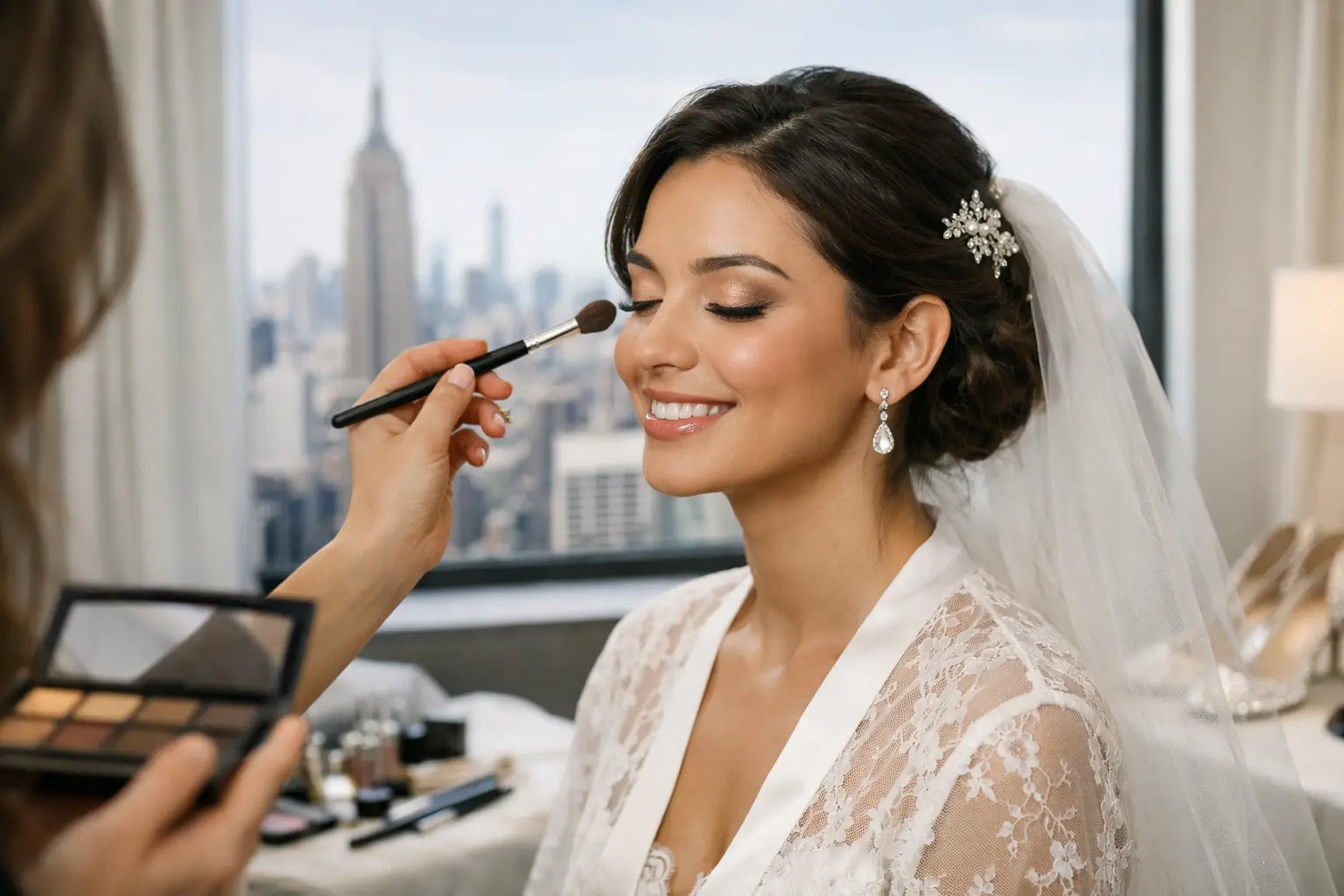
A New York bridal makeup review should tell you far more than whether a bride looked beautiful in a single photograph. In a city where a wedding day may move from a hotel suite to a cathedral, a rooftop, and a candlelit reception, makeup must hold its character through changing light, close embraces, flash photography, and hours of celebration. The strongest reviews reveal an artist’s judgment: how they listen, how they adapt, and how their work translates the bride’s personal style into an image that feels polished from every angle.
For a style-conscious bride, the question is rarely whether makeup will be applied well. The more meaningful question is whether the artist can create a look with presence – one that honors the occasion, complements the gown and jewelry, respects cultural tradition, and remains unmistakably hers.
What a New York Bridal Makeup Review Can Tell You
A useful review describes an experience, not just an outcome. Phrases such as “she made me feel beautiful” are meaningful, but they become more valuable when accompanied by details: the artist refined a look after the trial, matched complexion products thoughtfully, kept the schedule calm, or adjusted the makeup for an outdoor ceremony and evening reception.
Look for language that signals precision. A bride may mention that her skin still looked like skin, that her eyes photographed with definition without feeling heavy, or that her lipstick survived family greetings and a multi-course dinner. These are not small compliments. They point to an artist who understands finish, proportion, product performance, and the difference between makeup that looks appealing at arm’s length and makeup that holds up under a high-resolution camera.
There is also a difference between longevity and heaviness. A face that stays intact for twelve hours should not look overly matte at noon or feel uncomfortable by the first dance. The most refined bridal artistry is built in measured layers, with strategic luminosity, considered powder placement, and color choices that remain dimensional in daylight as well as reception lighting.
Read Beyond the Star Rating
A five-star rating is a starting point, not a decision. Read for consistency across reviews, especially when clients describe different skin tones, age ranges, event styles, and locations. An artist with a clear point of view should still be flexible enough to create a soft, modern bride one weekend and a more formal, jewelry-forward bridal look the next.
Pay close attention to comments about the trial. For many luxury clients, the trial is where trust is established. It should feel like a considered creative consultation rather than a quick rehearsal. The artist should be interested in your gown, venue, ceremony timing, reference images, skin preferences, and the way you want to feel when you see yourself fully dressed.
The best feedback often mentions a bride who arrived with a strong idea but left with a more elevated version of it. That is the value of experienced direction. An artist should not erase your taste in favor of a signature look, but should know when a reference image needs adjusting for your features, your photography style, or the atmosphere of your celebration.
The Details That Matter in New York
New York asks a great deal of bridal makeup. Summer humidity, winter wind, long car transfers, crowded rooms, and unpredictable light can all affect the finish. A skilled artist plans for the actual conditions of the day rather than applying a generic “long-wear” formula.
For a daylight ceremony, overly dense base makeup can flatten the complexion in photographs. For an evening ballroom reception, makeup that is too minimal may disappear under warm ambient lighting. Neither approach is universally right. The venue, time of year, skin type, and photography direction should shape the final look.
This is why reviews that mention thoughtful preparation are worth noticing. A calm arrival time, an organized kit, a clear schedule for bridesmaids and family, and a realistic understanding of how long each service takes can protect the entire morning. Beauty is part of the visual story, but it is also part of the wedding-day rhythm. A composed artist helps preserve both.
Photography, Video, and the In-Person Finish
A bridal look now lives in several places at once: in person, in still photography, in video, and often in guest-captured content. These formats do not always ask for the same thing. Flash can expose excessive powder or mismatched complexion products. Video reveals texture and movement. Candlelight softens some details while intensifying others.
An artist with production experience understands this tension. The goal is not makeup that appears dramatic only on camera, nor makeup so restrained that it vanishes in images. It is a calibrated finish with enough structure to photograph beautifully and enough nuance to feel elegant face-to-face.
When reading reviews, notice whether clients mention photographs without being prompted. If a bride says her makeup looked fresh in portraits, natural during the ceremony, and refined well into the reception, that is a strong indication of balanced artistry. If possible, evaluate an artist’s work across editorial imagery, wedding photography, and motion rather than relying on tightly cropped social images alone.
Multicultural Fluency Is a Standard, Not an Add-On
For South Asian and multicultural weddings, the makeup artist’s role requires both technical command and cultural awareness. A bridal look may need to complement a richly colored lehenga, traditional jewelry, a maang tikka, a veil, multiple ceremonies, or a change from daytime celebration to evening reception. Complexion, eye definition, and lip color must hold their own alongside these elements without competing with them.
A meaningful review in this space often speaks to feeling understood. That may mean an artist knew how to create radiance without unwanted flashback, selected tones that enhanced rather than muted the client’s complexion, or built an eye look that remained visible beneath ornate jewelry. It may also mean the artist respected a family’s timeline, the significance of a ceremony, and the bride’s wish to feel both traditional and contemporary.
Cultural fluency is not achieved through a single aesthetic. South Asian beauty alone encompasses enormous variation in skin tone, regional tradition, personal style, and bridal wardrobe. The same is true for every multicultural celebration. A confident artist approaches this complexity with curiosity, preparation, and a practiced eye for color.
At BridalGal, this intersection of multicultural bridal beauty, couture sensibility, and camera-ready technique is treated as a creative discipline. The result should feel intentional rather than themed: a bridal image with depth, clarity, and an enduring sense of occasion.
Questions a Review Cannot Answer Alone
Even exceptional feedback cannot replace a direct conversation. Reviews are personal accounts, and one client’s ideal of “natural” may be another’s idea of full glam. A bride who prioritizes a barely-there complexion may have different expectations from someone envisioning sculpted eyes, defined brows, and a statement lip.
Before booking, ask how the artist approaches trials, what is included in the wedding-day service, whether they remain for touch-ups or can arrange them, and how they plan for travel, early starts, and larger parties. If your celebration includes multiple looks or ceremonies, ask how those transitions are timed and priced. Clear answers are part of a premium experience.
It is equally reasonable to ask to see work on clients with features, complexion depth, or wedding styling similar to yours. This is not about narrowing beauty to one template. It is about confirming that the artist has demonstrated range and that their visual language aligns with yours.
Choose the Review That Sounds Like Your Wedding
The most persuasive review is often not the most effusive one. It is the one that resembles the experience you want: a bride who felt heard, looked elevated without looking unlike herself, and moved through a demanding day with confidence in her appearance. If the wedding is formal, fashion-led, deeply rooted in tradition, or spread across several locations, seek feedback that reflects those realities.
Your bridal makeup should not be remembered as a layer you wore. It should be remembered as the moment the mirror reflected a more luminous, composed version of you – ready for the room, the camera, and every person who came to celebrate.