


What Makes Bridal Makeup Camera-Ready on Film?
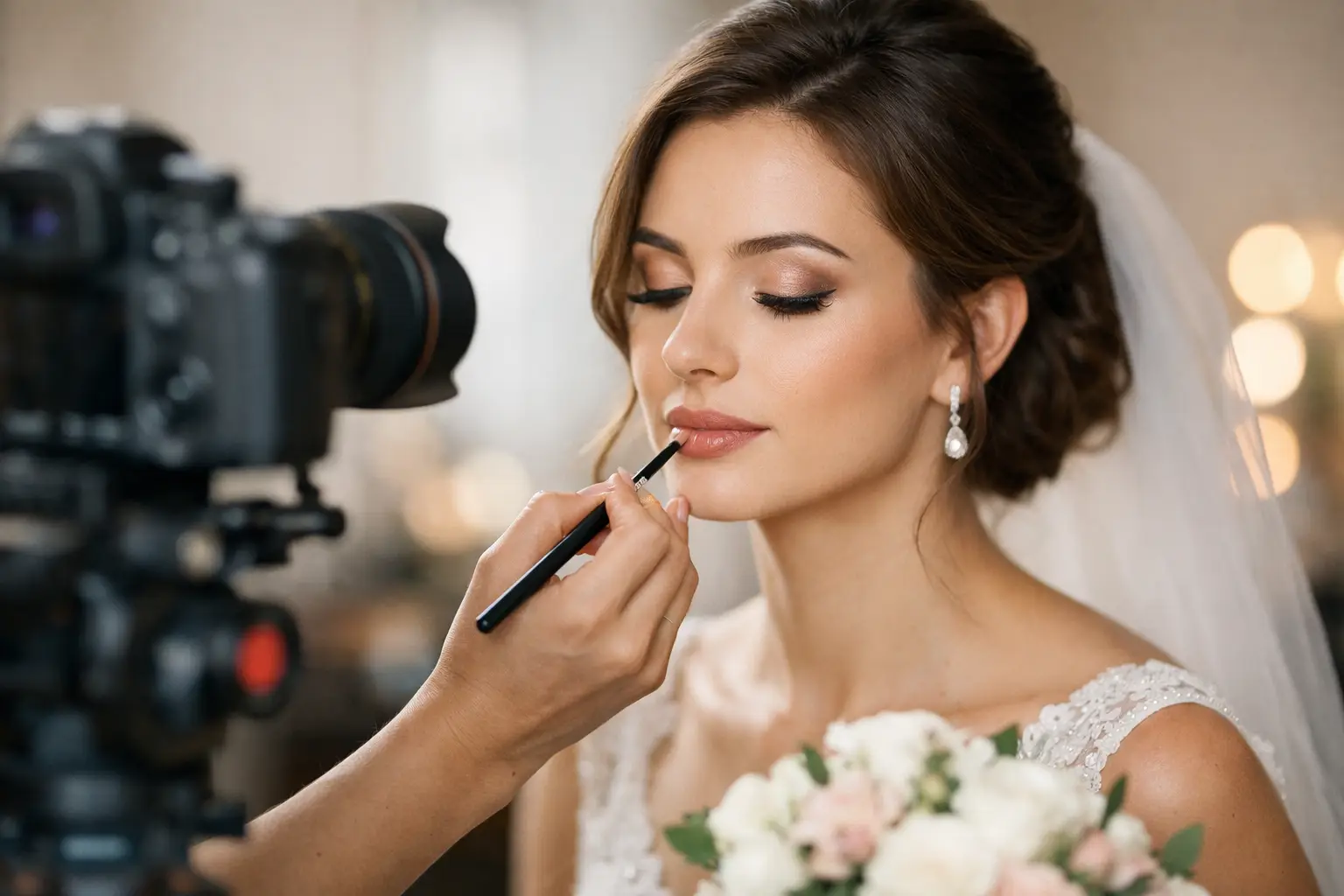
A bridal look can appear exquisite in a quiet suite, then lose its dimension under flash, ceremony lighting, or a cinema camera. What makes bridal makeup camera-ready is not heavier application. It is deliberate composition: skin that holds its finish, color that retains its presence, and structure that reads beautifully from an intimate first look through the final dance.
For a wedding day, makeup must perform in several visual languages at once. It is seen close enough for a parent to notice the skin texture, photographed in daylight and candlelight, and often recorded in motion. The most refined result feels like the bride, only more luminous, defined, and enduring.
What Makes Bridal Makeup Camera-Ready?
Camera-ready bridal makeup begins with an understanding that cameras flatten. They can soften the architecture of the face, absorb subtle color, and amplify areas of unwanted shine. Professional artistry restores the dimension that lighting and lenses can take away, without creating the mask-like effect that feels disconnected in person.
The goal is not a single trend or a preset level of glamour. A softly sculpted complexion may suit a garden ceremony in natural afternoon light, while a black-tie ballroom celebration may call for deeper definition, richer lip color, and a more intentional eye. For South Asian and multicultural bridal celebrations, the approach must also honor the scale and symbolism of the occasion. A bride wearing a richly detailed lehenga, heirloom jewelry, or a traditional red ensemble often needs color and contrast that can hold their own beside the visual richness of the wardrobe.
A camera-ready face is calibrated to the bride’s features, the event design, and the way the day will be documented.
Skin Preparation Creates the Finish
Beautiful makeup does not begin with foundation. It begins with skin preparation that is specific to the bride’s skin condition that day, rather than a generic skincare sequence. Hydration is essential, but excessive layers of rich products can cause complexion makeup to separate under heat, tears, and long wear. Conversely, over-mattifying dehydrated skin can make every expression look more textured in high-resolution imagery.
The artistry lies in balancing moisture, grip, and controlled radiance. The center of the face may need strategic refinement, while the high points retain a soft, believable sheen. This creates a complexion that looks fresh in portraits rather than flat, and polished in person rather than overly powdered.
Skin texture should not be erased at the expense of realism. A bridal complexion can be perfected while still allowing the face to look alive. Fine lines around the eyes, natural freckles, and the movement of a smile are part of a person, not flaws to be concealed beyond recognition. The most luxurious finish is smooth, even, and dimensional, never airbrushed into anonymity.
Coverage Is a Design Decision
Full coverage is not automatically more camera-ready. It can photograph beautifully when it is built in thin, meticulously blended layers, especially when a bride has discoloration or prefers a more formal finish. Yet many brides are best served by targeted correction and a lighter overall complexion, particularly for daylight weddings or close editorial-style photography.
The deciding factor is consistency. The complexion should match through the face, neck, chest, shoulders, and any visible areas of the body. This requires attention to undertone as much as shade. A foundation that looks acceptable under a makeup mirror but turns too warm, too cool, or too gray in photographs can interrupt an otherwise impeccable look.
Dimension Must Read Without Looking Drawn On
Photography asks for more definition than a casual daytime makeup look. Concealer, contour, blush, bronzer, and highlight each have a role, but their placement must respect the bride’s natural bone structure. Heavy contour can become obvious in flash photography. Reflective highlight placed too broadly can create a stripe of light across the face. Blush that is too pale may disappear entirely.
A balanced application gives the camera a clear map of the face: brightness where the face naturally lifts, gentle shadow where it recedes, and color that brings life back into the complexion. The transition between these elements should be invisible. The impression should be of exceptional skin, not separate layers competing for attention.
Blush deserves particular consideration. It brings vitality to still photography and movement to video, especially after the complexion has been evened out. The right tone depends on the bride’s undertone, dress, floral palette, and lip color. Rose, apricot, berry, and warm terracotta can all be elegant choices. What matters is that the color remains present after powder, lighting, and hours of celebration.
Eyes and Brows Hold the Expression
The eyes carry much of a bridal portrait. They should be defined enough to be visible in a wide ceremony image, yet soft enough to remain timeless when viewed years later. This does not always mean a dramatic smoky eye. A polished neutral eye with carefully placed depth, lifted lashes, and a refined liner can be just as impactful.
The most successful eye looks use tonal contrast. A whisper of sheen on the lid, a deeper shade at the lash line or outer corner, and a thoughtful transition through the crease give the eyes shape without harshness. For brides with monolids, hooded eyes, deep-set eyes, or prominent eyes, placement matters more than following a single trend. The same style of liner or shadow shape will not flatter every eye.
Brows frame this work. They should be groomed and balanced, but not made identical or overly sharp. A strong, architectural brow may complement a couture-inspired look; a softly feathered brow may better suit an ethereal ceremony. In either case, the brow color and density must read naturally against the bride’s hair color and skin tone.
Lashes complete the frame. Individual or customized lash applications often offer the most elegant result because they can be tailored to the eye shape and remain comfortable through a long day. A strip lash can be equally effective when the band is discreet and the style supports, rather than overwhelms, the eye makeup.
Color Must Survive Light, Flash, and Celebration
A bridal lip is often judged in the first few minutes after application, but its true test is later: after a toast, a kiss, photographs outdoors, and a room full of warm reception lighting. Long-wear formulas are useful, though durability should not come at the cost of a dry, rigid finish. Layering color thoughtfully and preparing the lips properly usually creates a more graceful result than relying on one product alone.
The lip tone should belong to the full composition. A nude can be sophisticated, but it must have enough depth to avoid disappearing in images. A red or berry can be striking, but should be selected with the bride’s complexion, attire, and comfort in mind. For a bride wearing vibrant ceremonial color, a lip may need a little more presence than it would with an ivory gown.
The same principle applies to eyeshadow and blush. Camera-ready color is not necessarily bold. It is simply visible enough to preserve harmony in photographs.
Longevity Is Built in Layers, Not Added at the End
Setting spray alone cannot solve a makeup look that has not been constructed for wear. Longevity comes from compatible formulas, intentional layering, and selective setting. Cream and powder products may be paired to strengthen color payoff and hold, but every face responds differently. Oily skin may benefit from more refinement through the T-zone, while mature or dry skin often needs a lighter hand with powder to preserve luminosity.
Weather changes the equation. New York summer humidity, Florida heat, ocean air, winter wind, and destination climates all affect the complexion. A destination bride may need a different plan for a beachfront ceremony than for an indoor reception, even if she wants the same visual mood. The artistry should anticipate touch-ups without making the bride feel managed by her makeup all day.
At BridalGal, this production-minded approach is part of creating a look that belongs equally in the room and in the final gallery. Makeup is assessed not only under the makeup chair lighting, but in relation to the day ahead: wardrobe, ceremony time, photography style, cultural traditions, and the bride’s own presence.
A Trial Is Where the Camera-Ready Plan Becomes Personal
The bridal trial is not simply a rehearsal for a finished face. It is where the visual direction becomes precise. Bring reference images, but also consider what you respond to in them. Is it the skin finish, the eye shape, the lip color, or the overall mood? A reference photo may have been created for studio lighting, retouched editorial work, or a model with very different features. It is a starting point, not a formula.
A thoughtful trial also considers hair, veil placement, jewelry, and outfit color. The difference between a pearl veil and a jeweled dupatta, between a clean-lined silk gown and ornate embroidery, can shift how much makeup definition feels balanced. If possible, take photographs in varied light after the trial. They reveal whether the color placement and finish are reading as intended.
The most memorable bridal makeup does not announce itself before the bride does. It gives her the confidence to be present in every embrace, every portrait, and every unplanned moment that becomes part of the story.